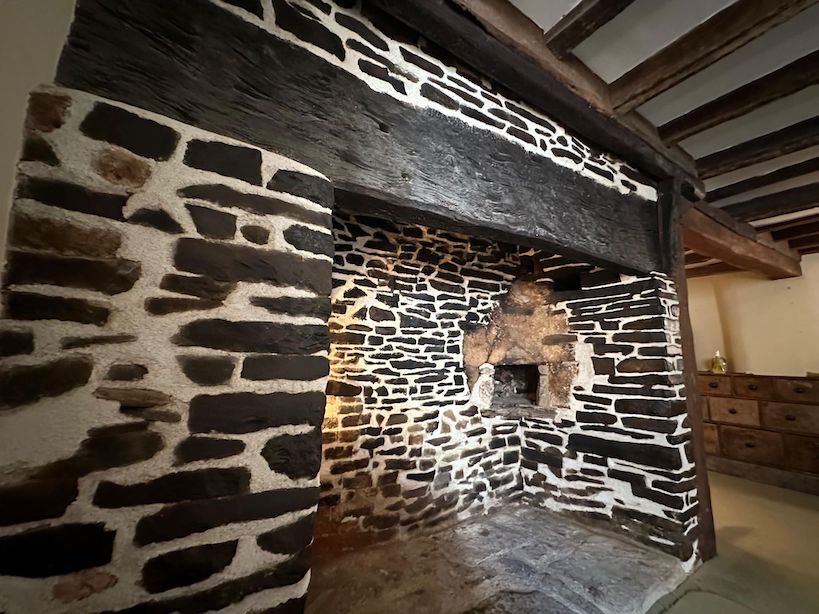
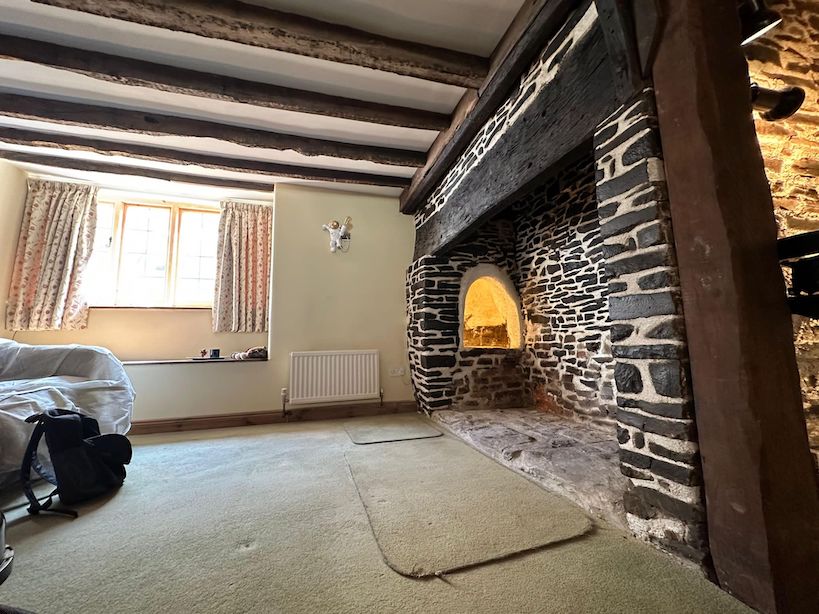
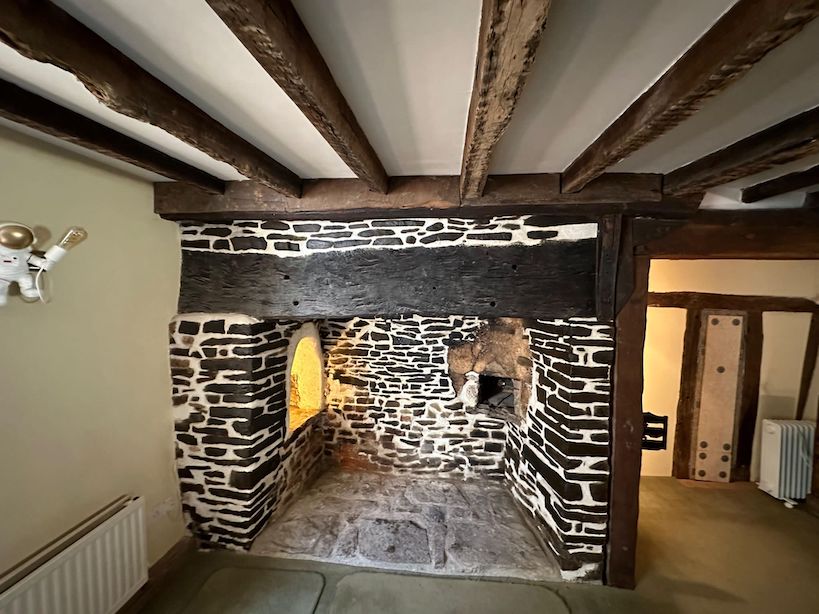
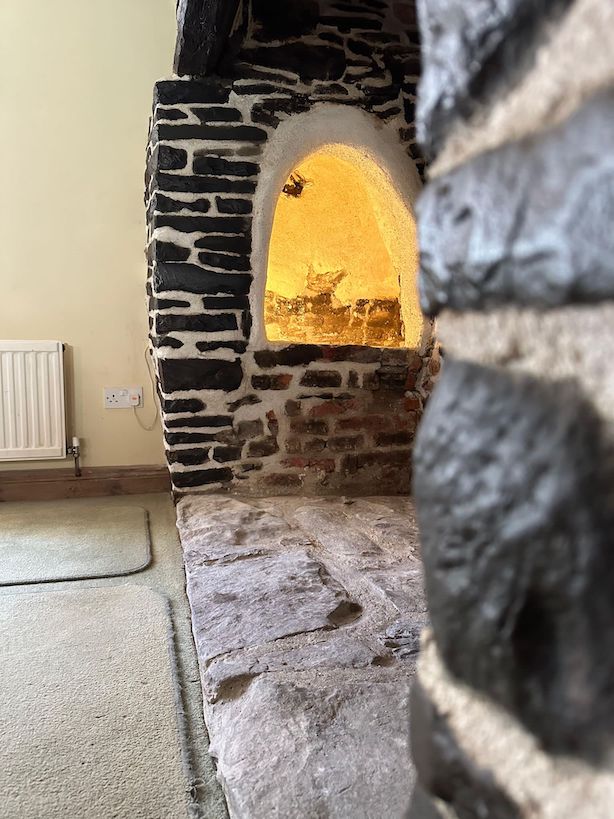
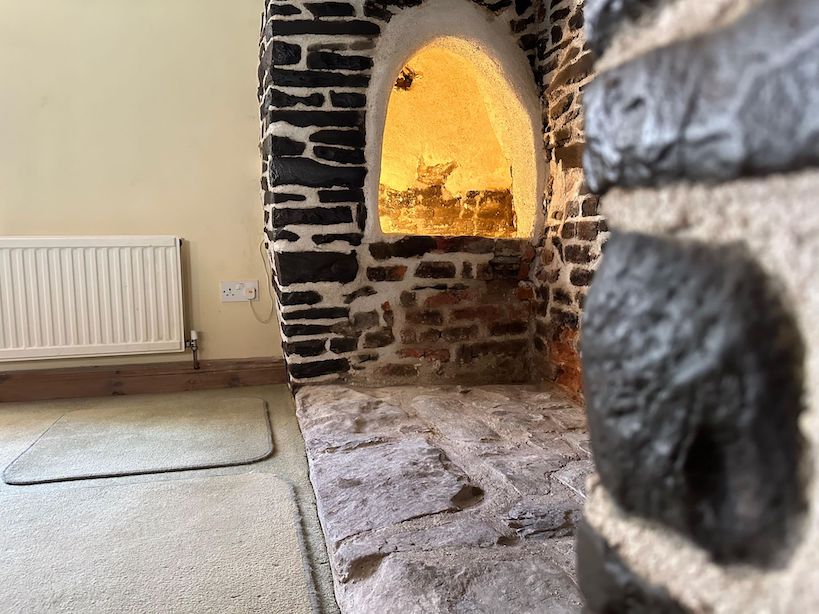
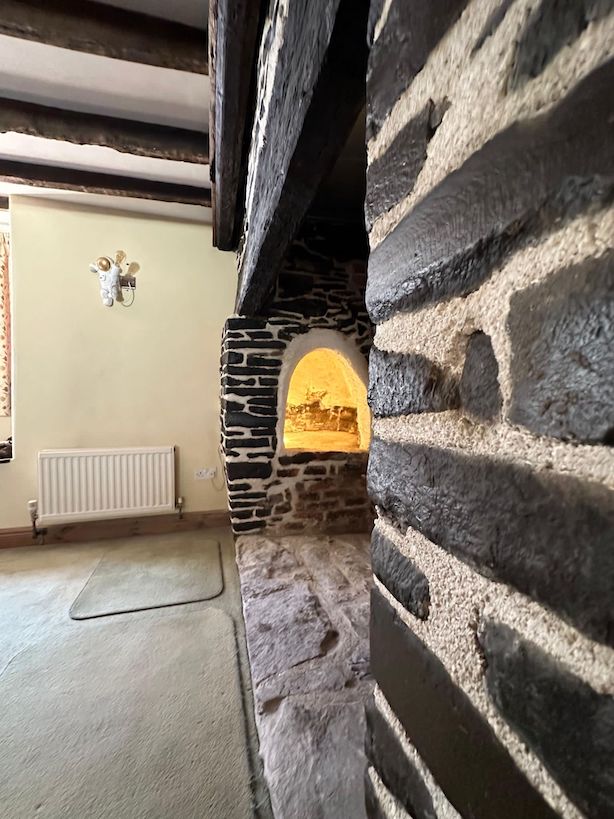
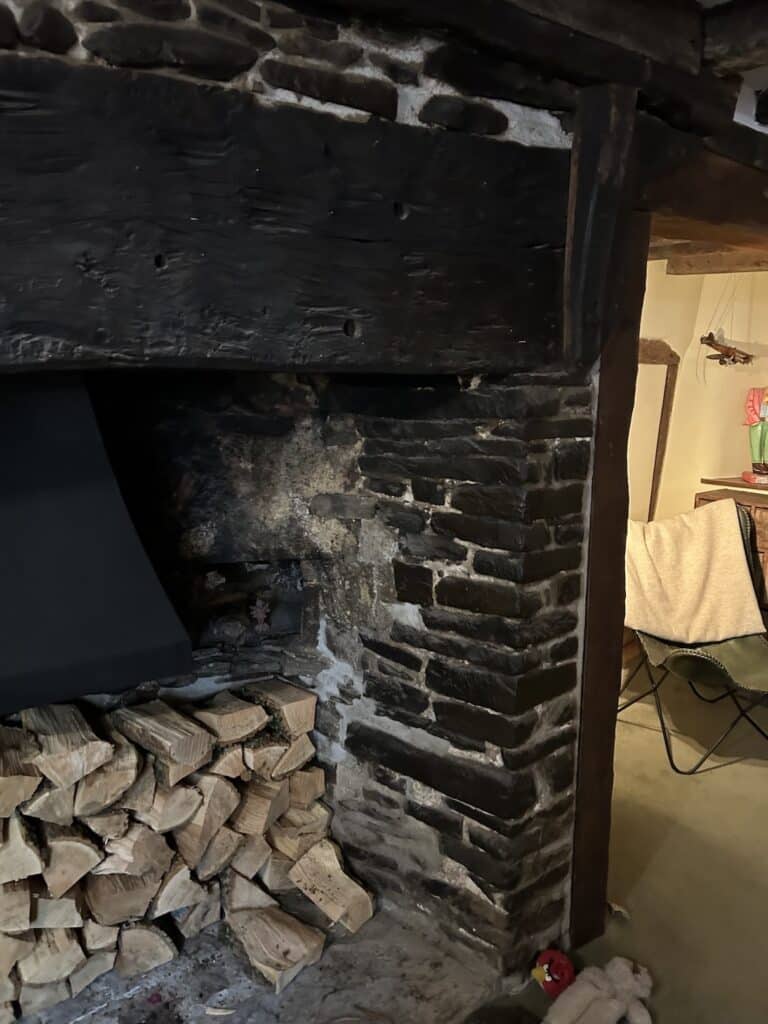
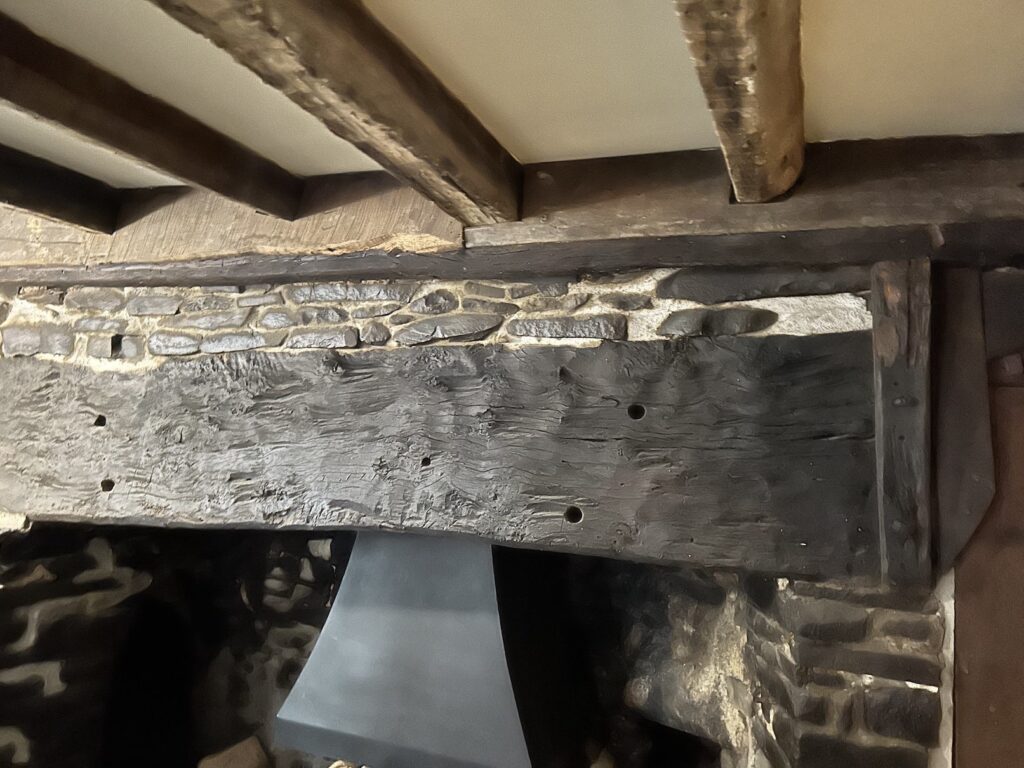
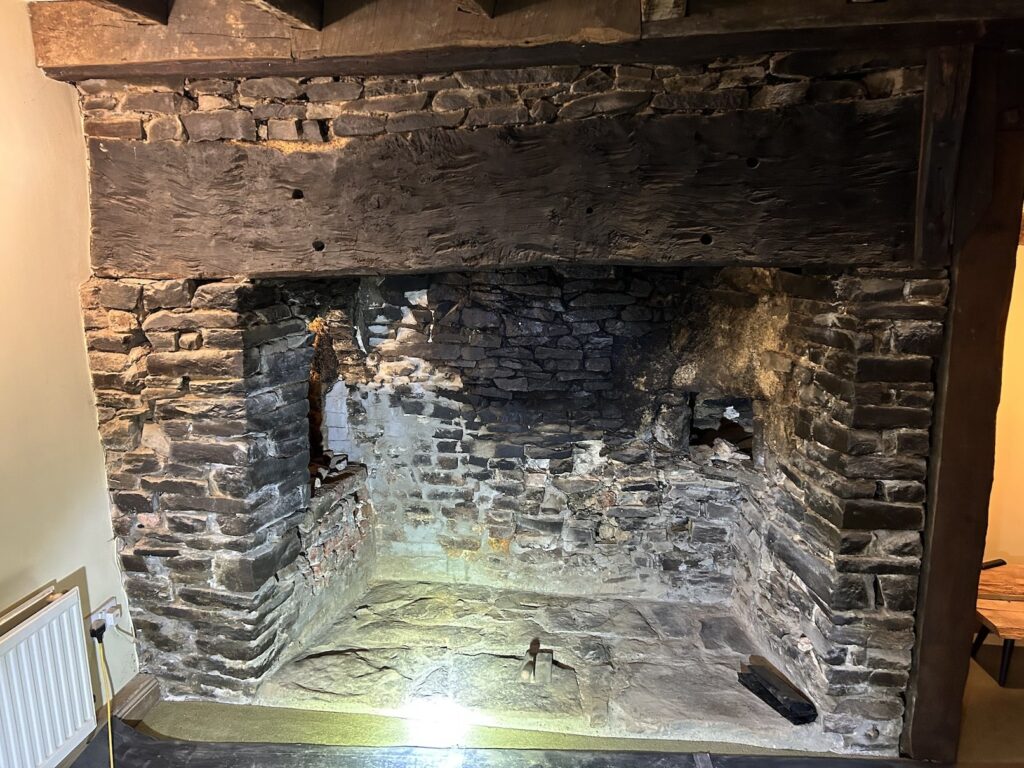
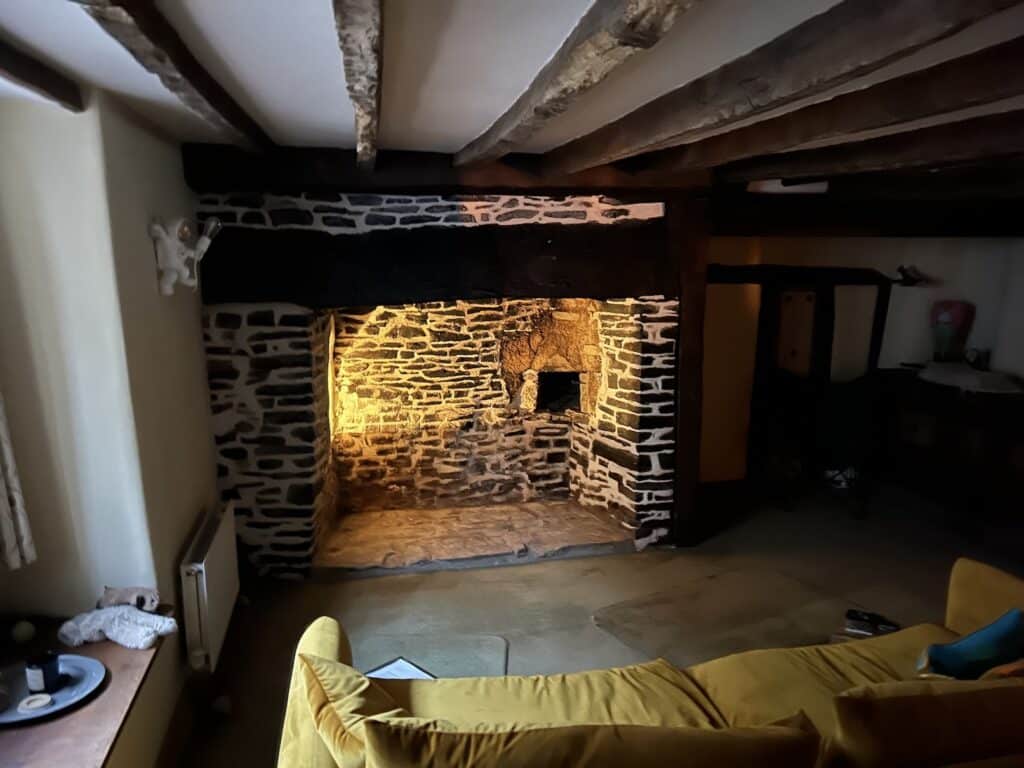
The 16th Century Inglenook and bread oven restoration project.
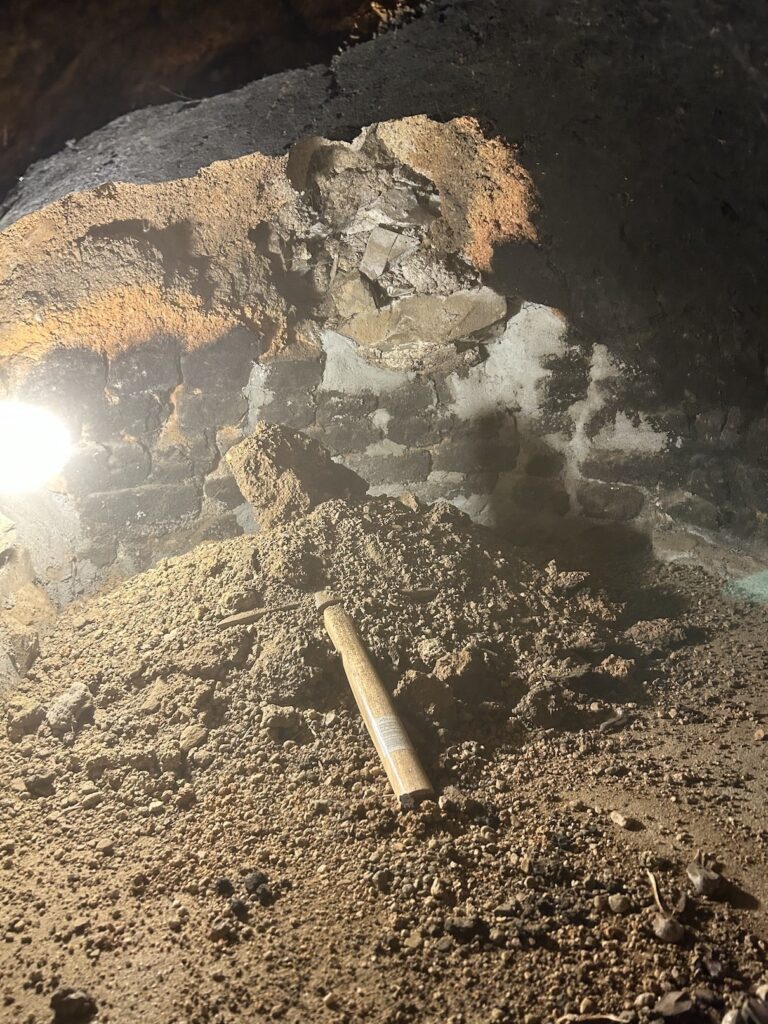
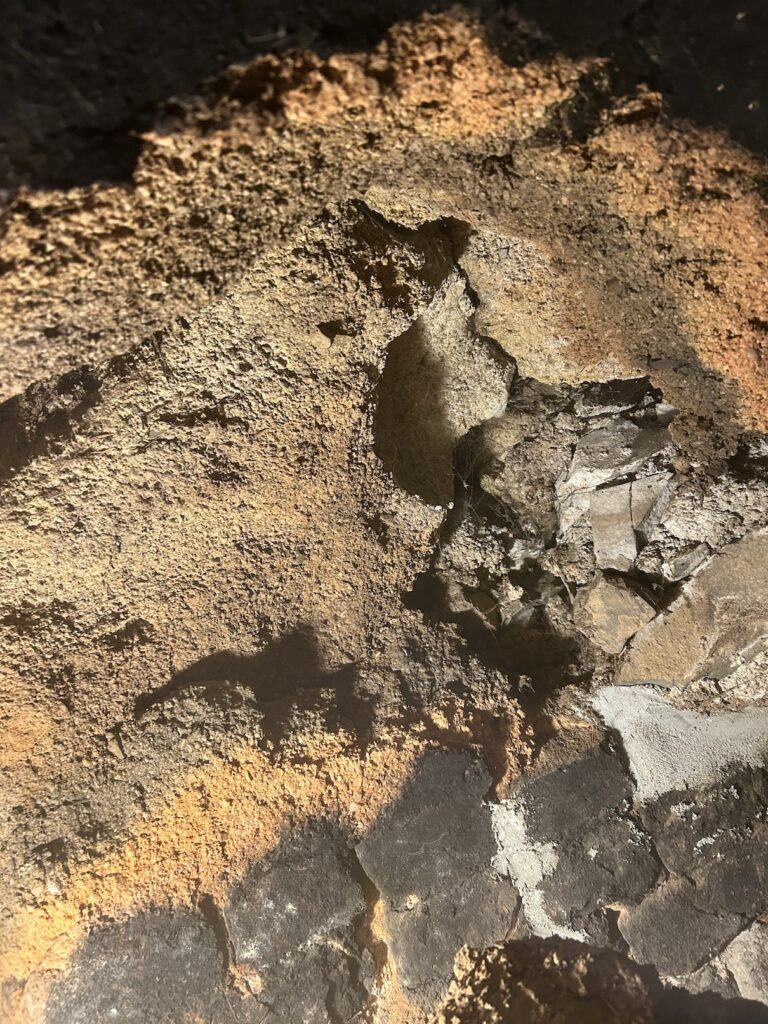
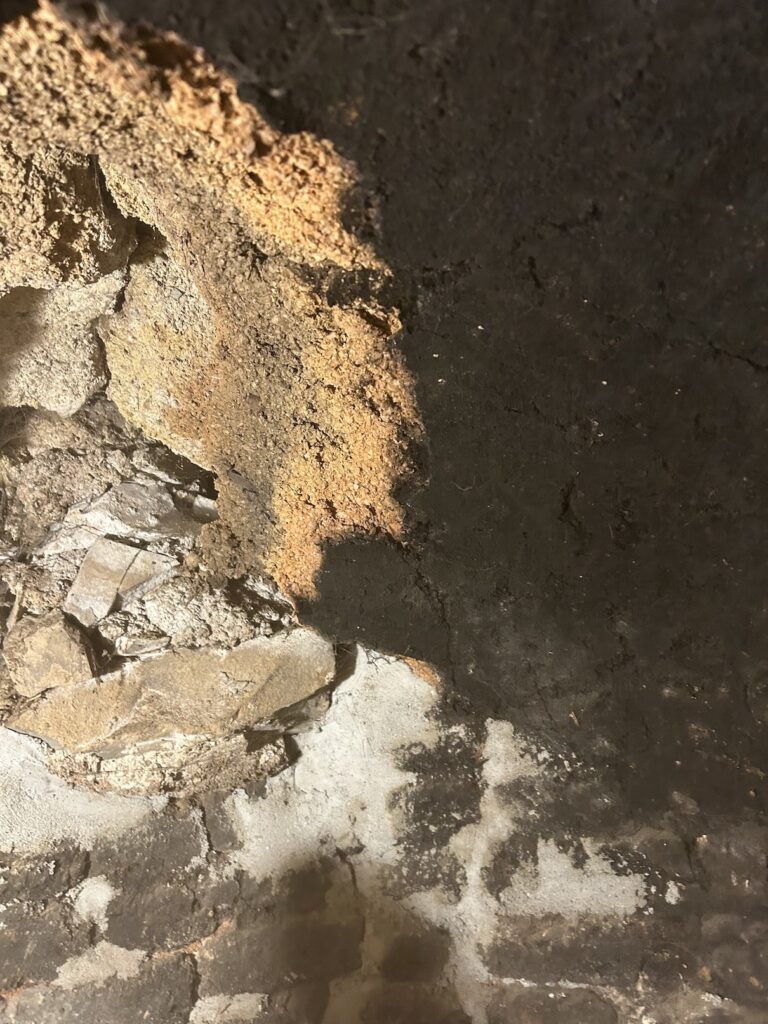
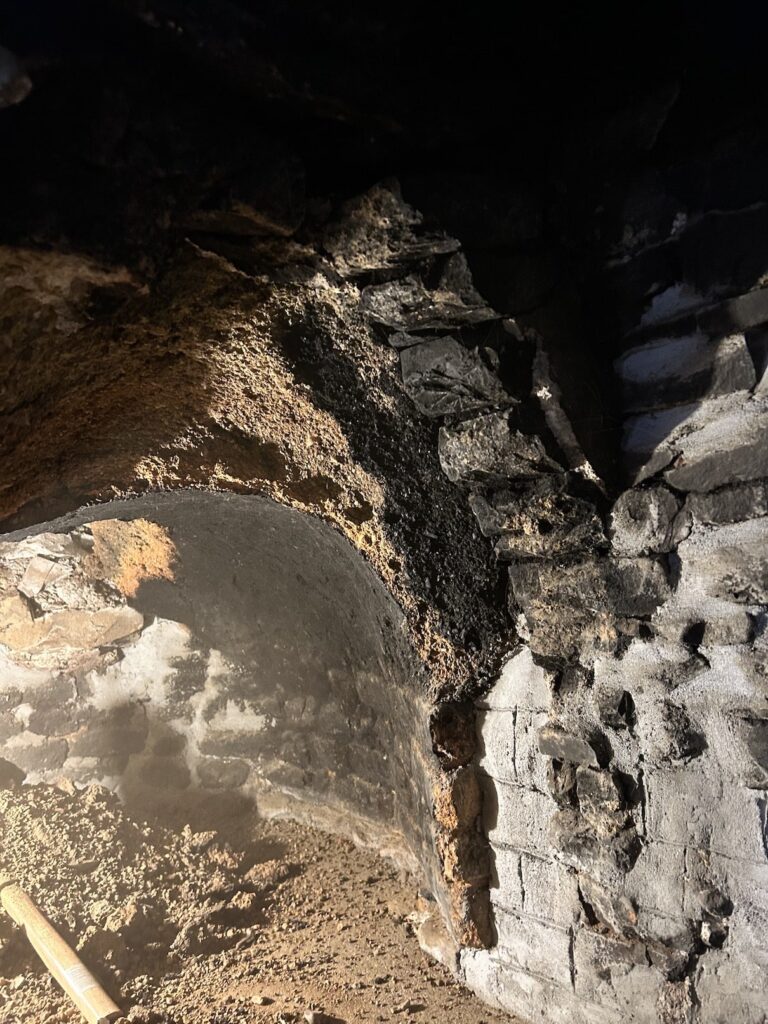
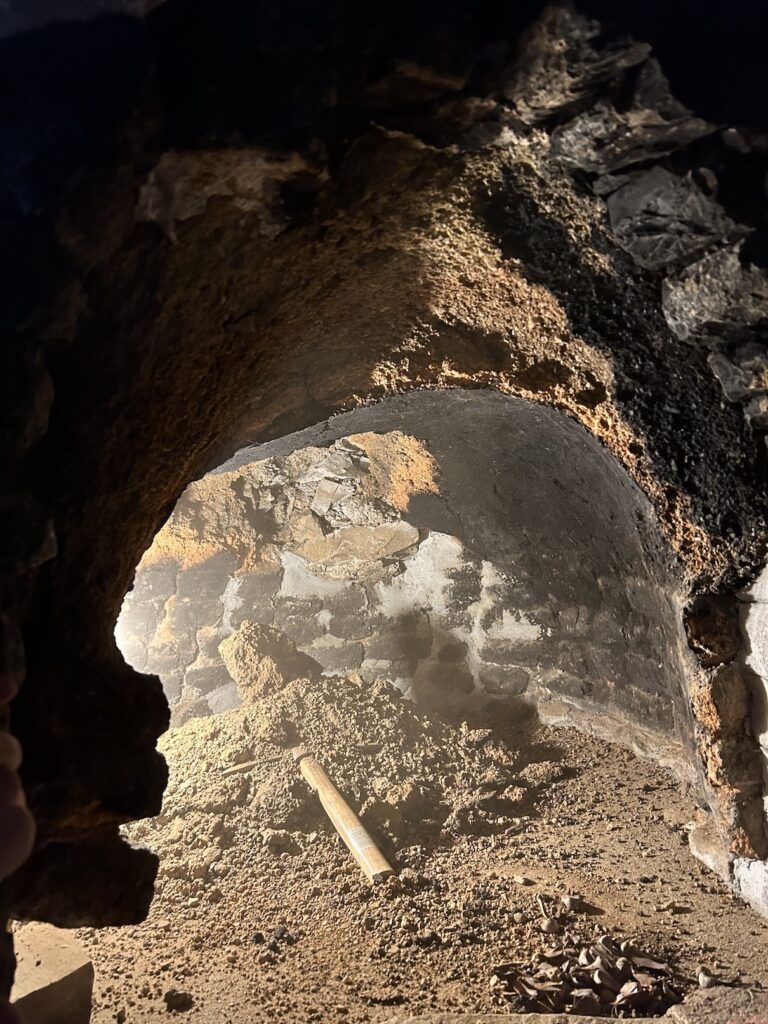
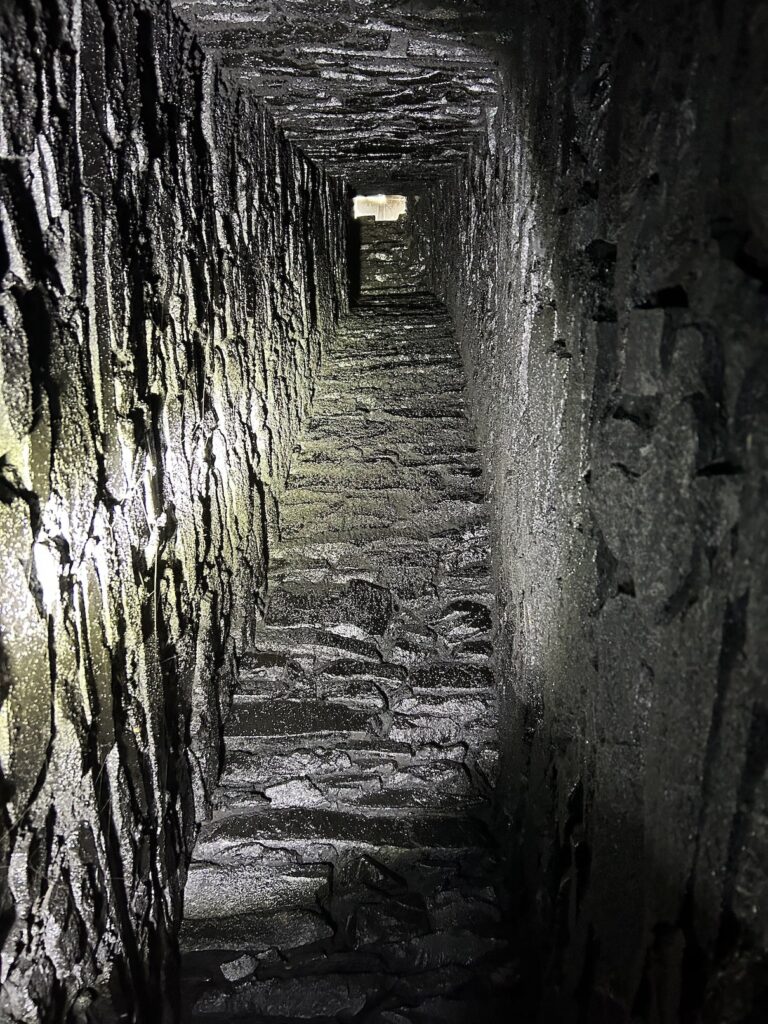
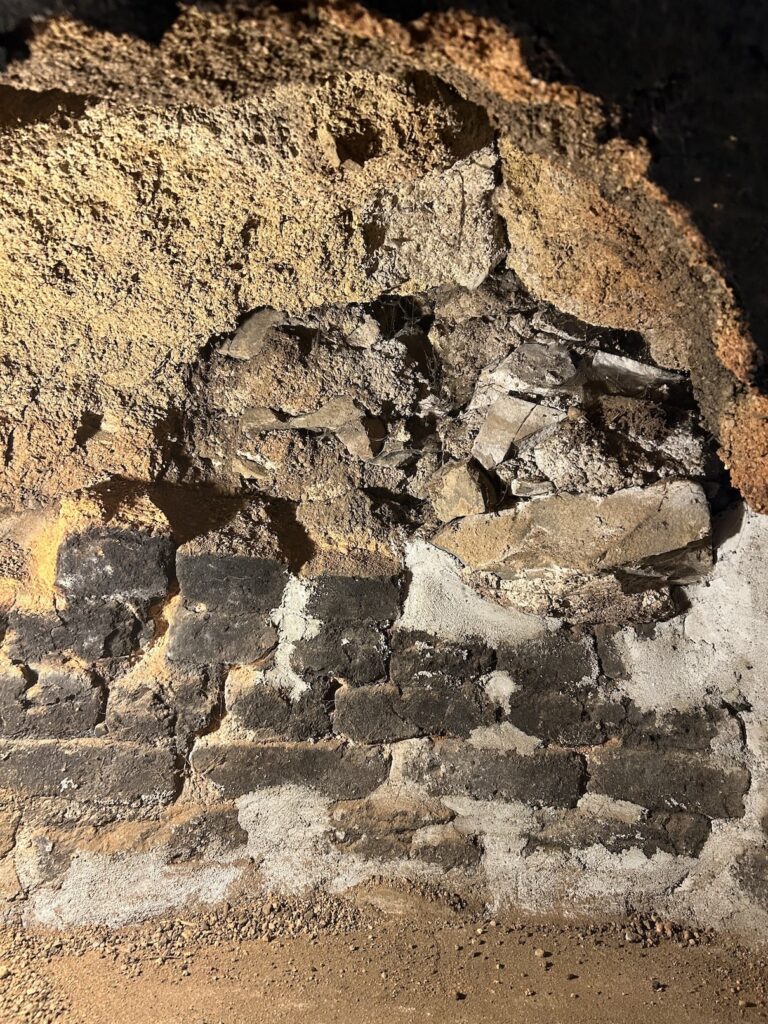
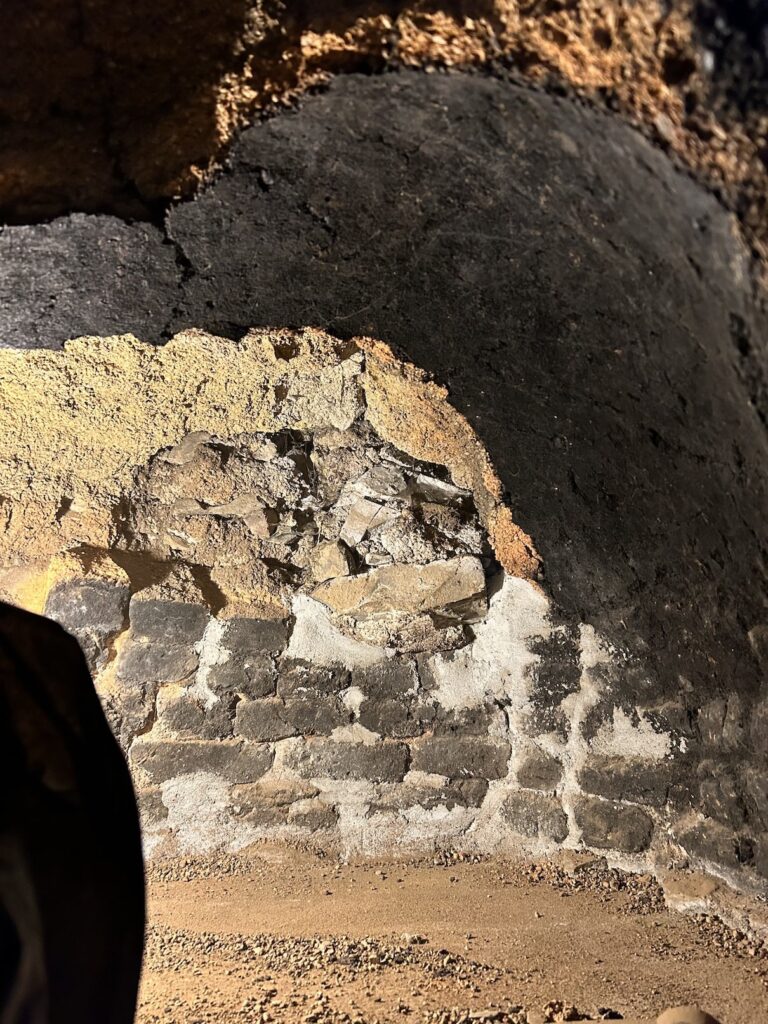
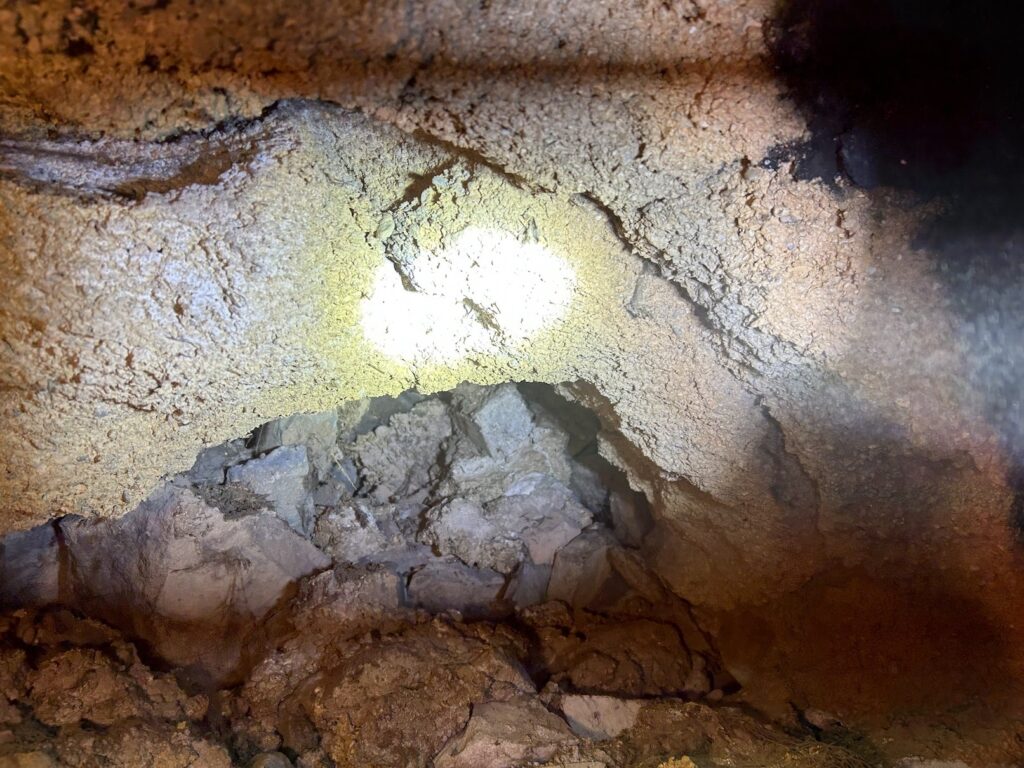
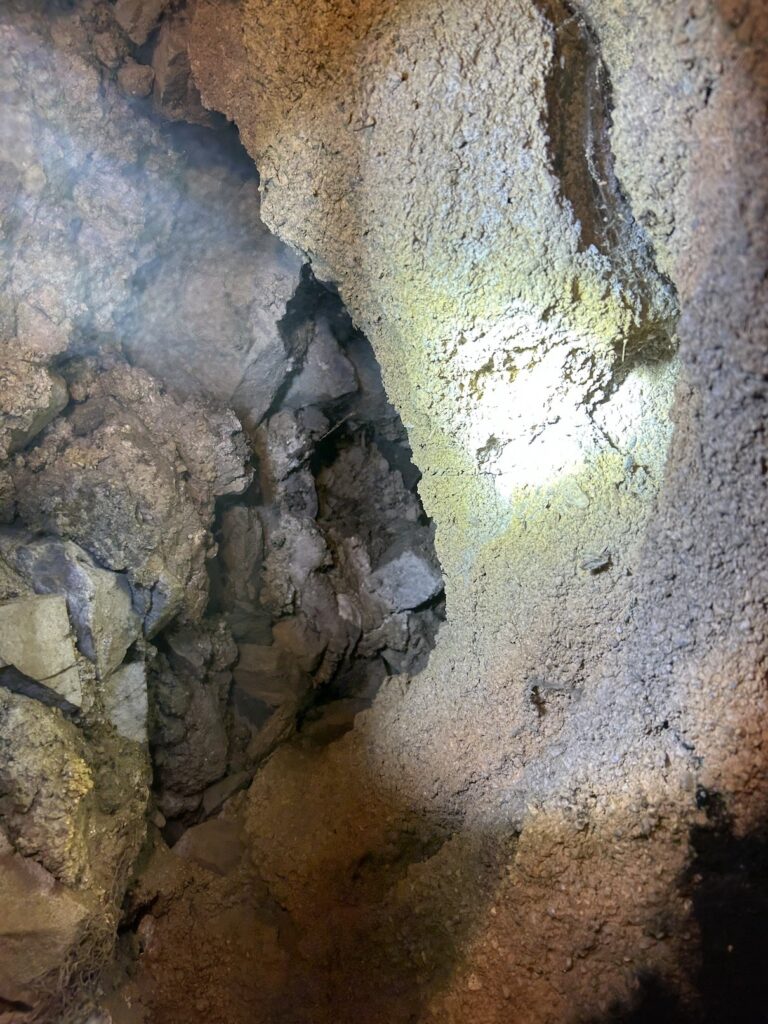
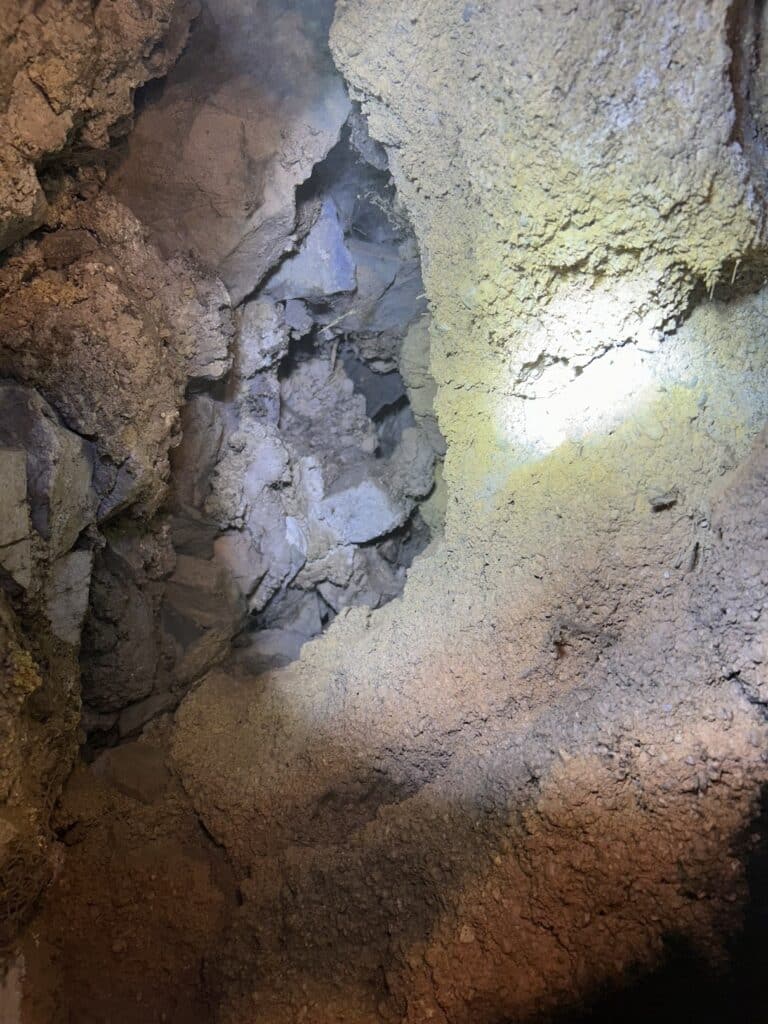
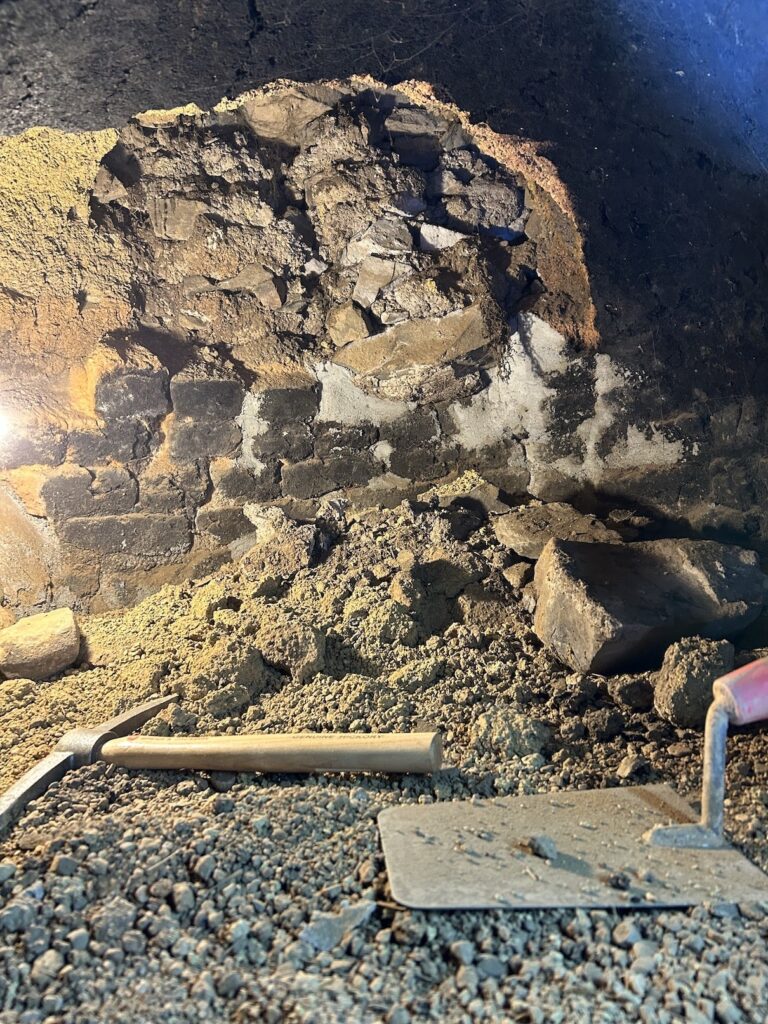
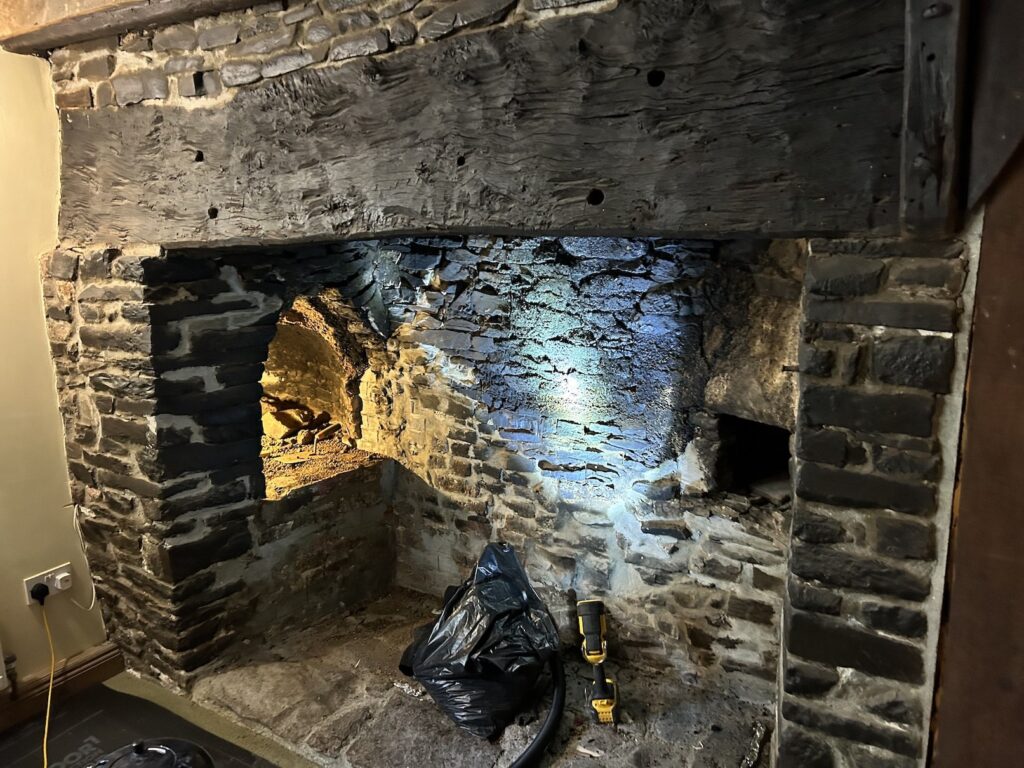
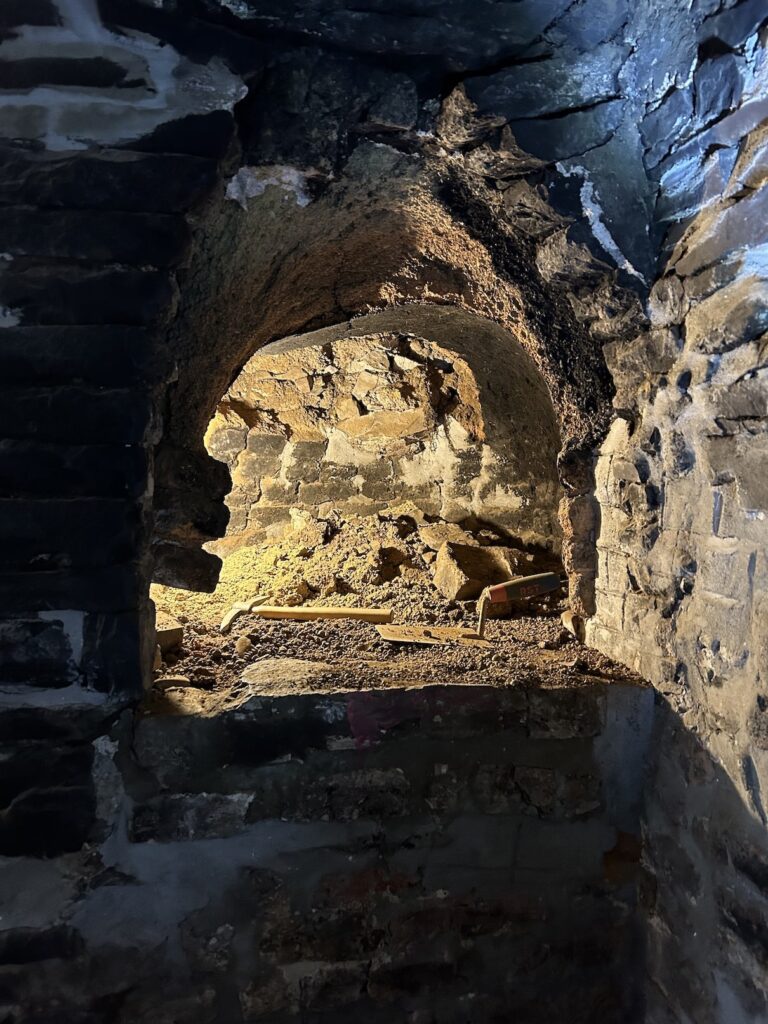
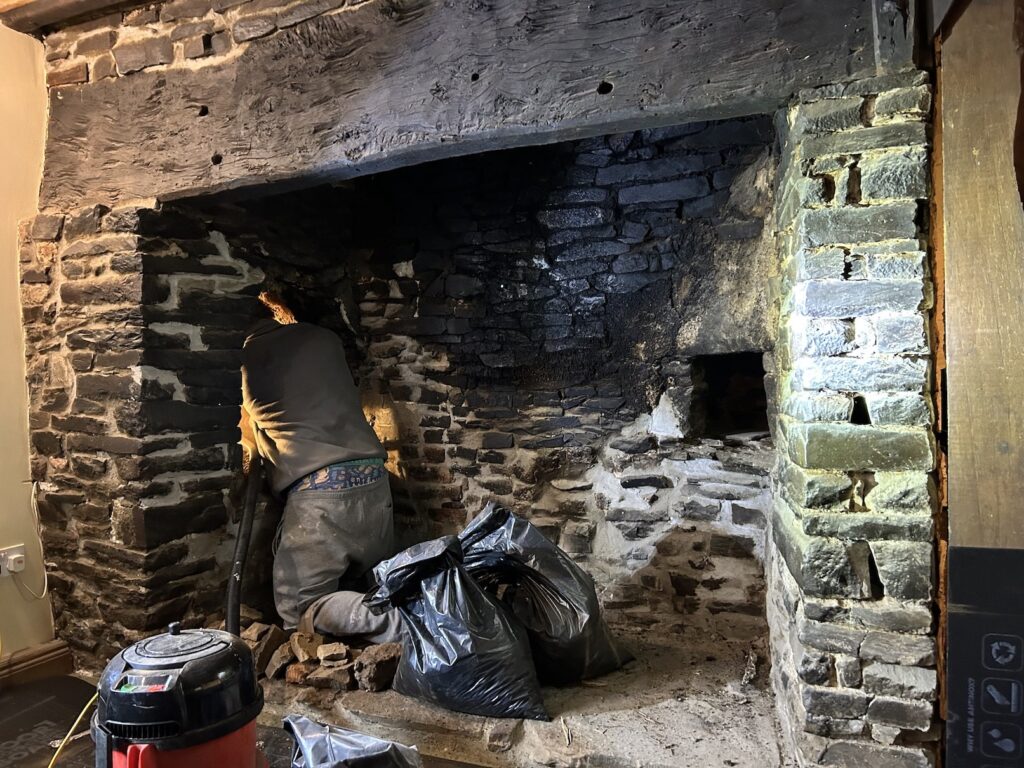
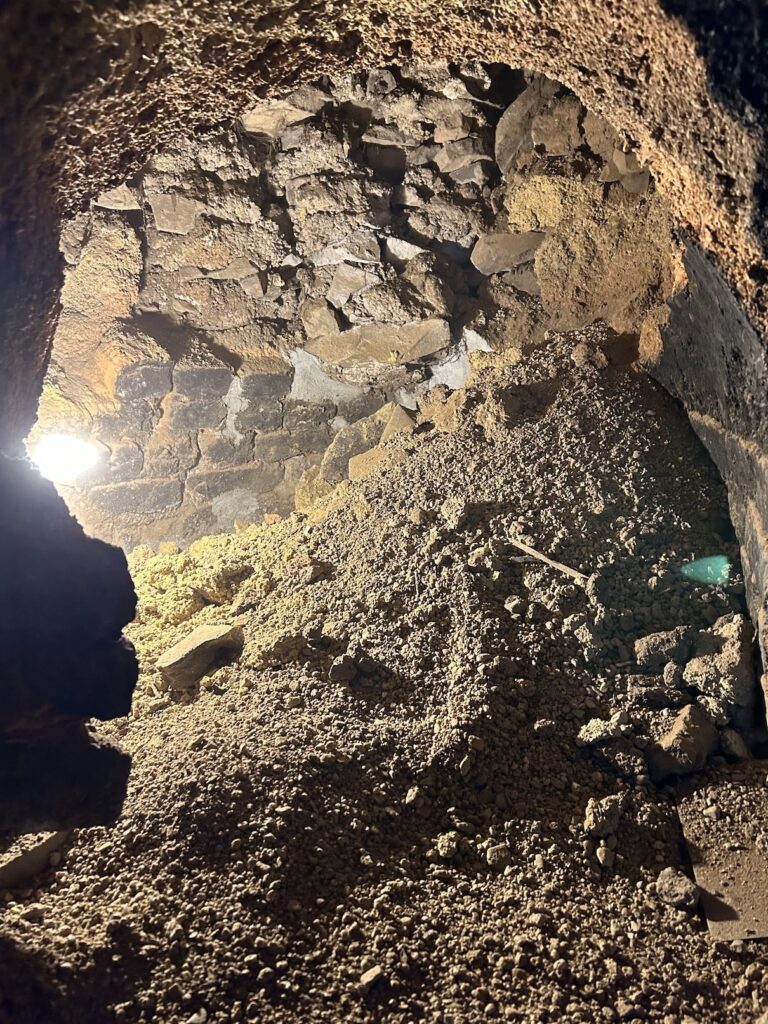
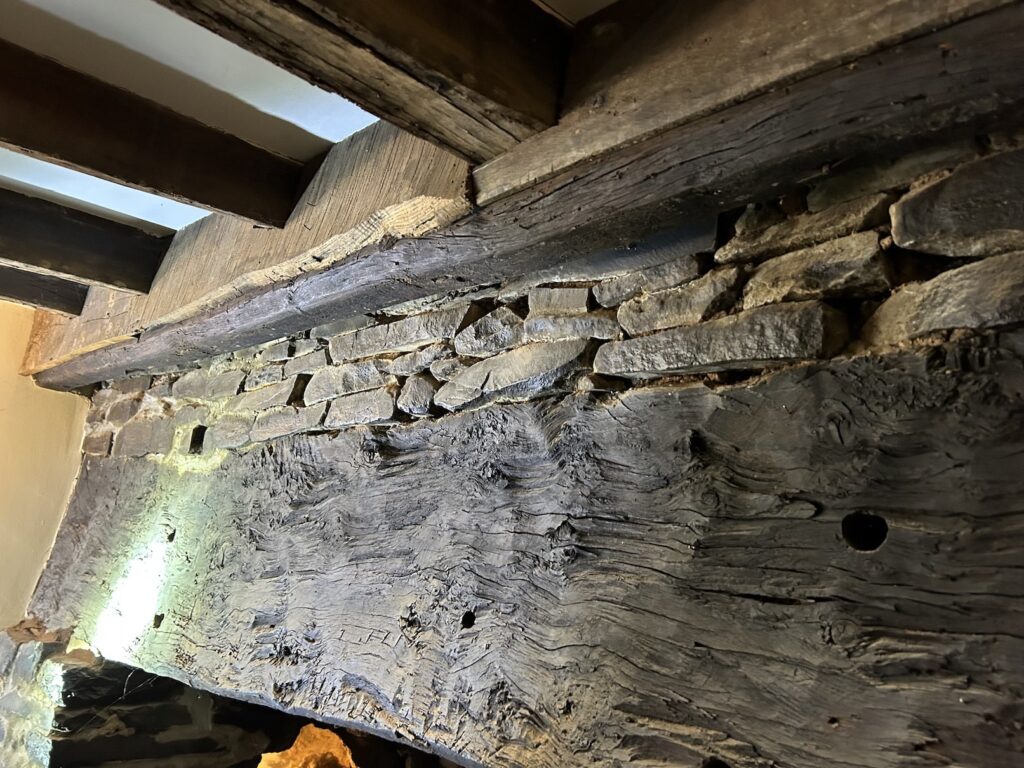
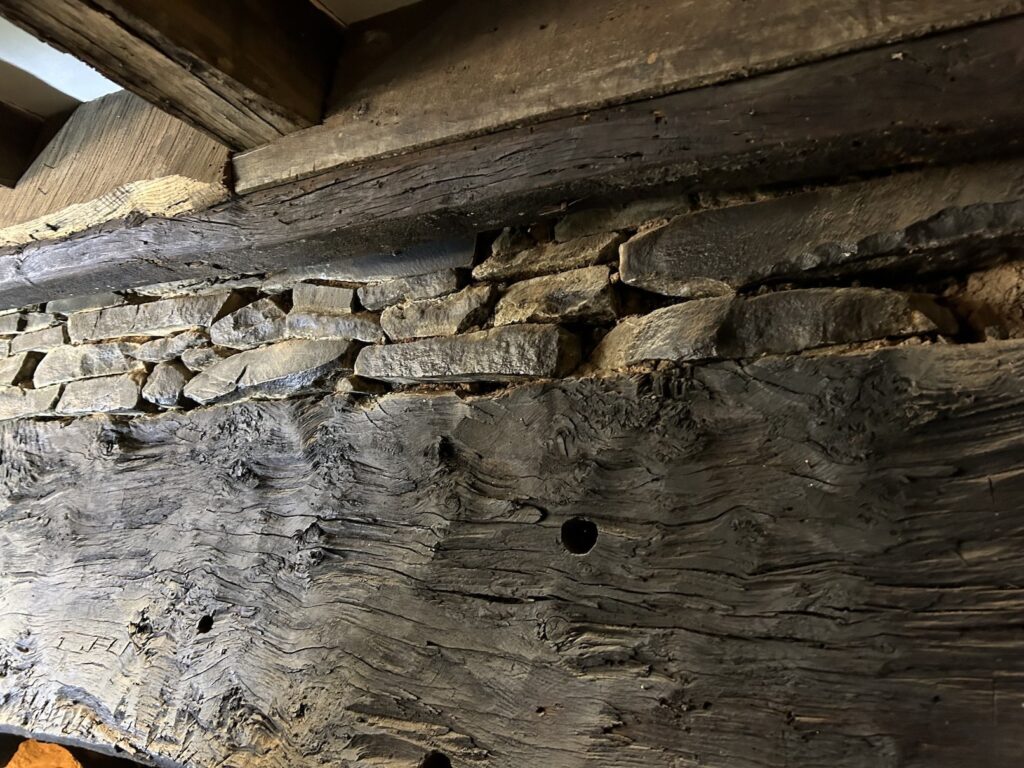
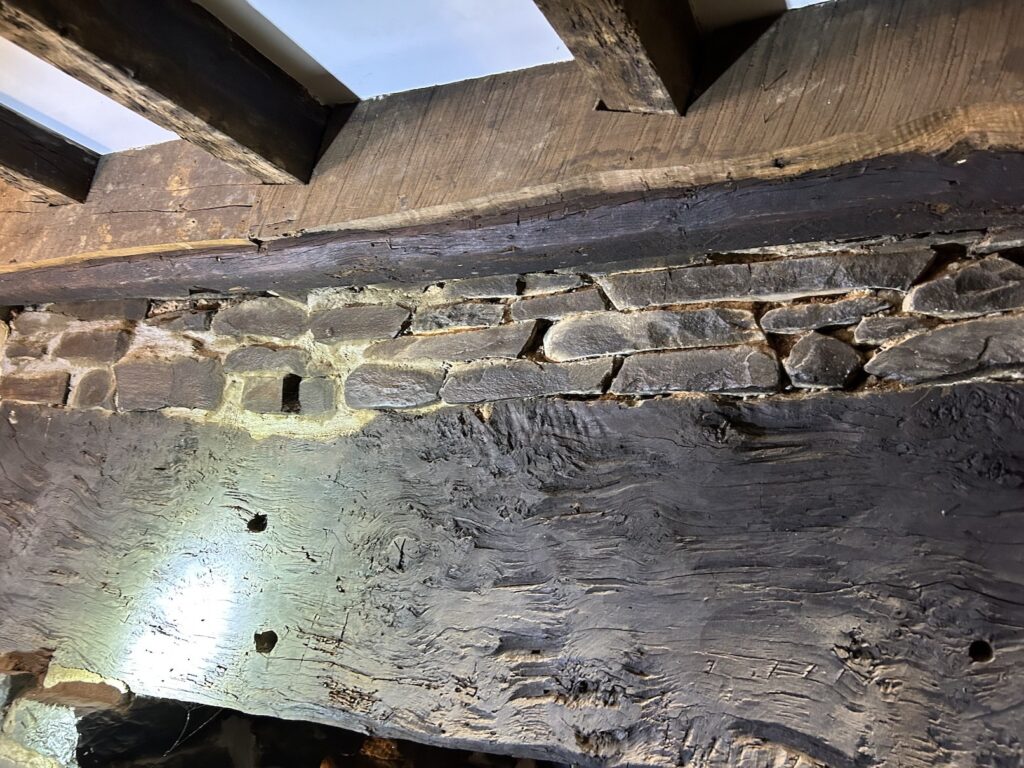
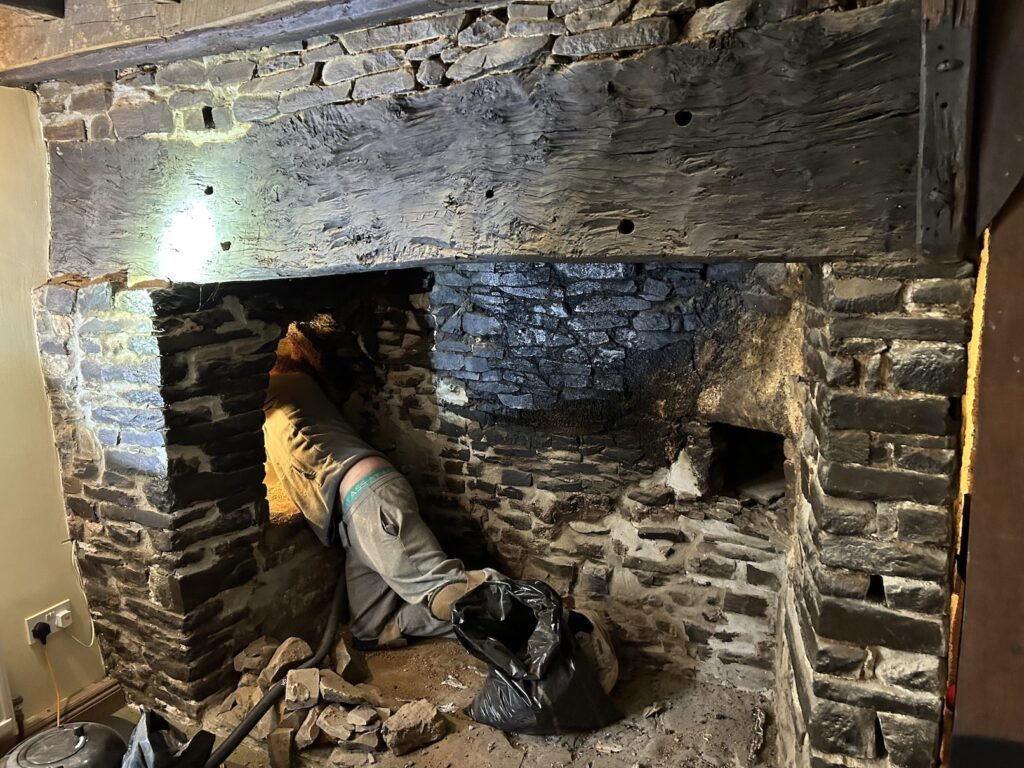
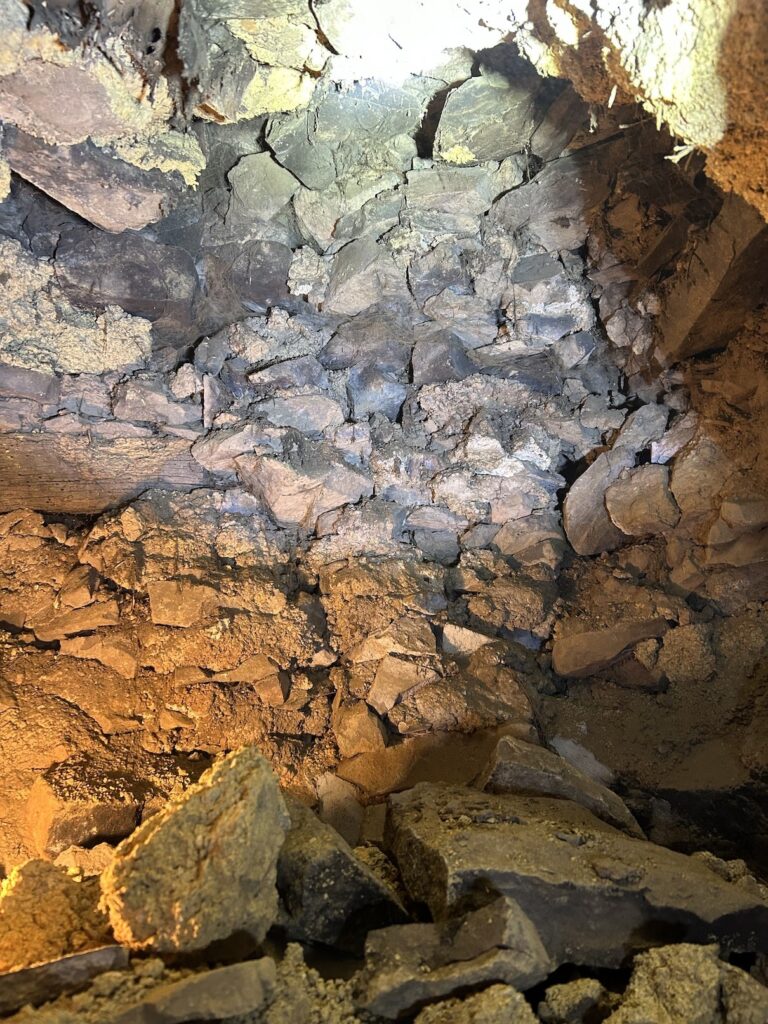
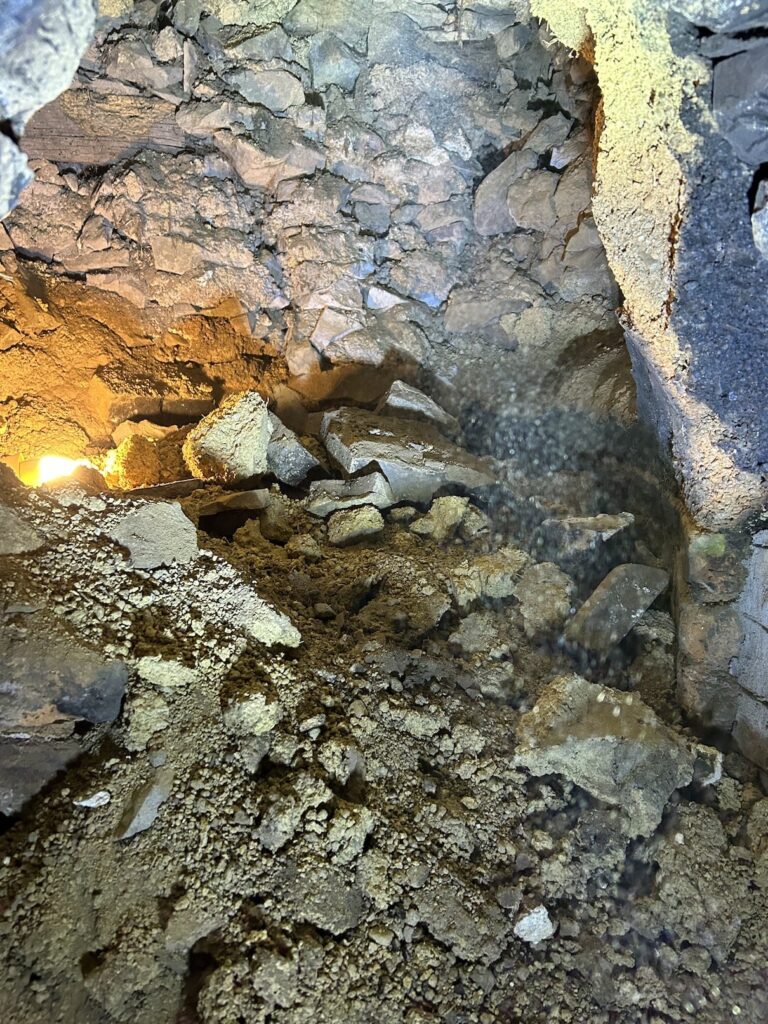
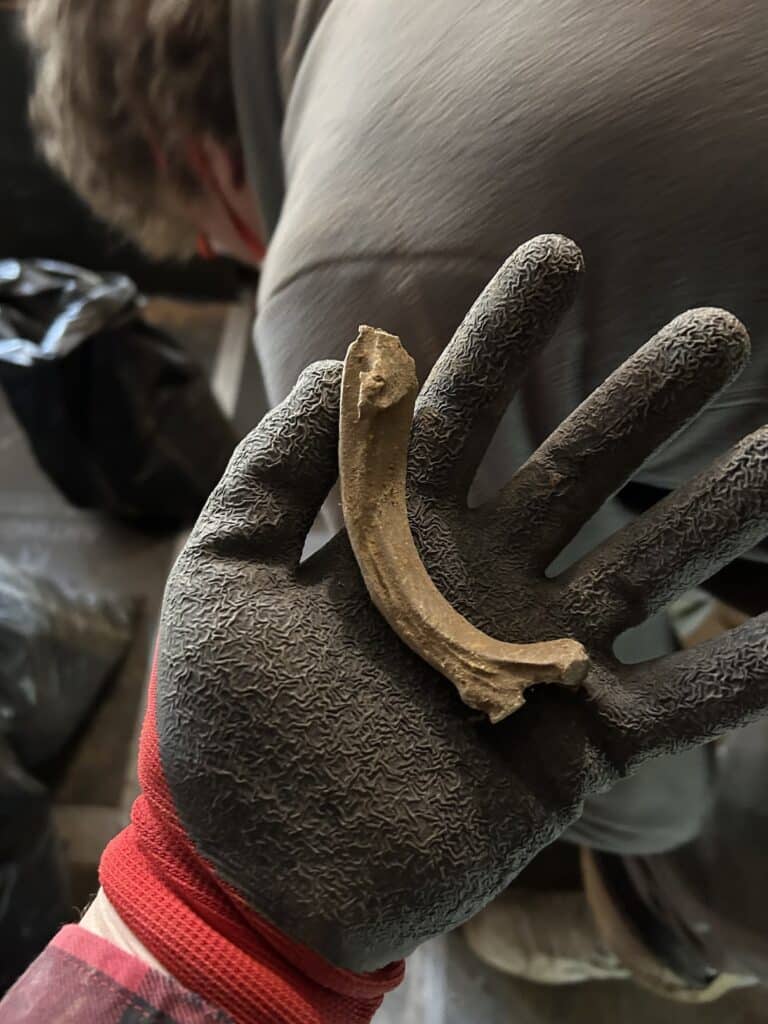
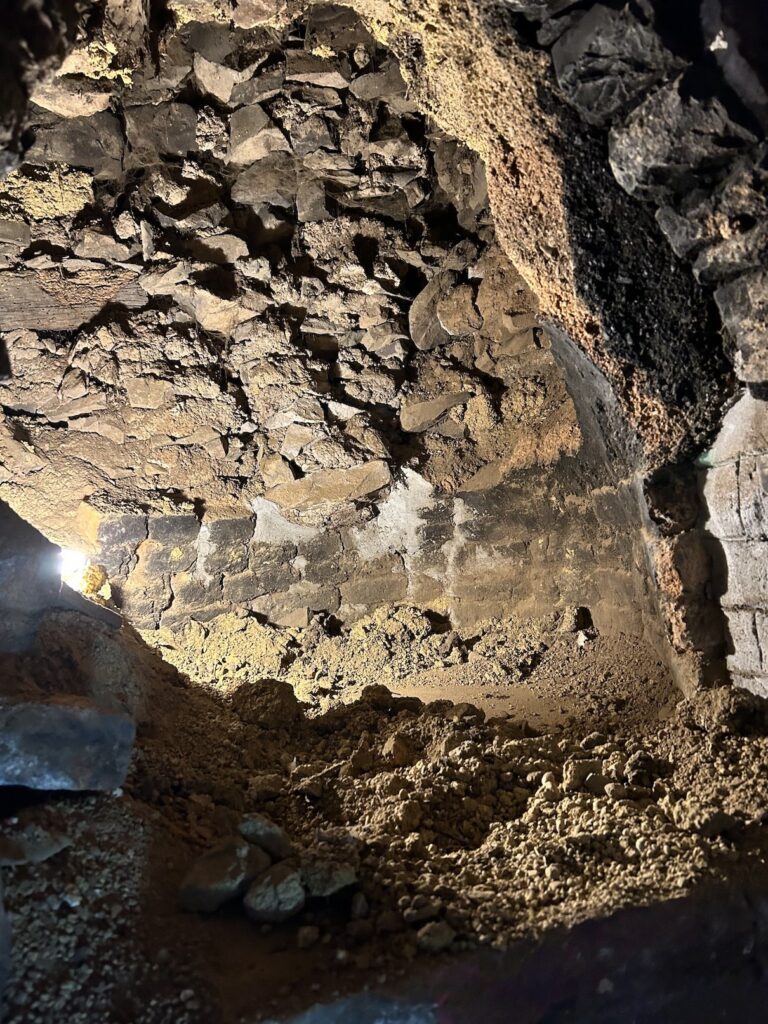
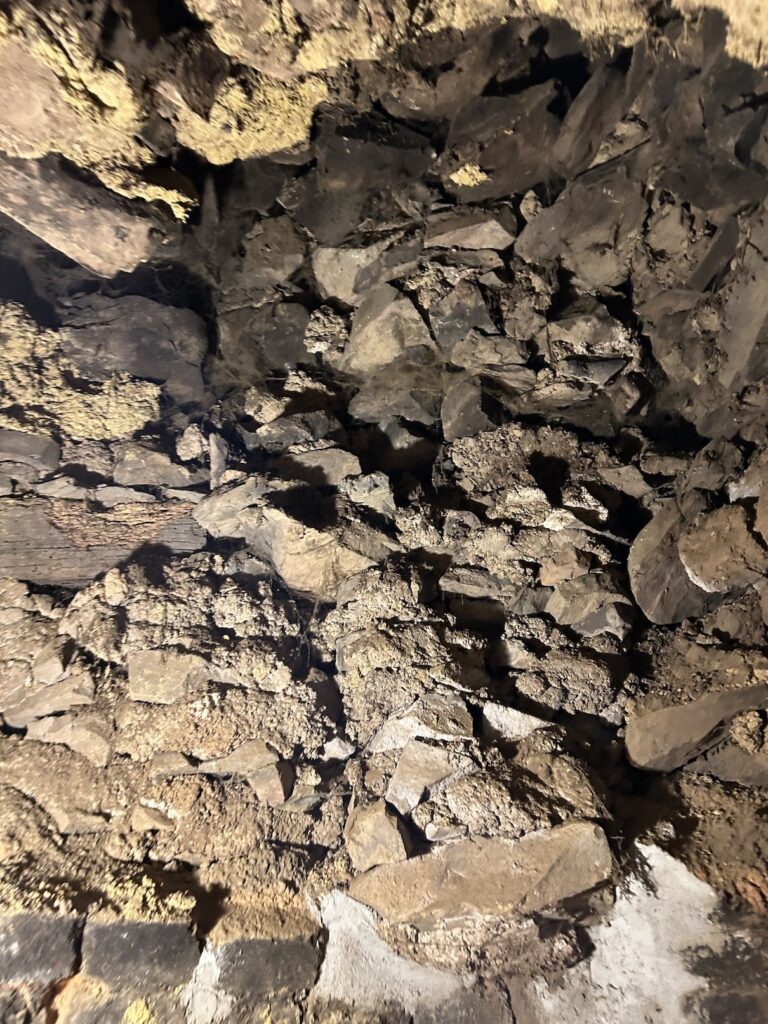
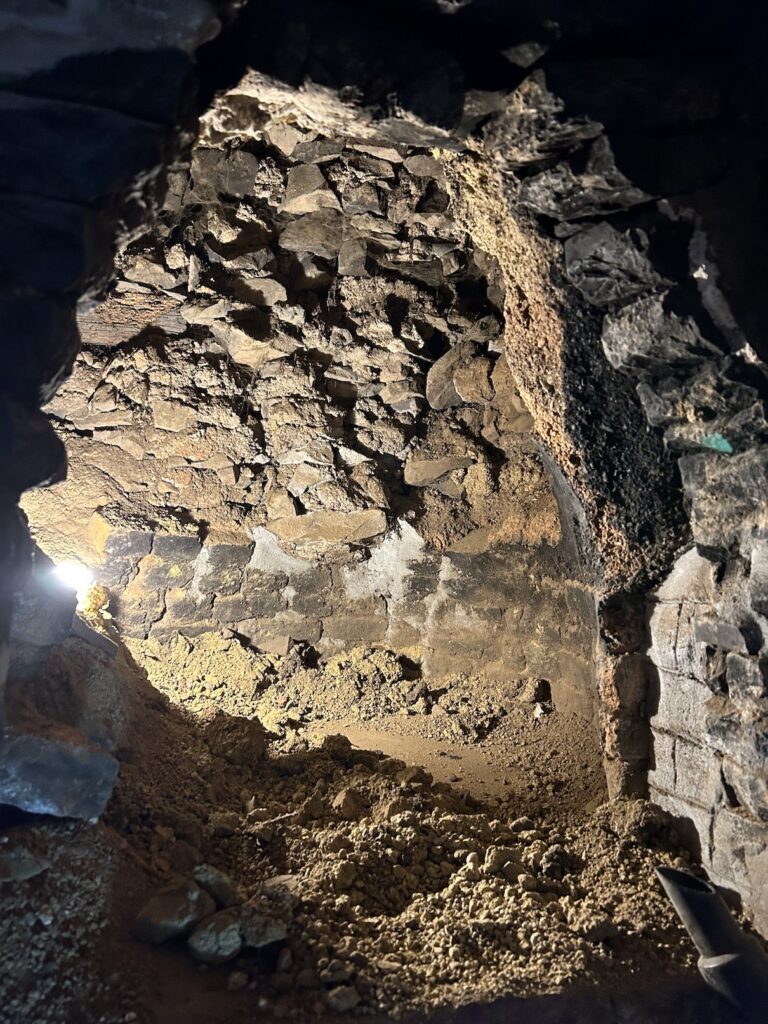
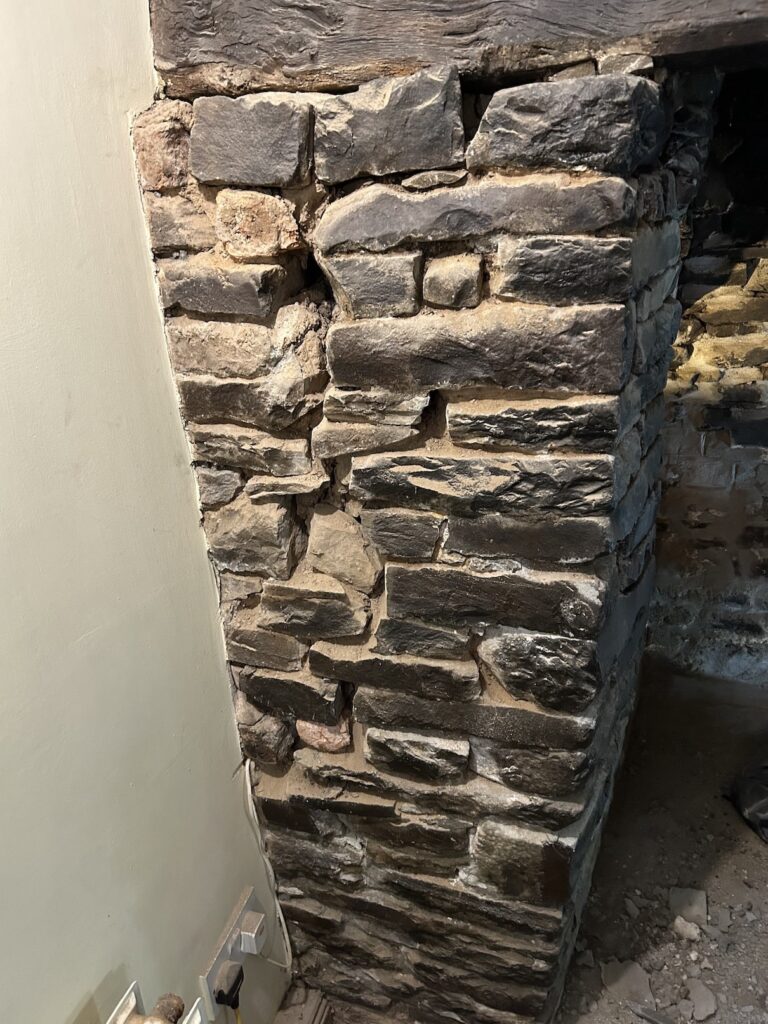
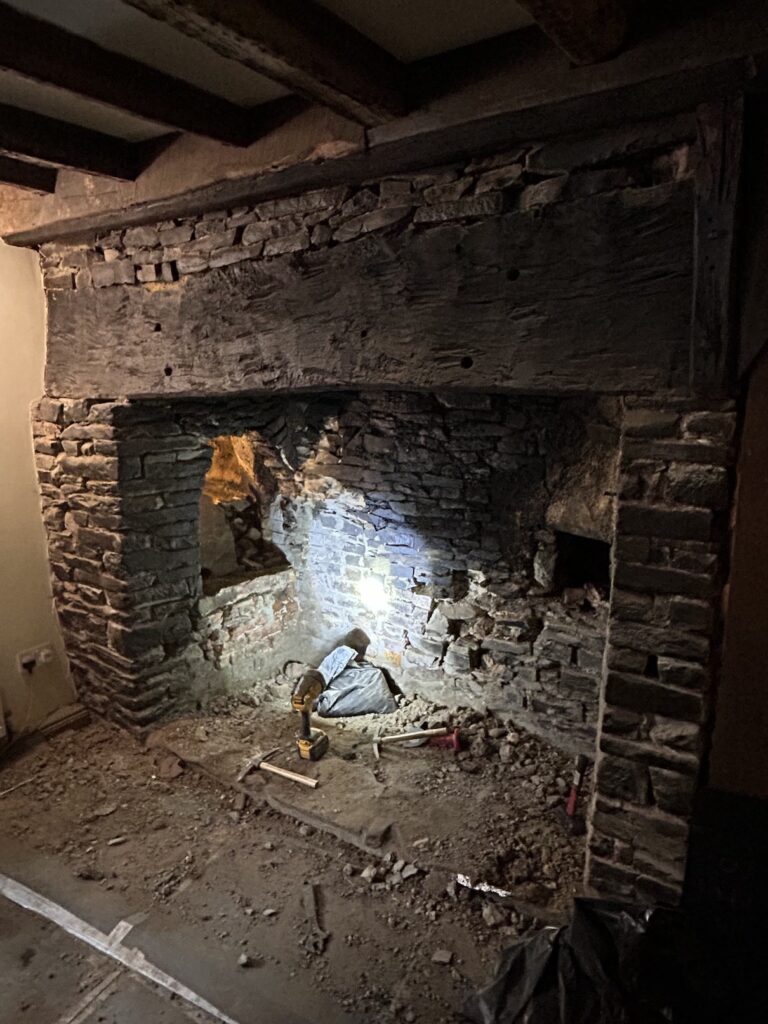
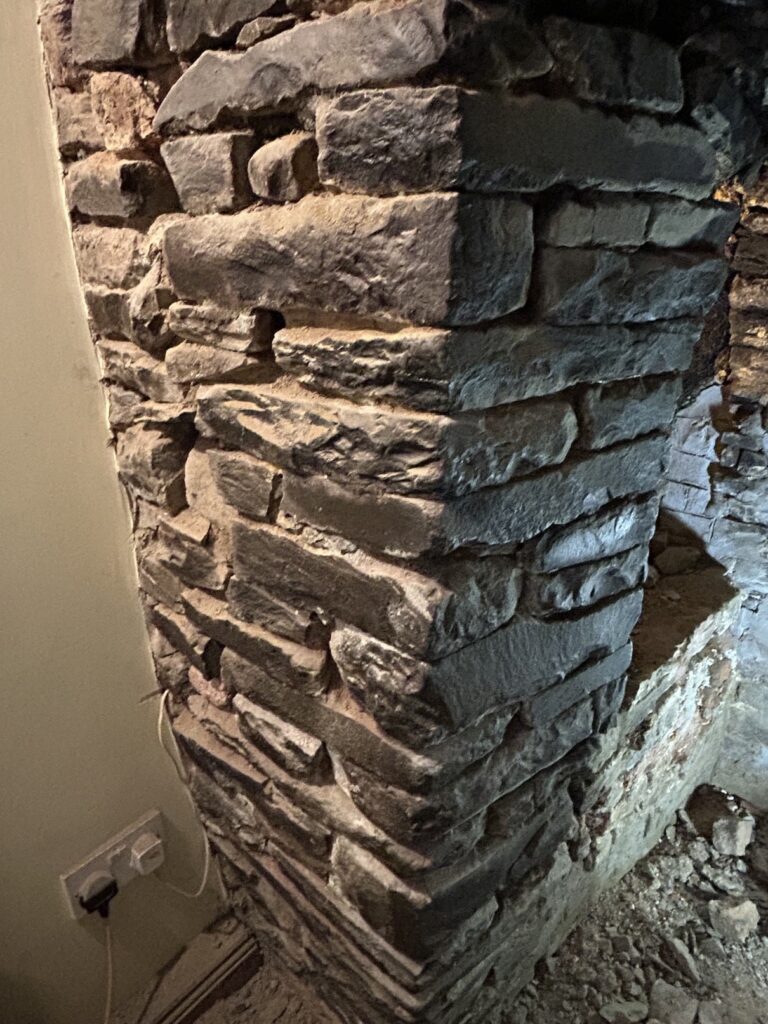
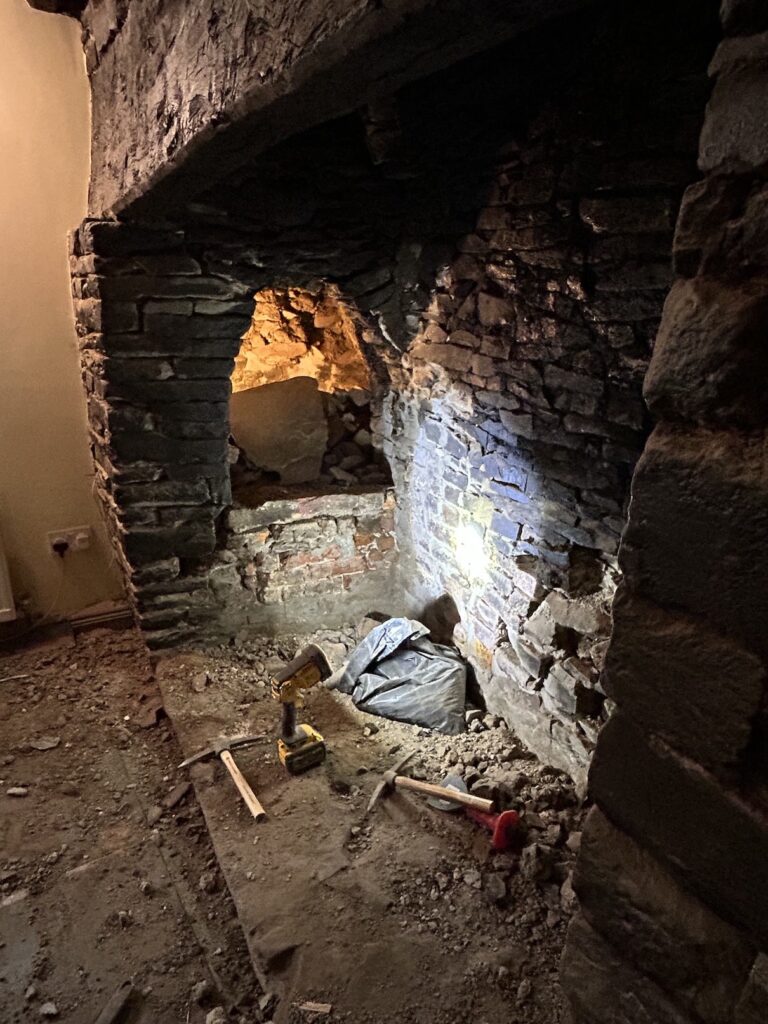
Another classic example of a very old house attacked by cement-based mortar applications. Although this beautiful old Malt House, situated in north Devon, had been repointed at some stage with a Cementous based mortar, it was still in relatively good shape. The chimney is very large and protrudes through the thatch, turning from stone to brick. The bread oven was once upon a time built in brick. Filled above with cob, stone, bones, clay, hair, and a classic Devonian oatmeal lime mortar. Our first task was to start removing all the fried brick, cob, and mess. Not an overly difficult task, due to the integrity of the structure being rather weak and loose. A mere couple of swings of the pick and it collapsed. Fortunately, we were working very gingerly, taking great care with every little excavational swing of the pick. It’s always surprising how well these old buildings stay intact, with the sheer force of compression just holding everything together. Then, one little piece of the proverbial compression puzzle dislodged, and things come down, quickly!
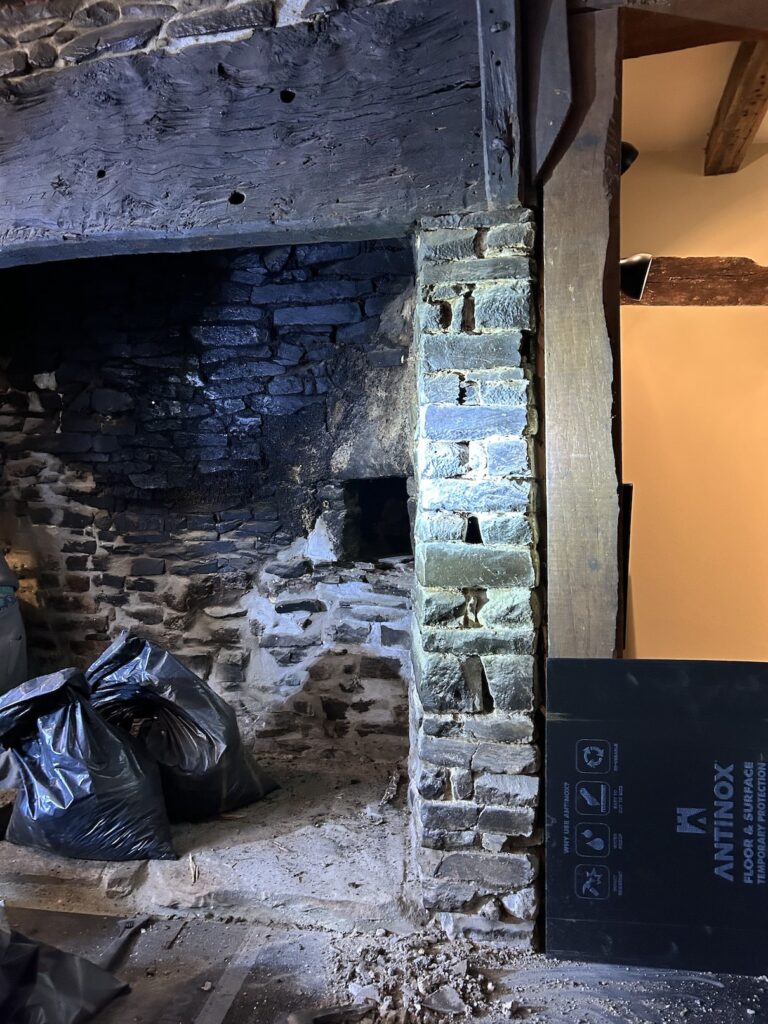
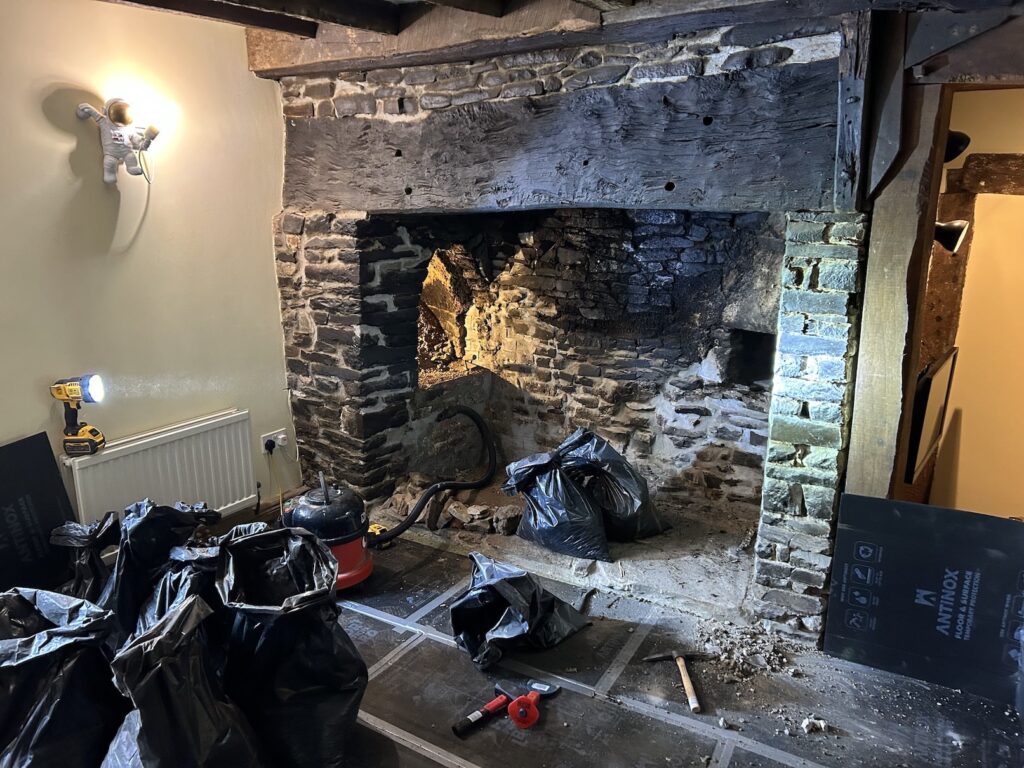
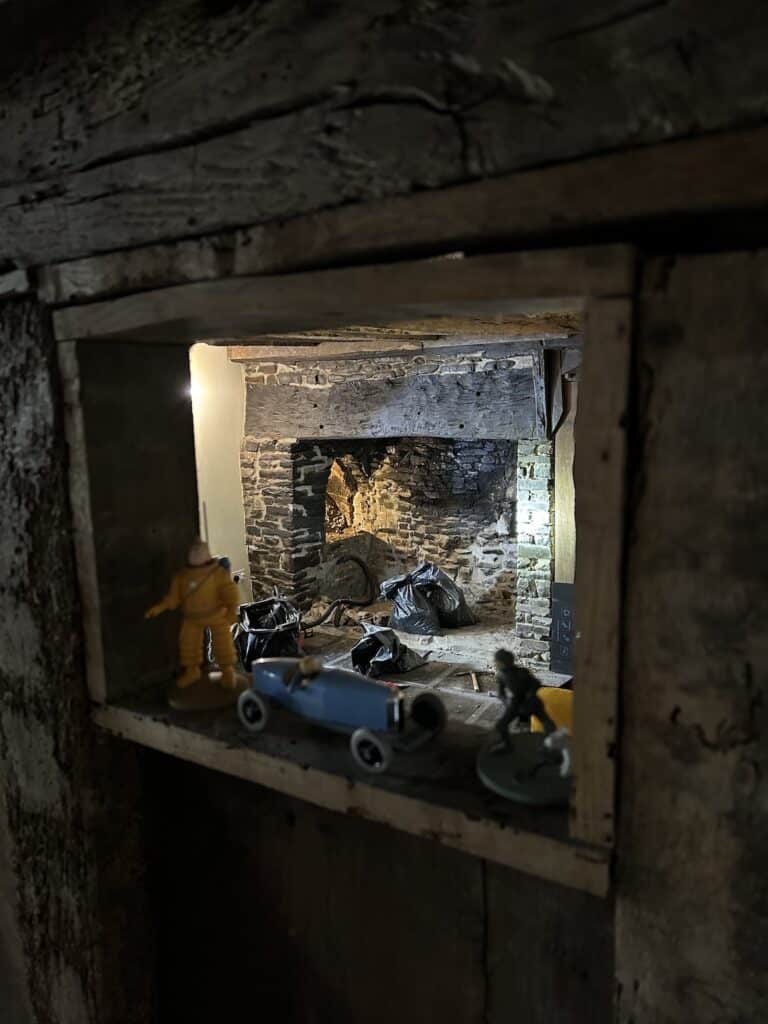
An alarming amount of debris, filled rubble bags later and we’re looking cleaner.
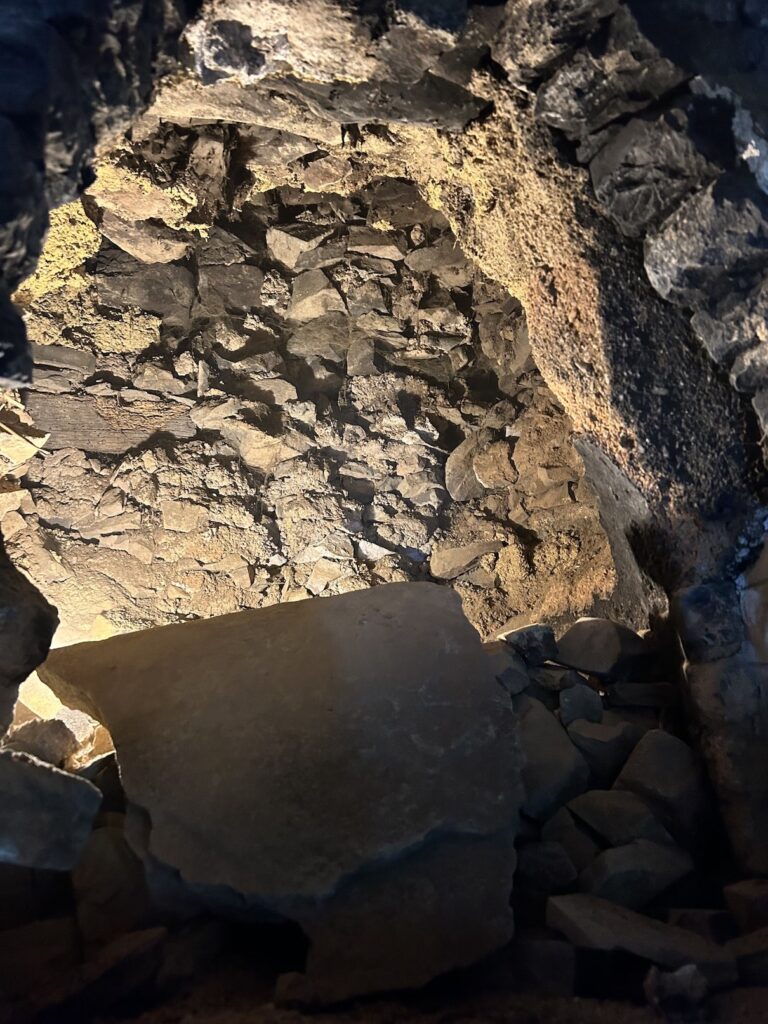
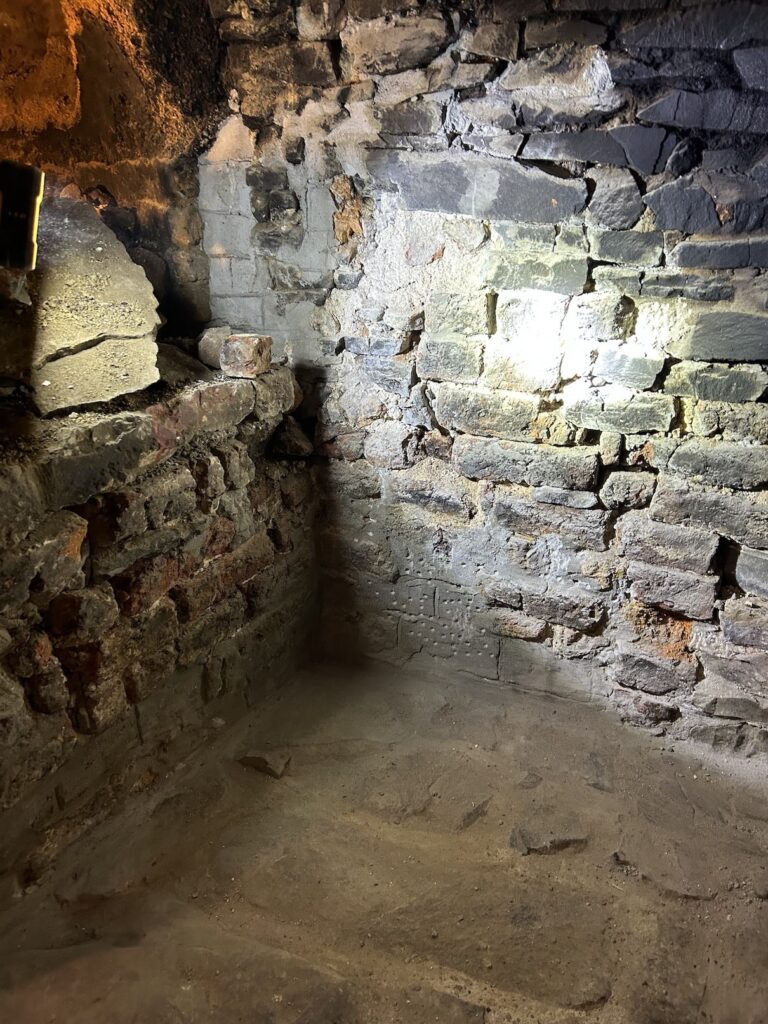
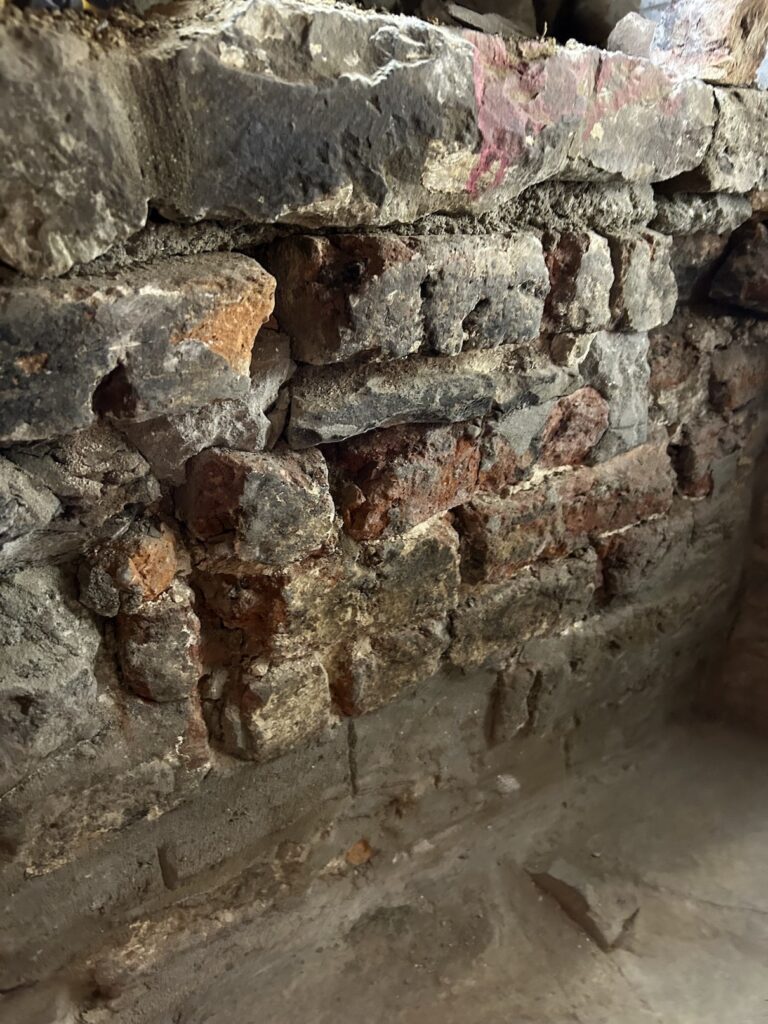
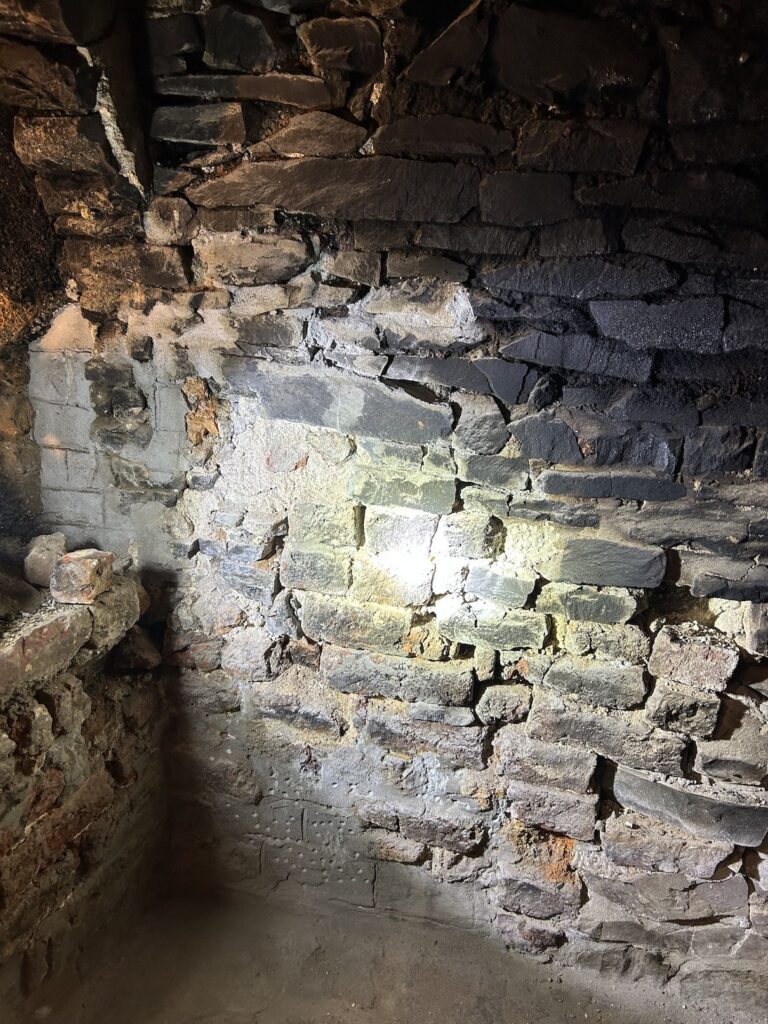
The bread oven needed stabilising. Our plasterer started by sticking all the loose ends back together with a sticky lime mortar. This ensured no more debris would fall from above, whilst working inside the oven. Next, he under cloaked the whole inside of the oven with a stainless-steel mesh woven to shape with Heli-Bar. After he reached a satisfactory shape to the original, a decent dashing of lime mortar was then squeezed through the mesh until largely backfilled. After the lime had dried out, another under cloak of the same method was implemented. Providing more strength with a secondary layer of stainless-steel mesh woven together with Heli-Bar. The strength of this new oven under armour is now far superior to before, and a nice solution to a rather complicated task. The original oven would have been built prior to all the above walls and chimney stack, so working in reverse had its moments indeed.
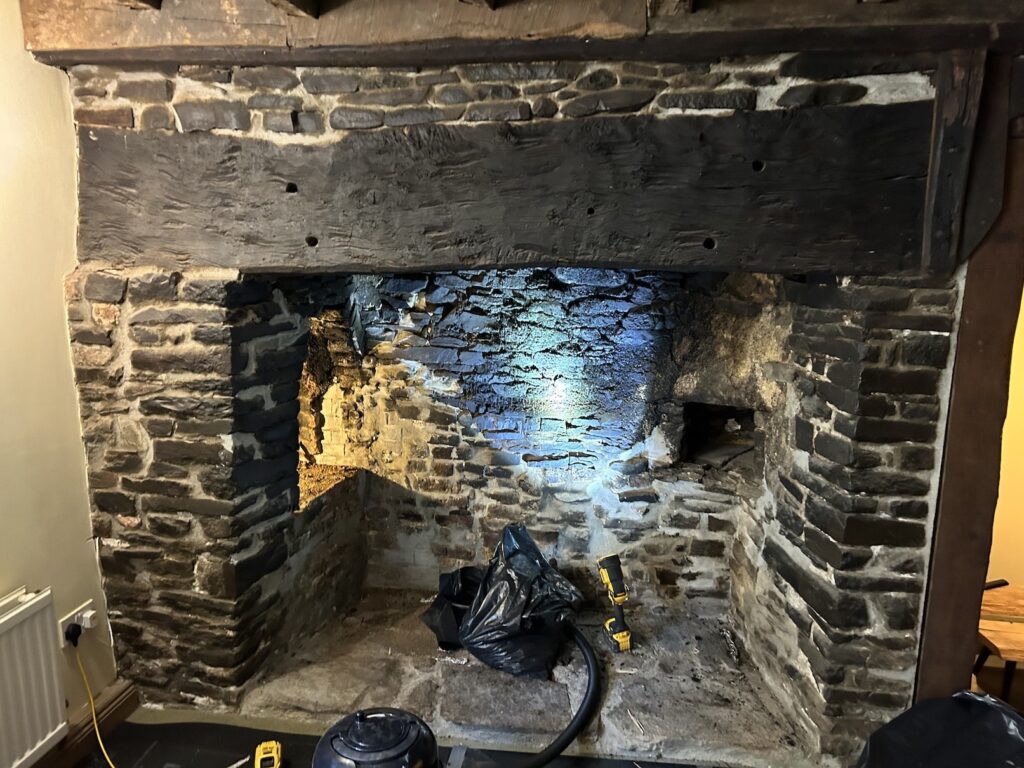
We were asked to retain anything that wasn’t a total crumbling disaster, so a few bricks remained inside the inglenook and a few inside the oven itself. Although we were uncertain to whether these bricks were original, they were undoubtably very, very old.
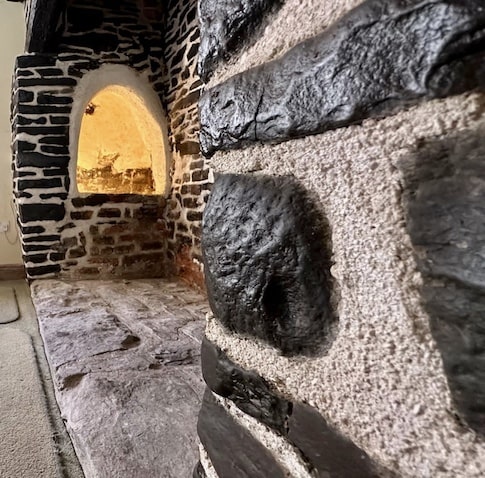
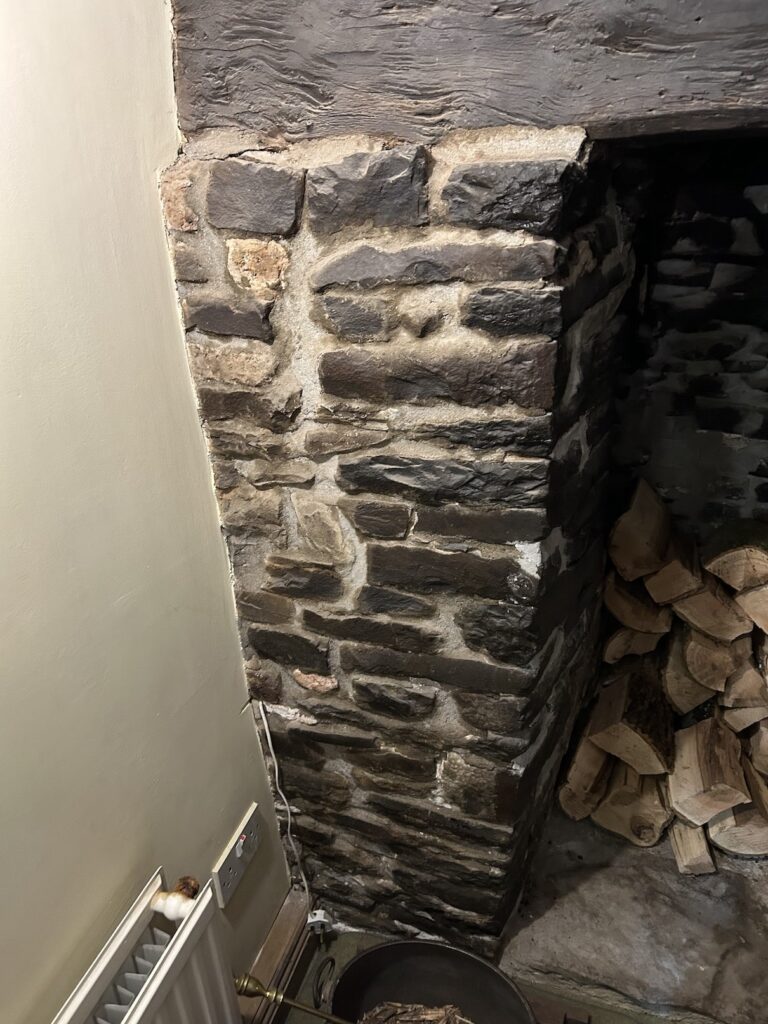
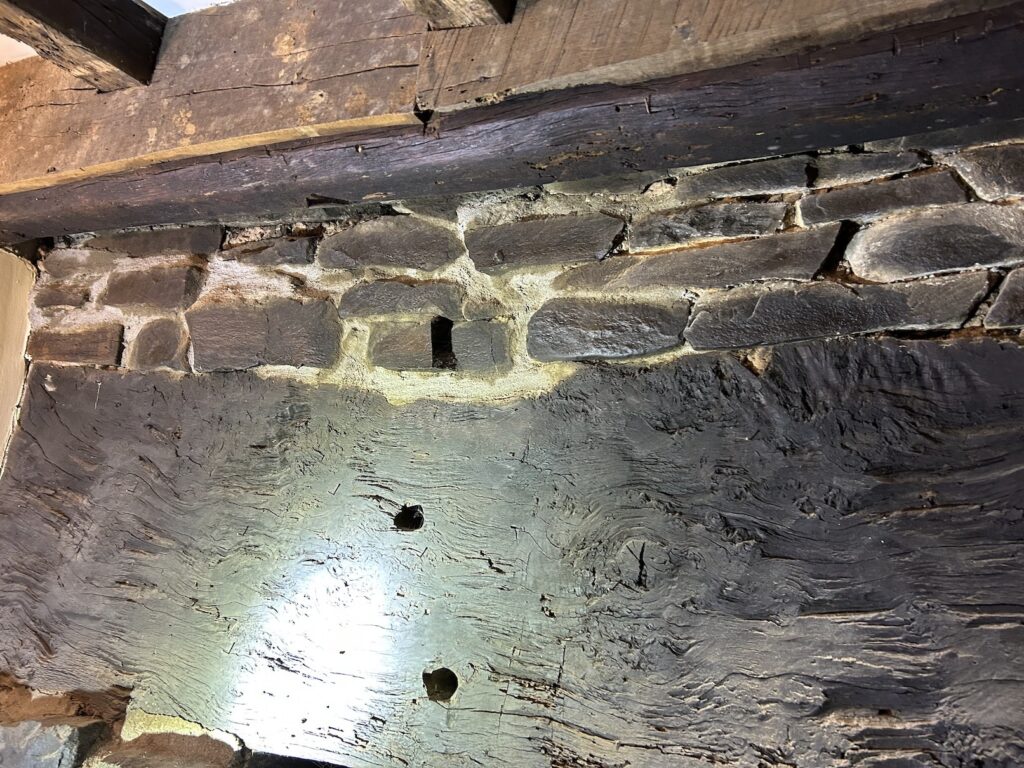
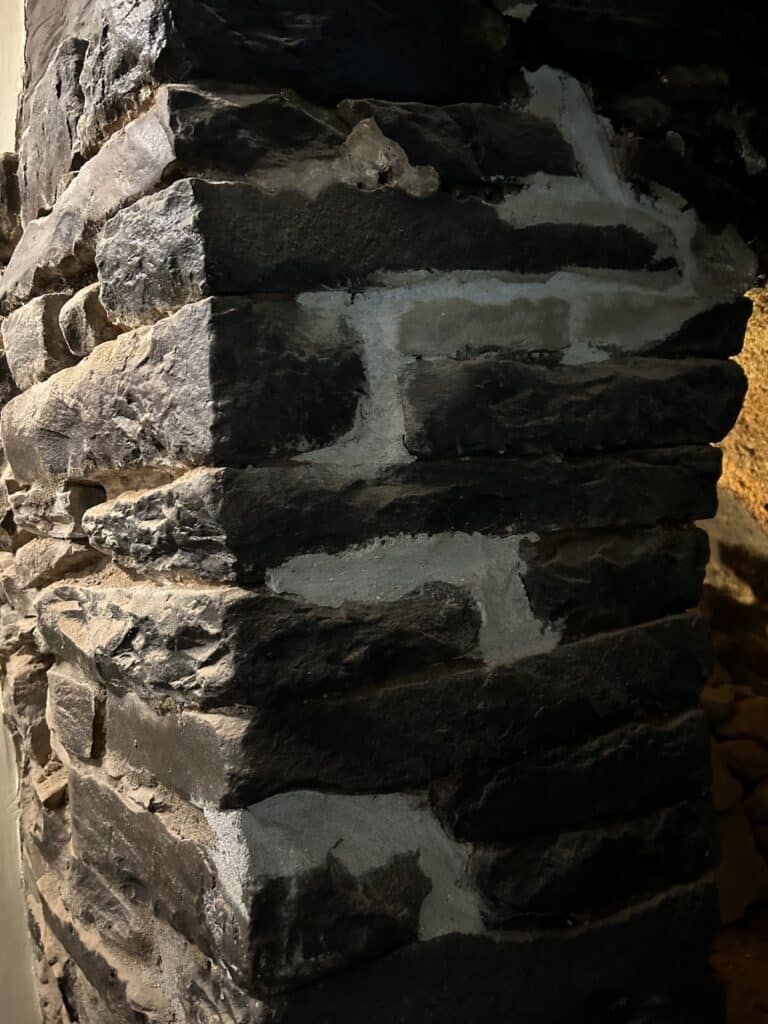
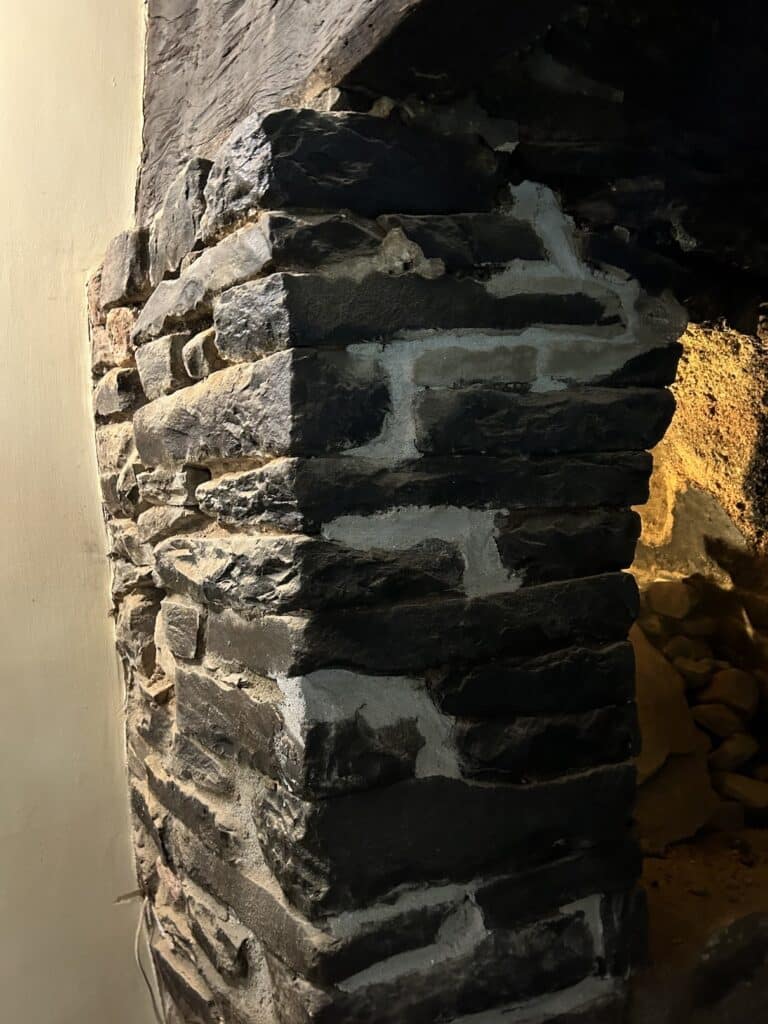
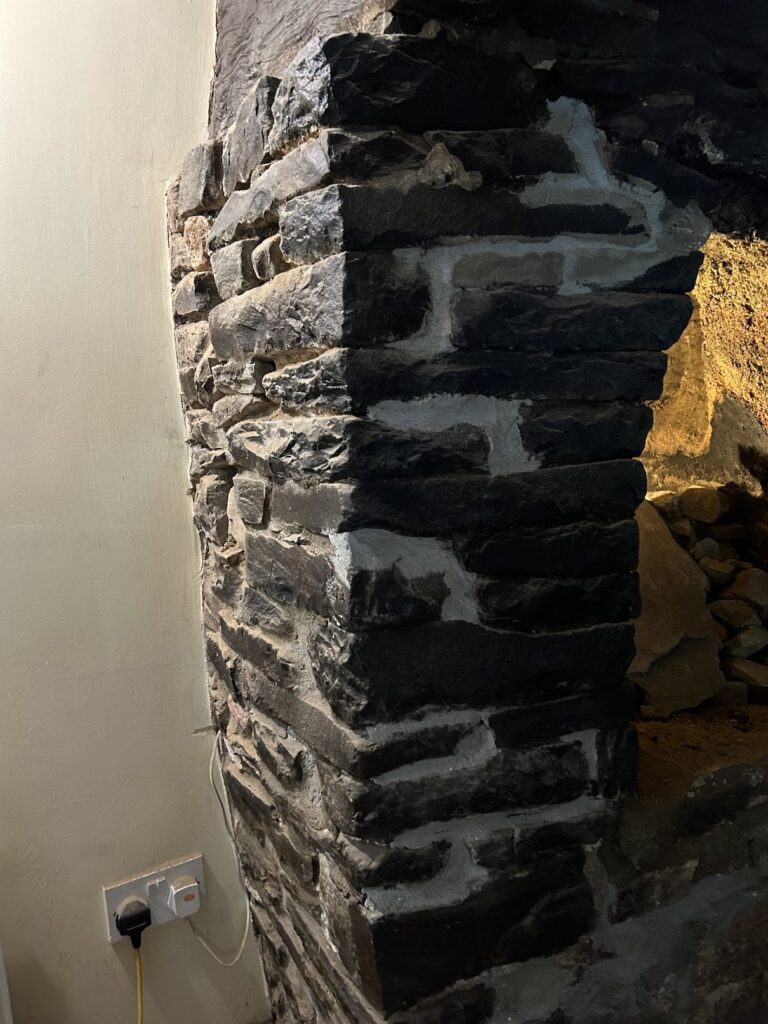
Once the bread oven was complete, the inglenook was repointed in a lime mortar.
Due to being a focal point of the living room we were asked to keep the stonework as clean as possible. So, we made a conscious effort to clean up rigorously once the lime mortar had cured. The finish looked very pleasing to the eye, and we are happy with the outcome of our medieval inglenook project.