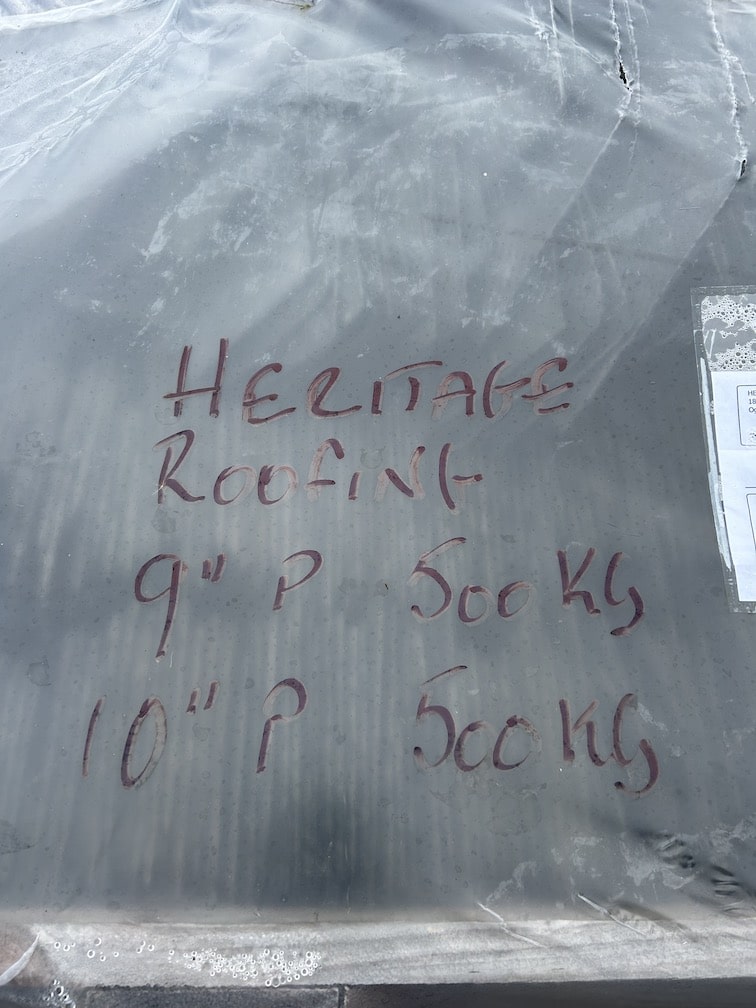
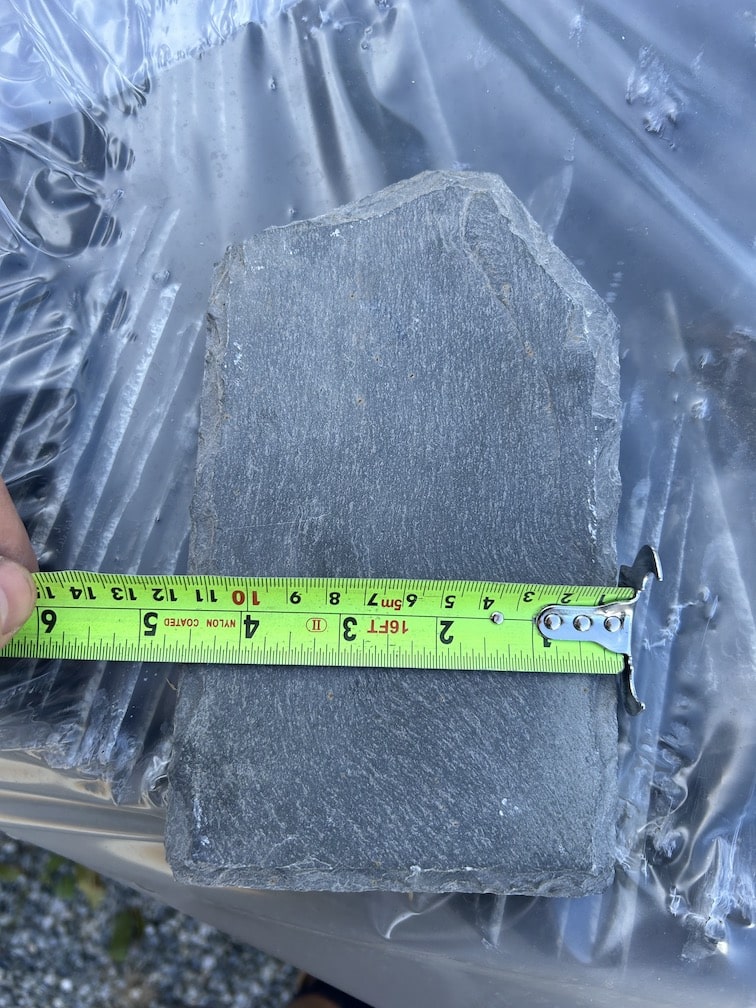
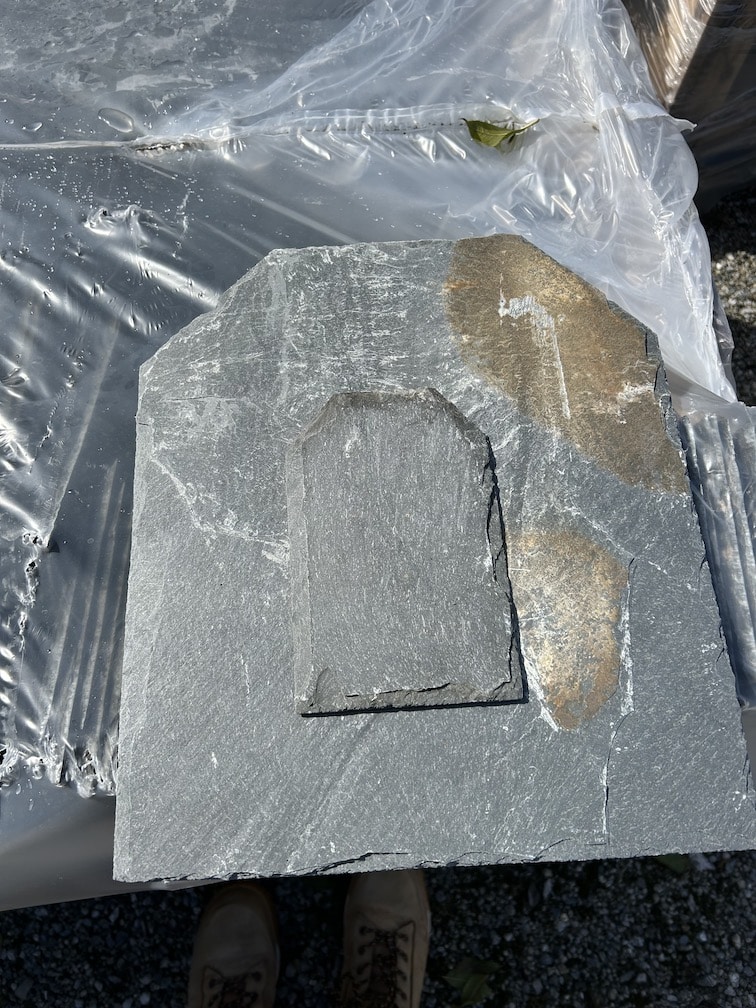
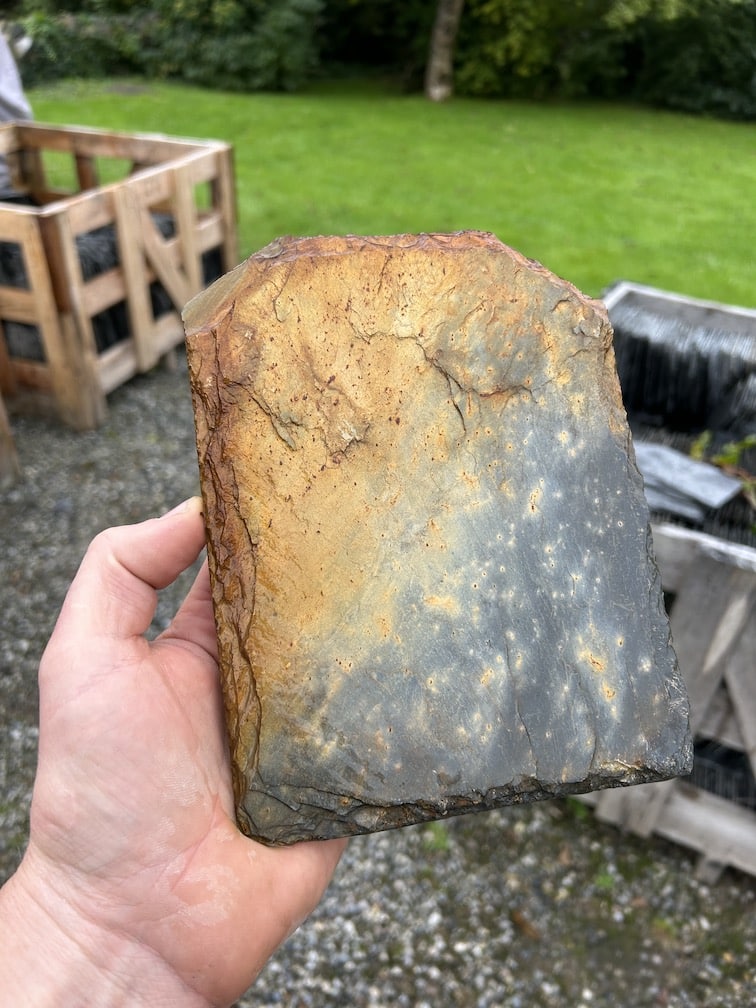
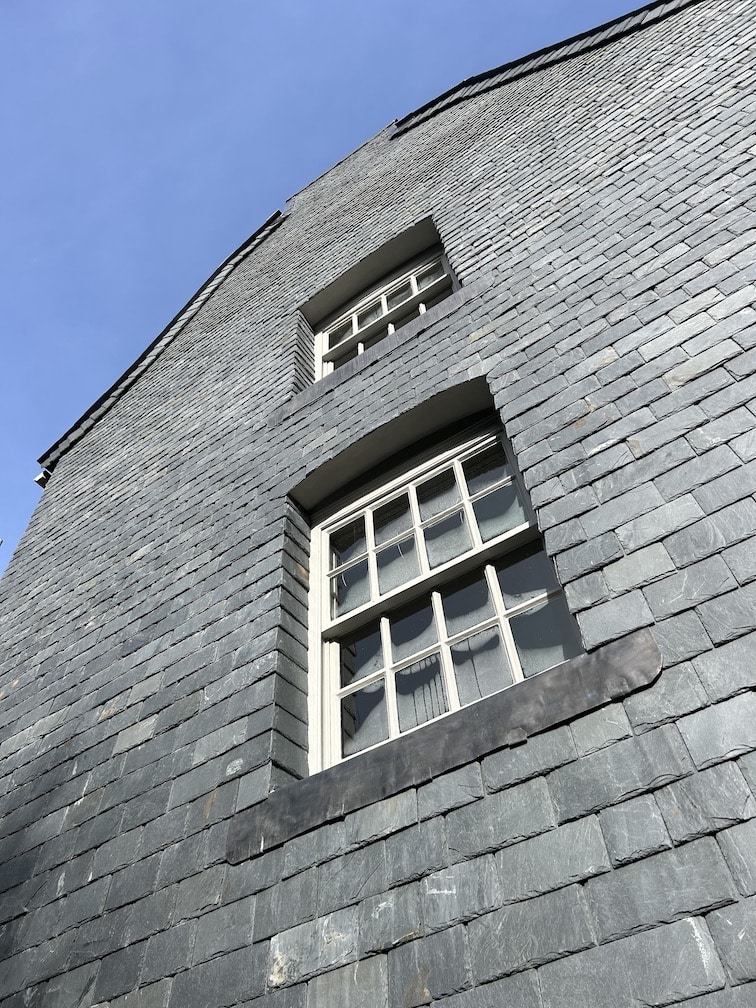
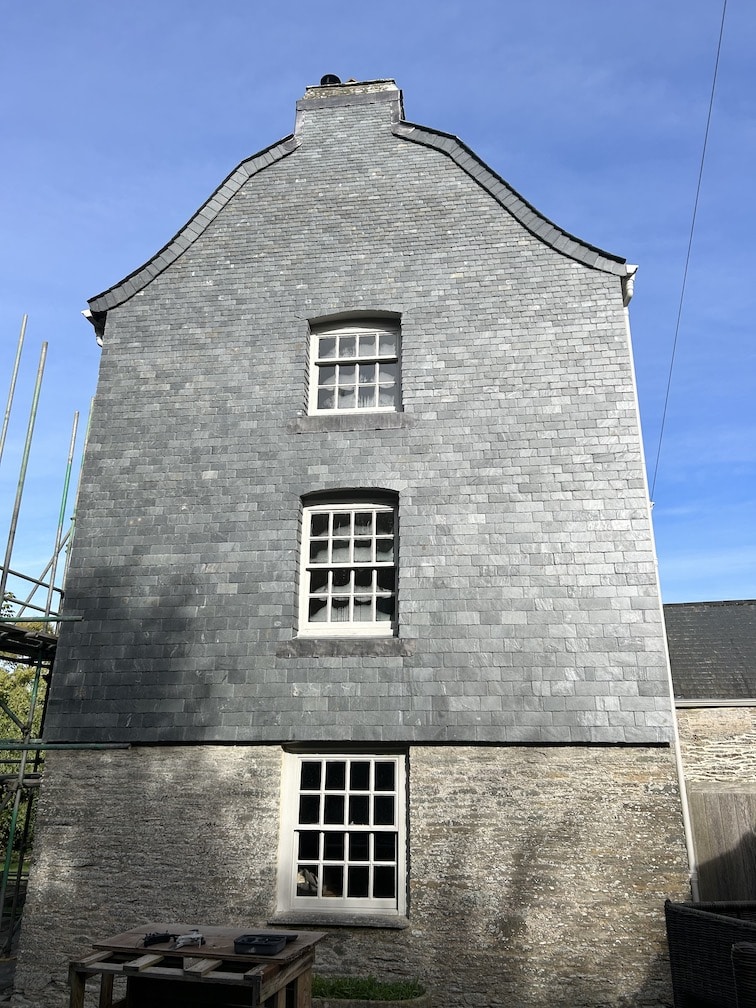
Each year we are fortunate enough to use locally quarried new Delabole slate. Occasionally utilising traditional systems and laying techniques.
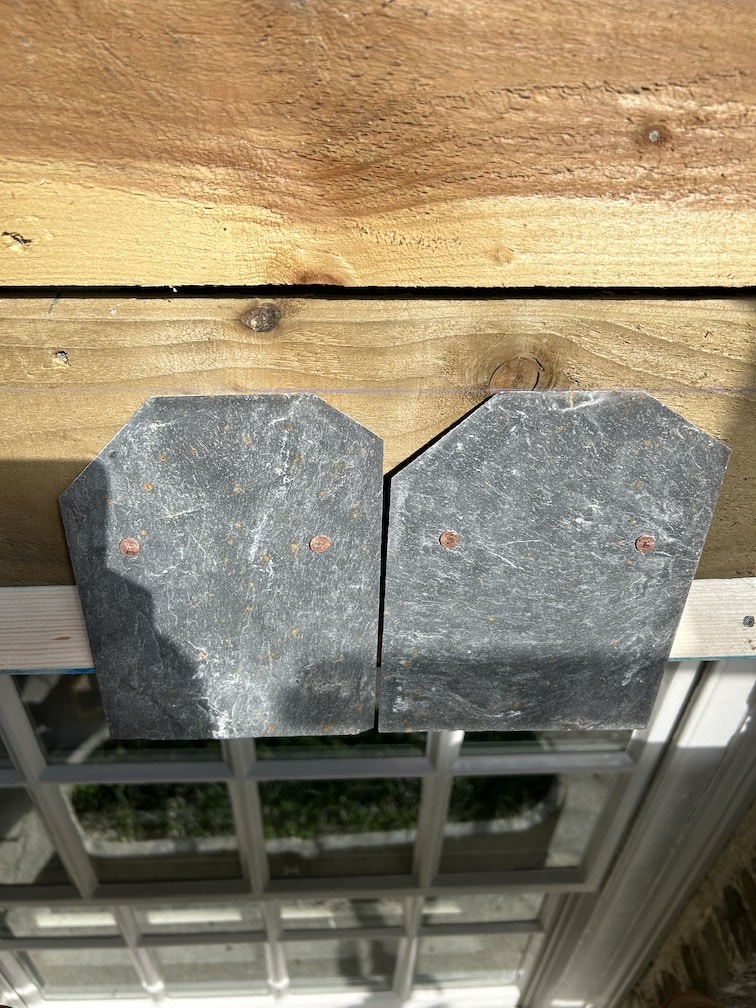
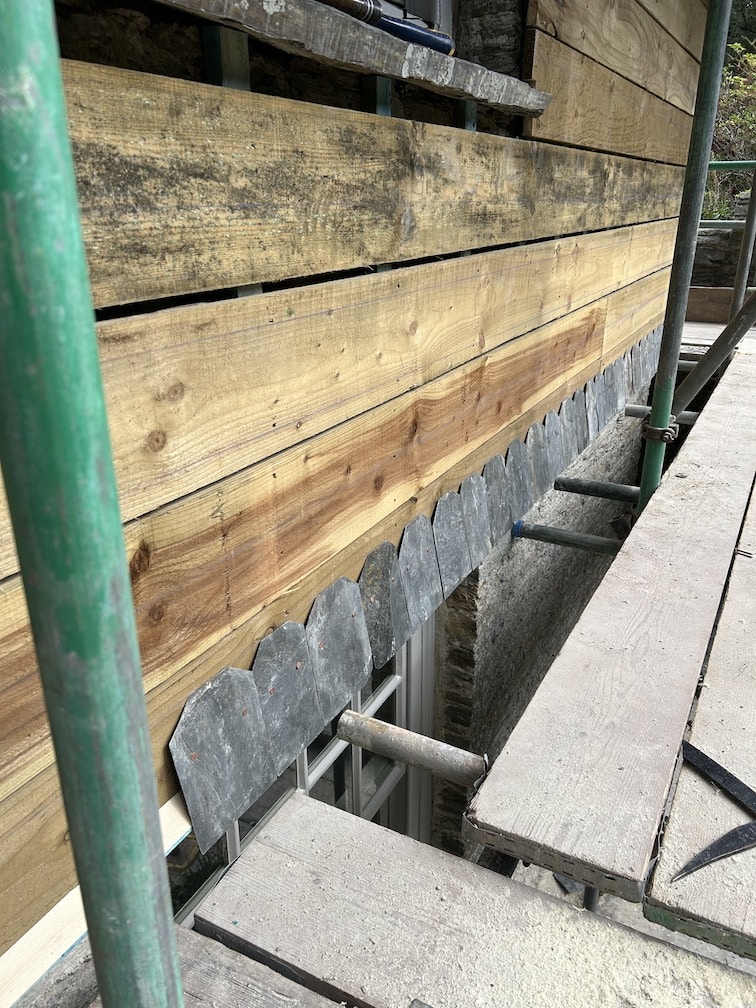
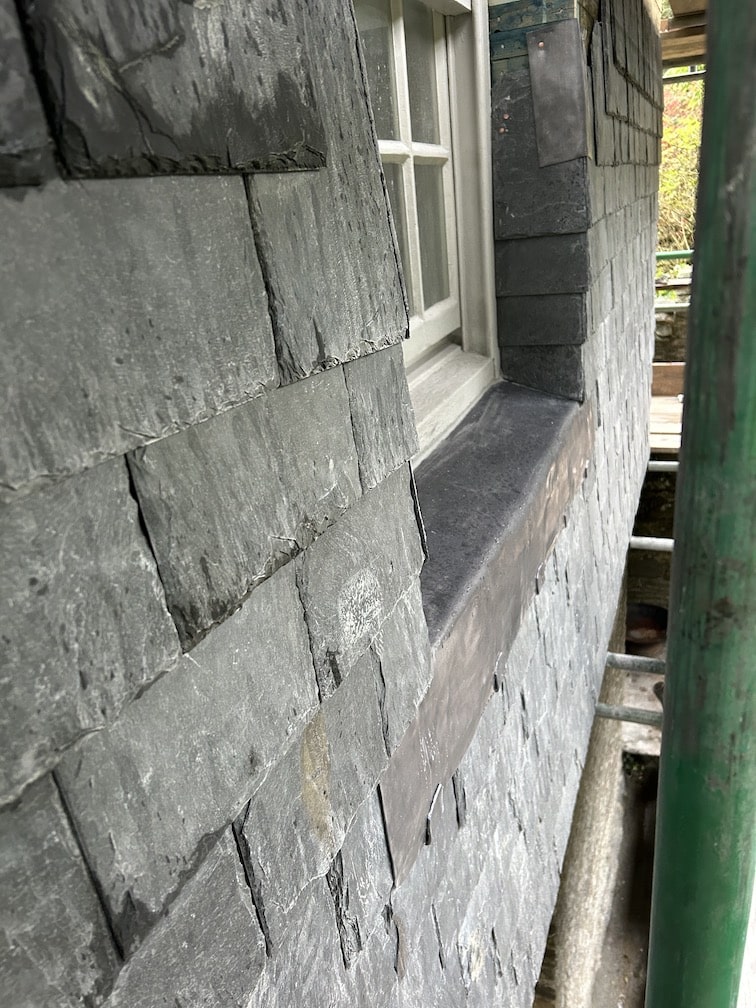
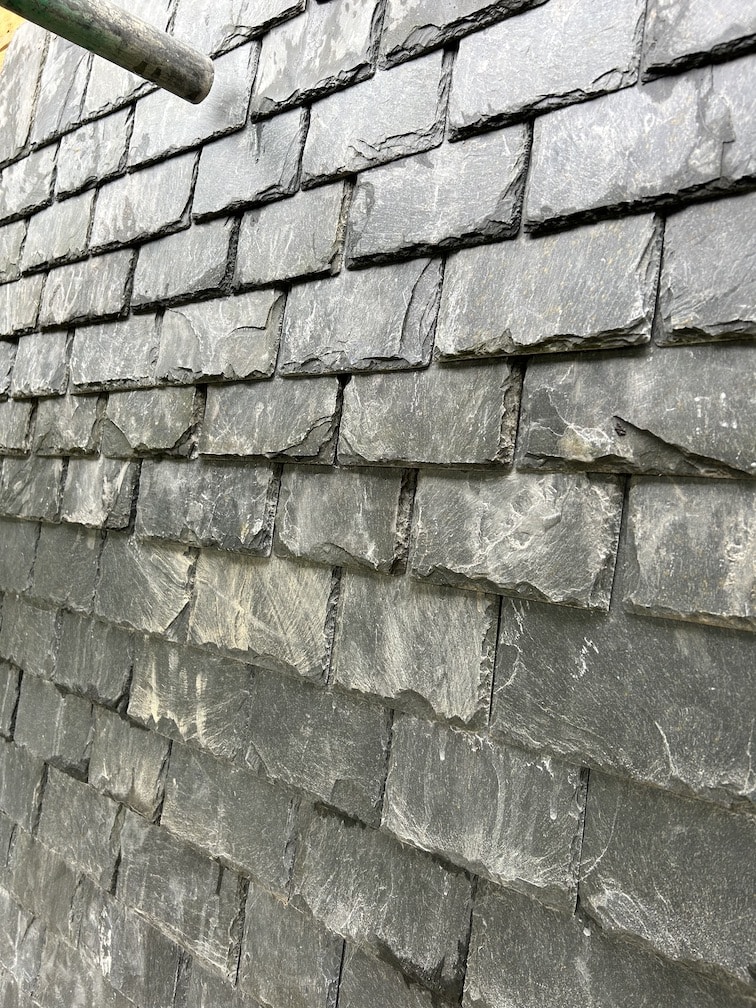
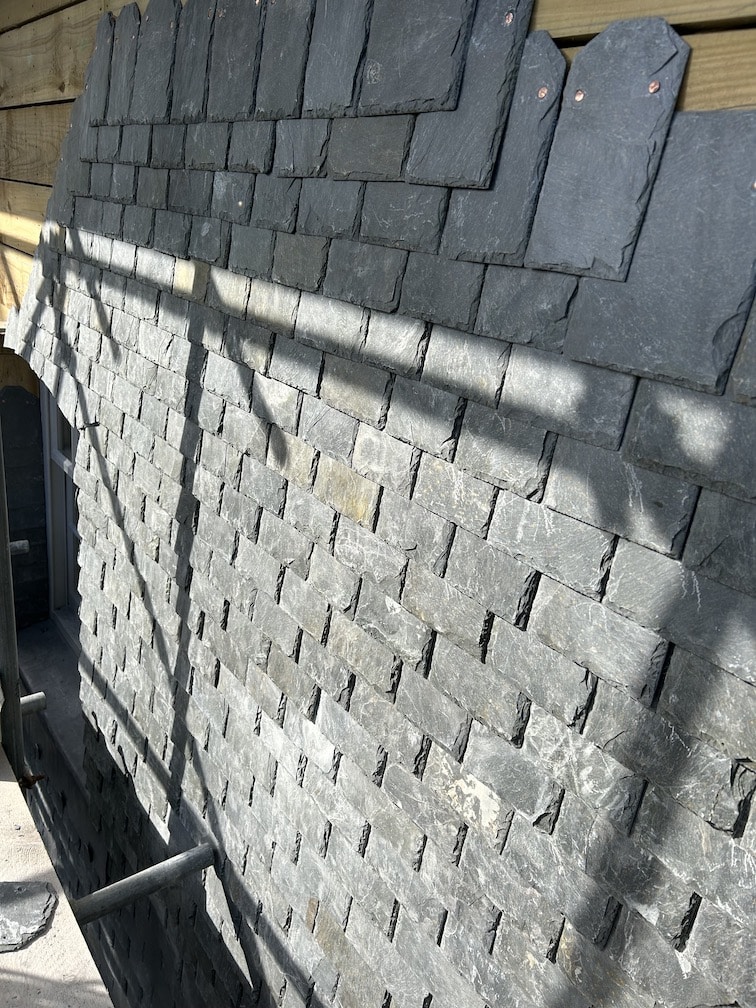
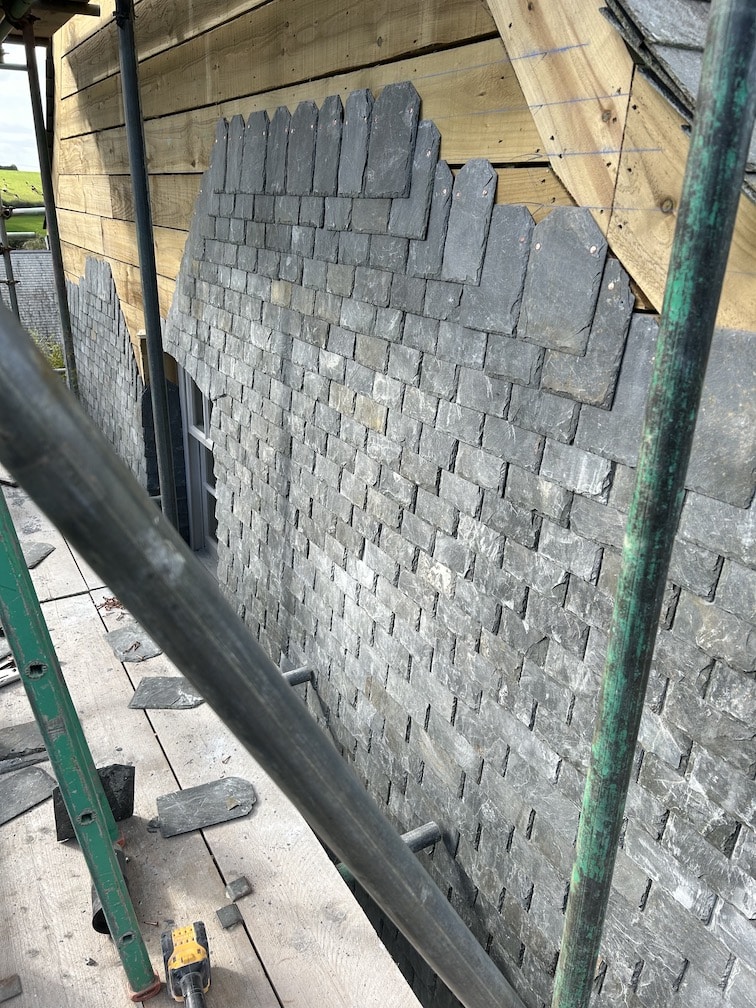
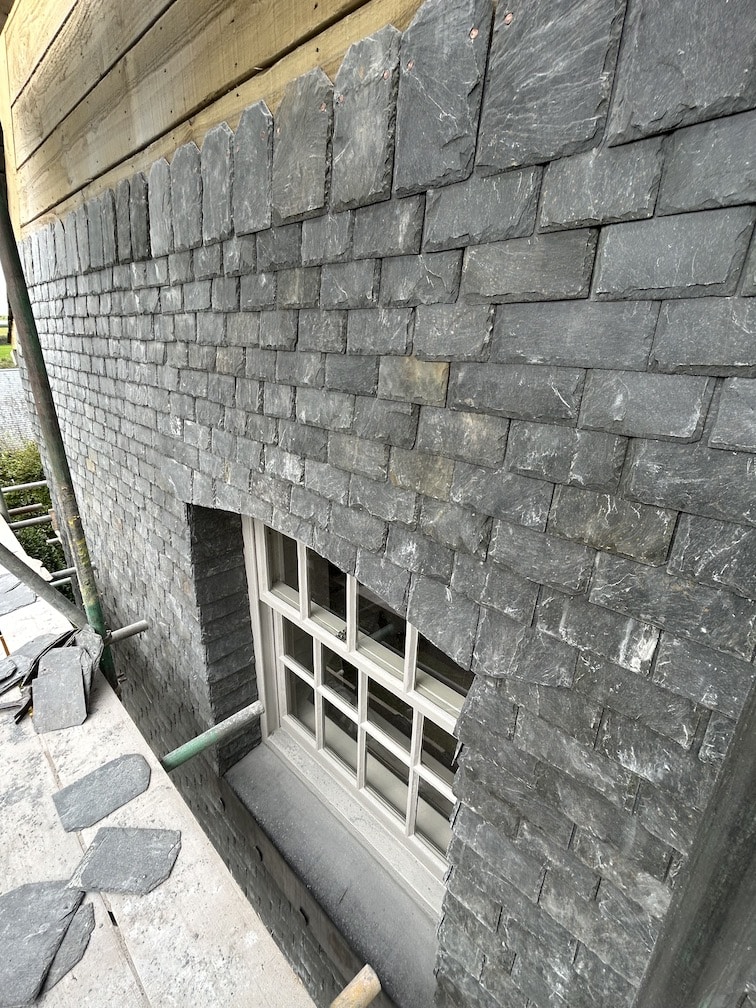
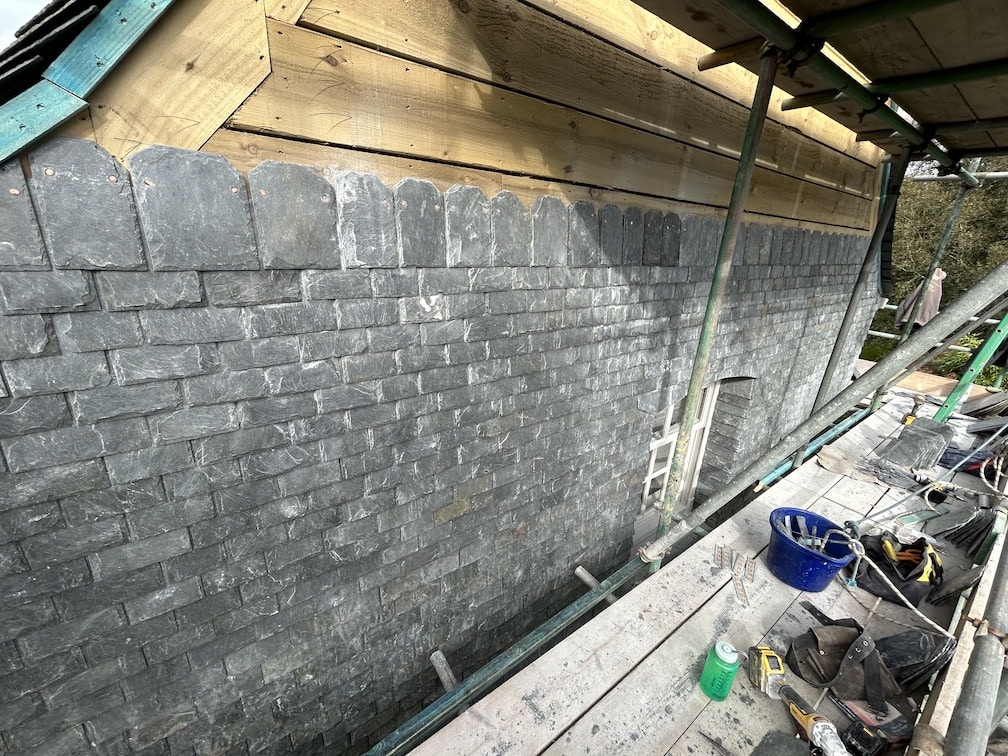
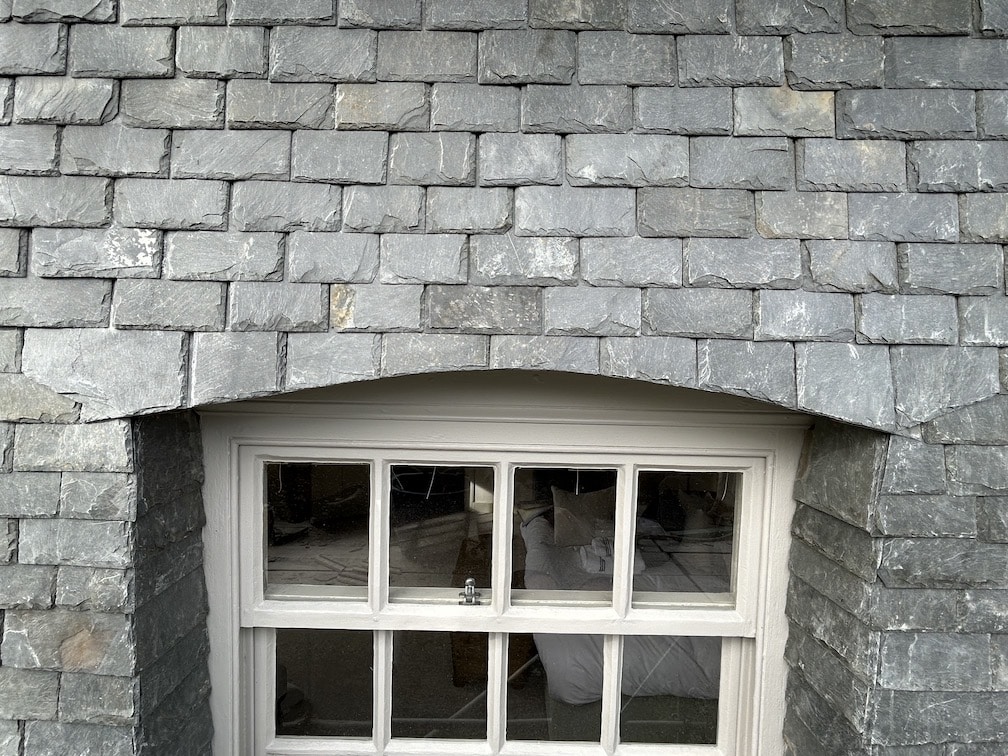
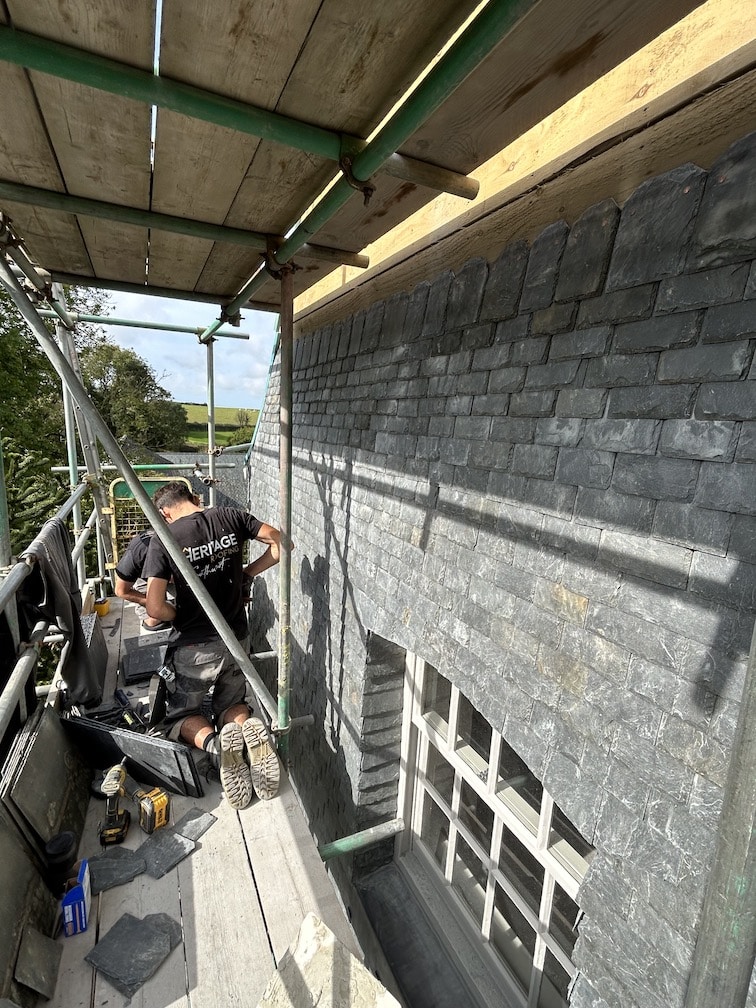
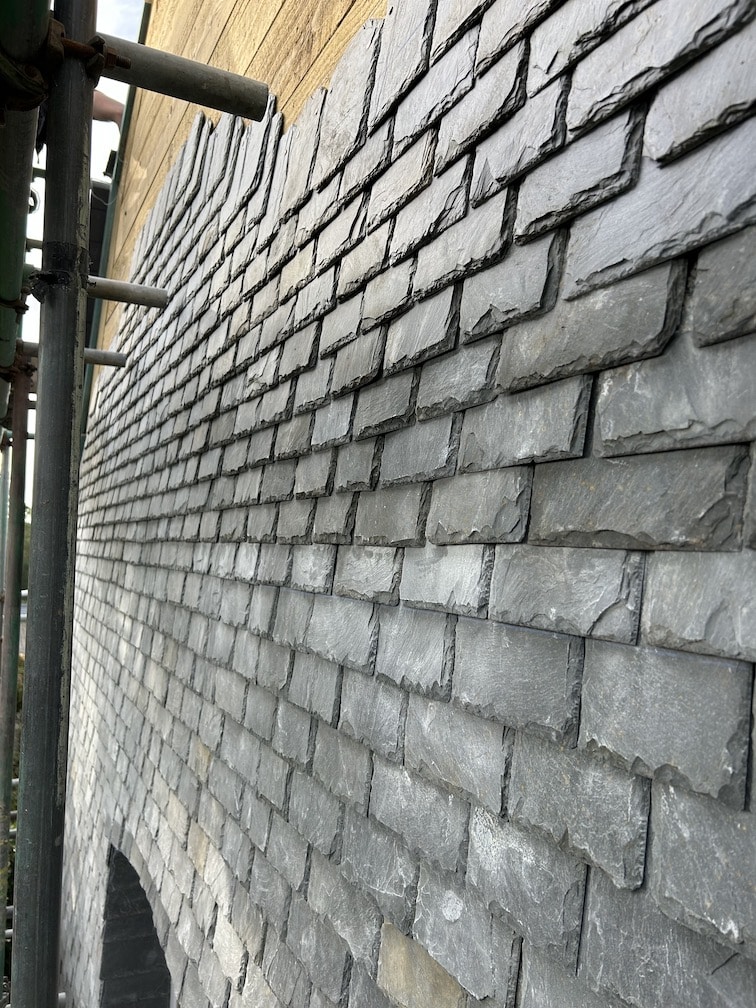
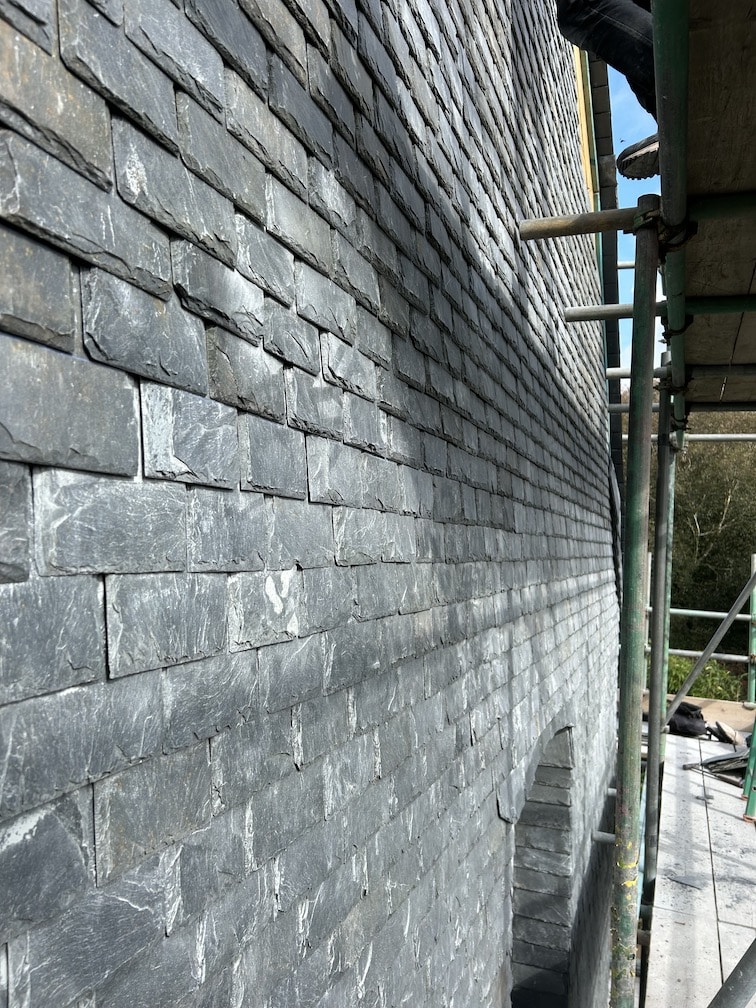
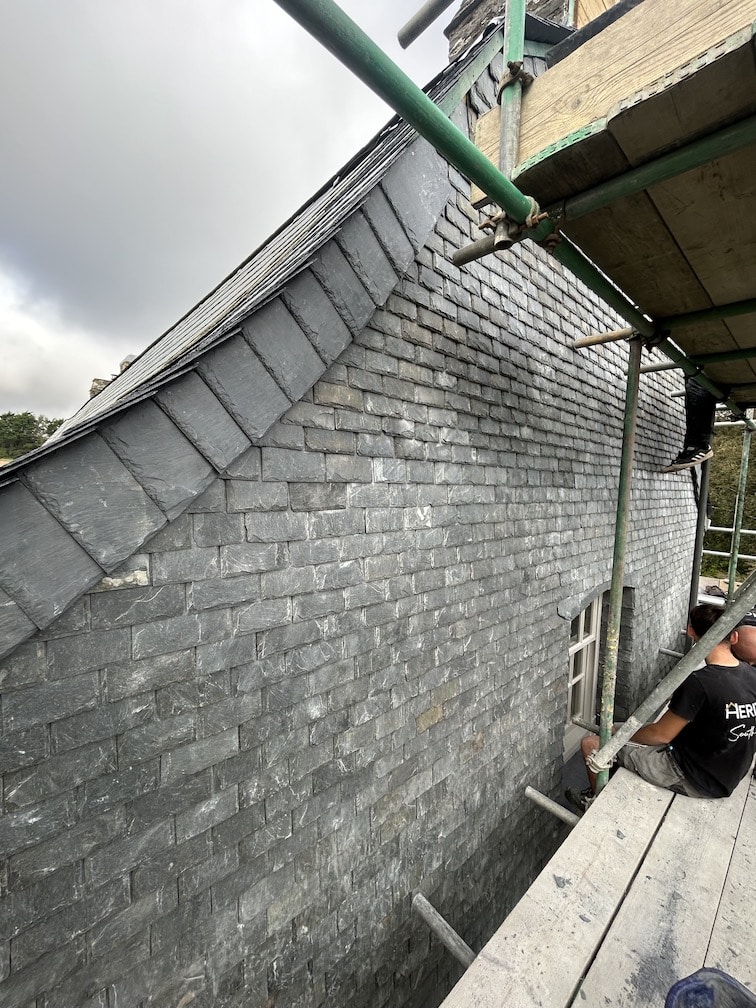
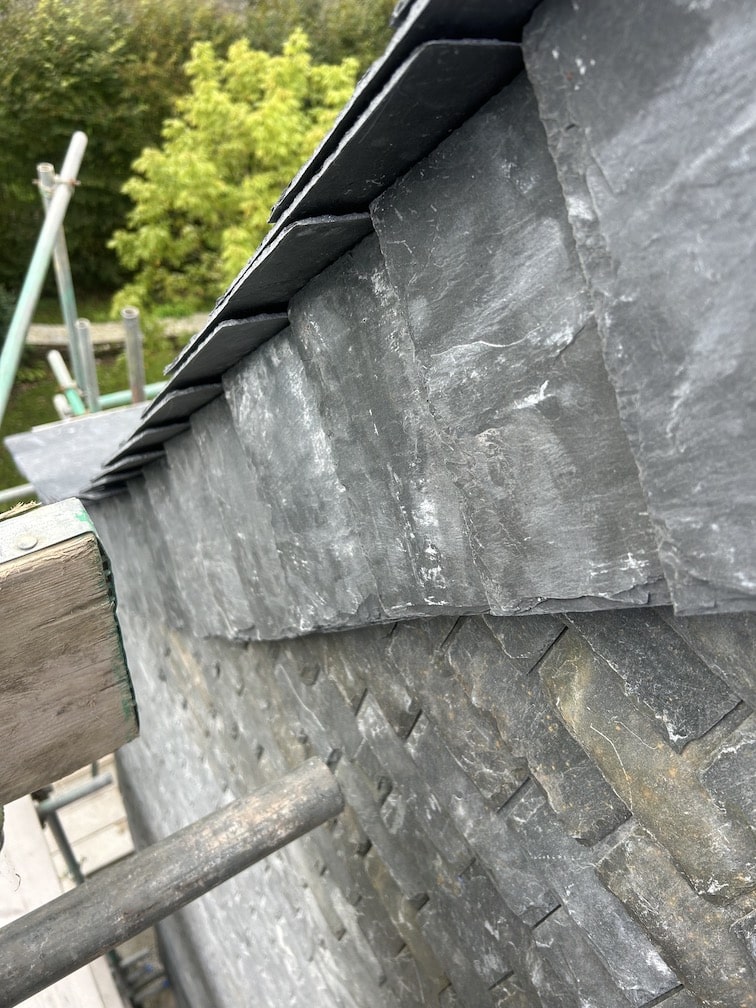
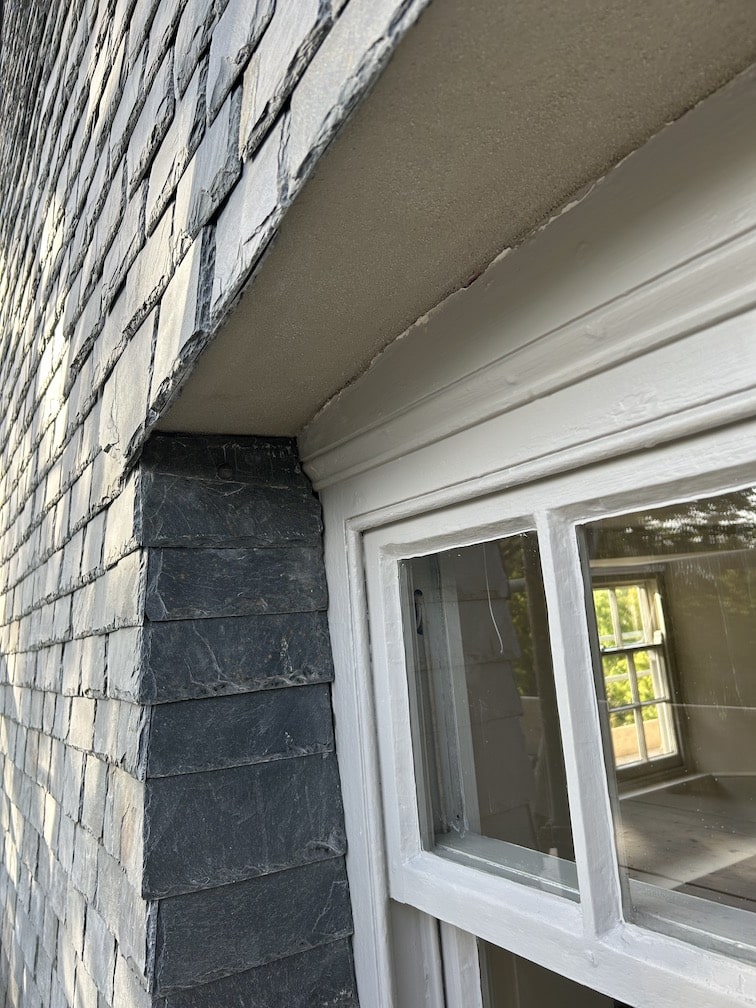
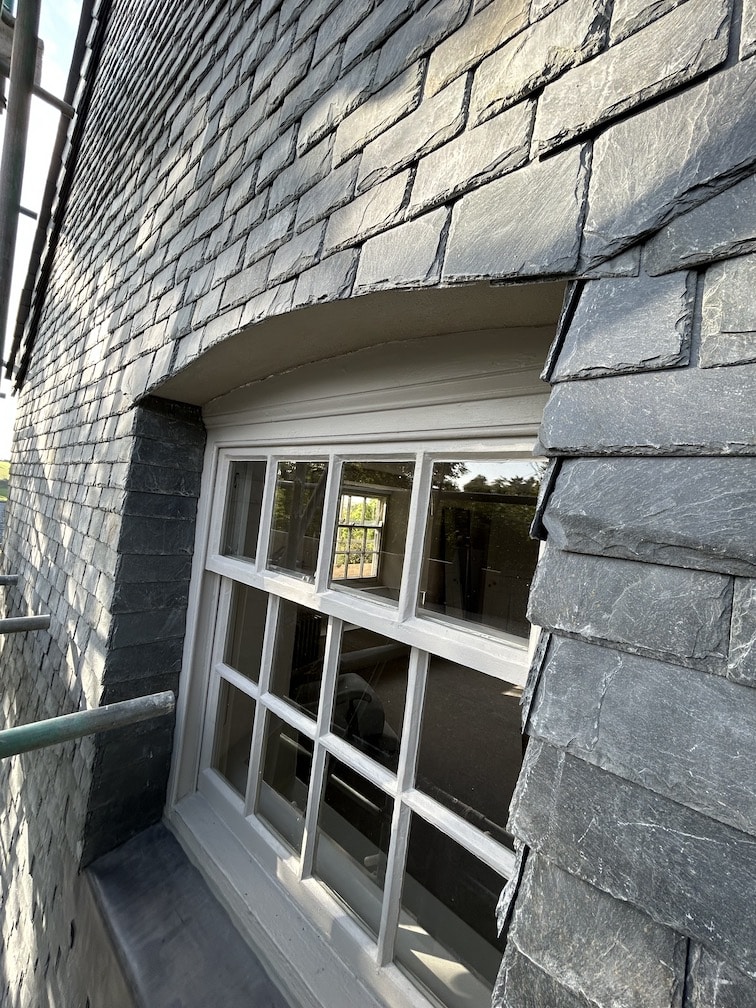
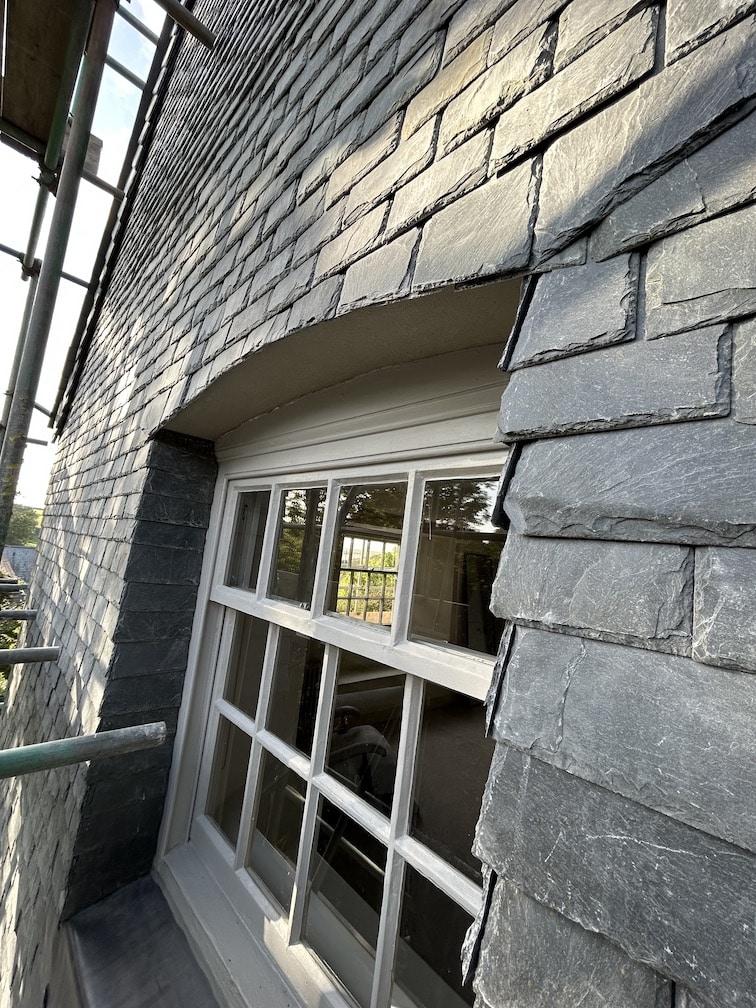
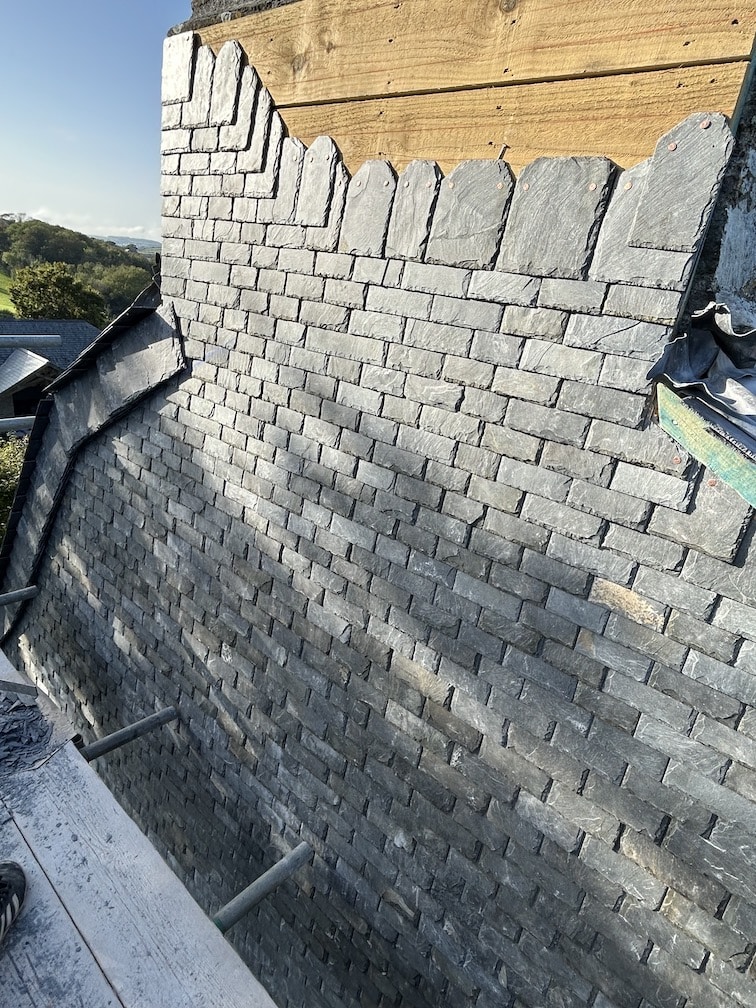
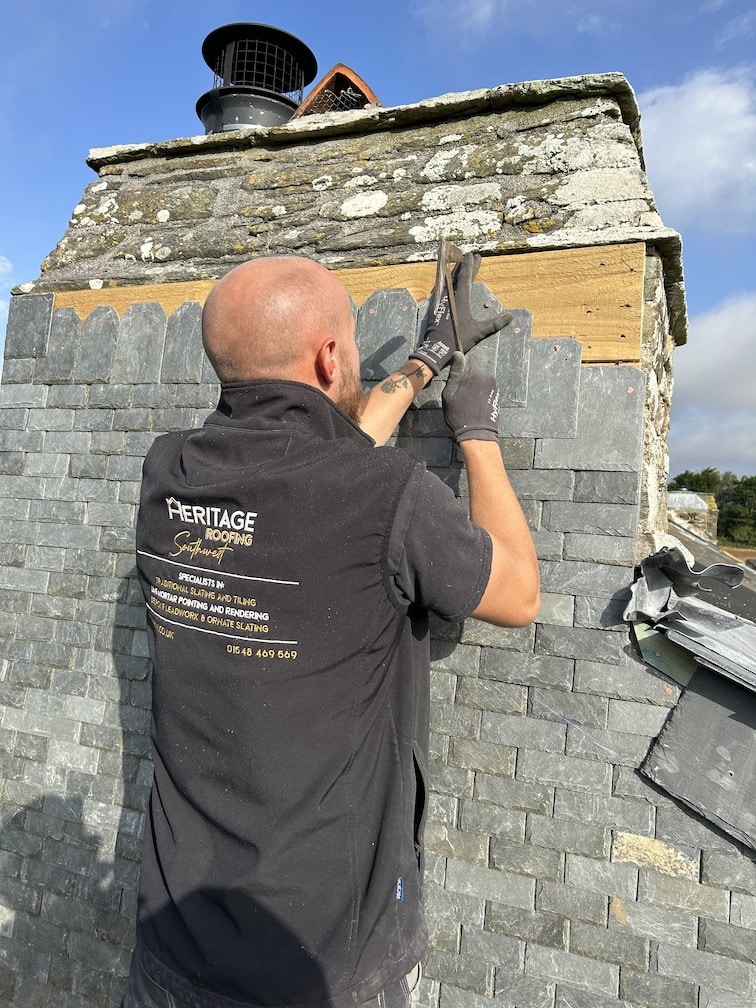
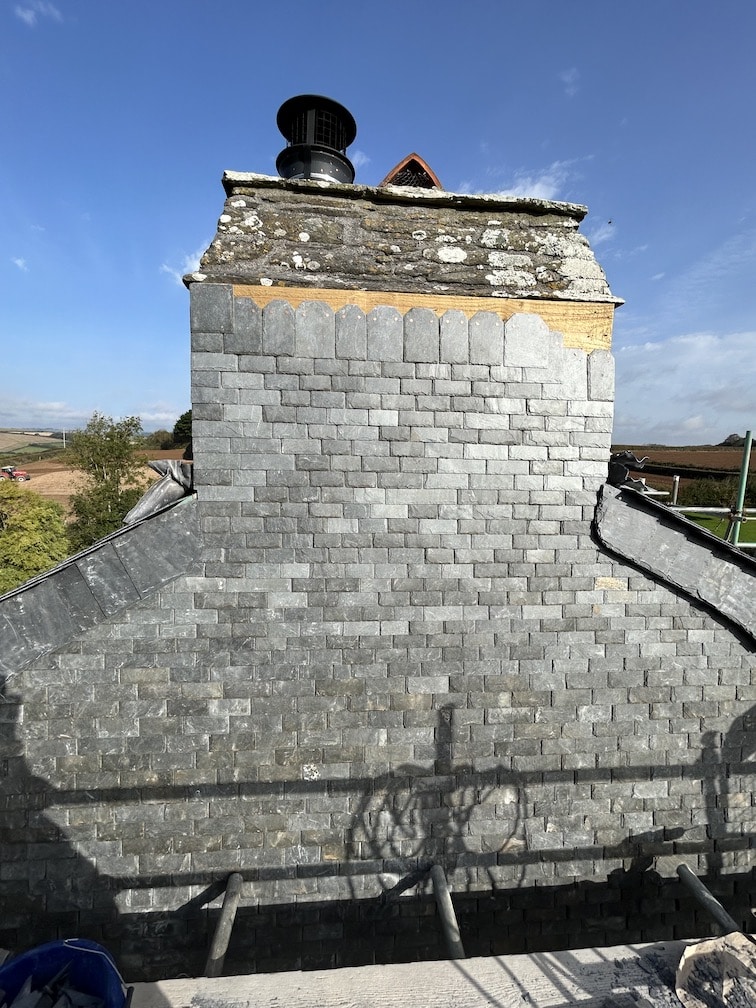
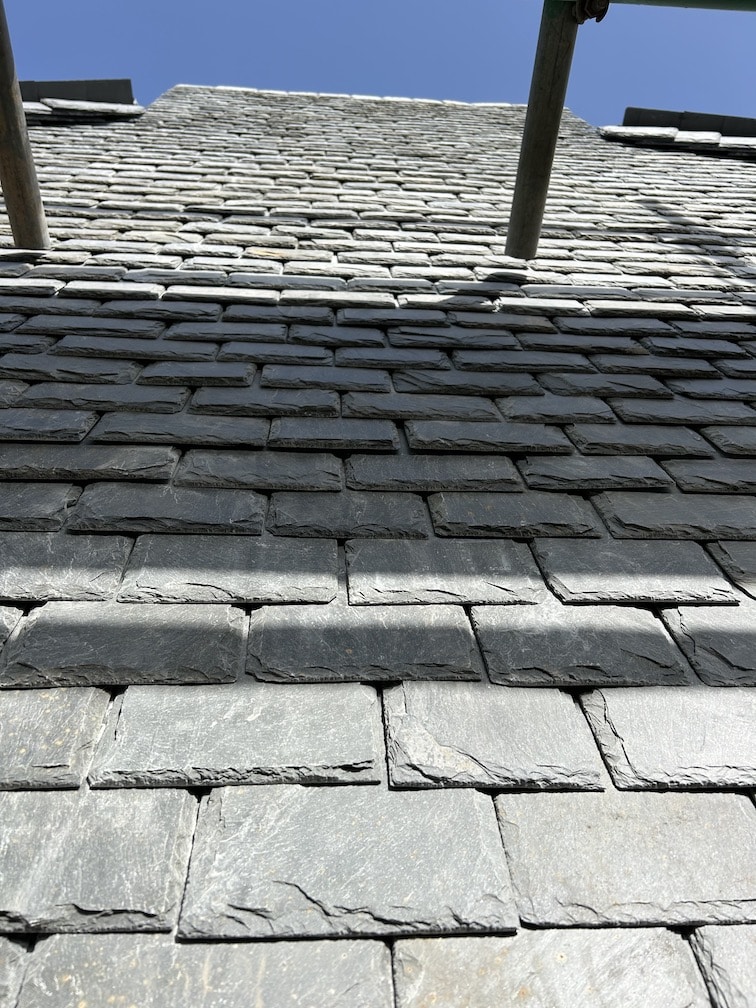
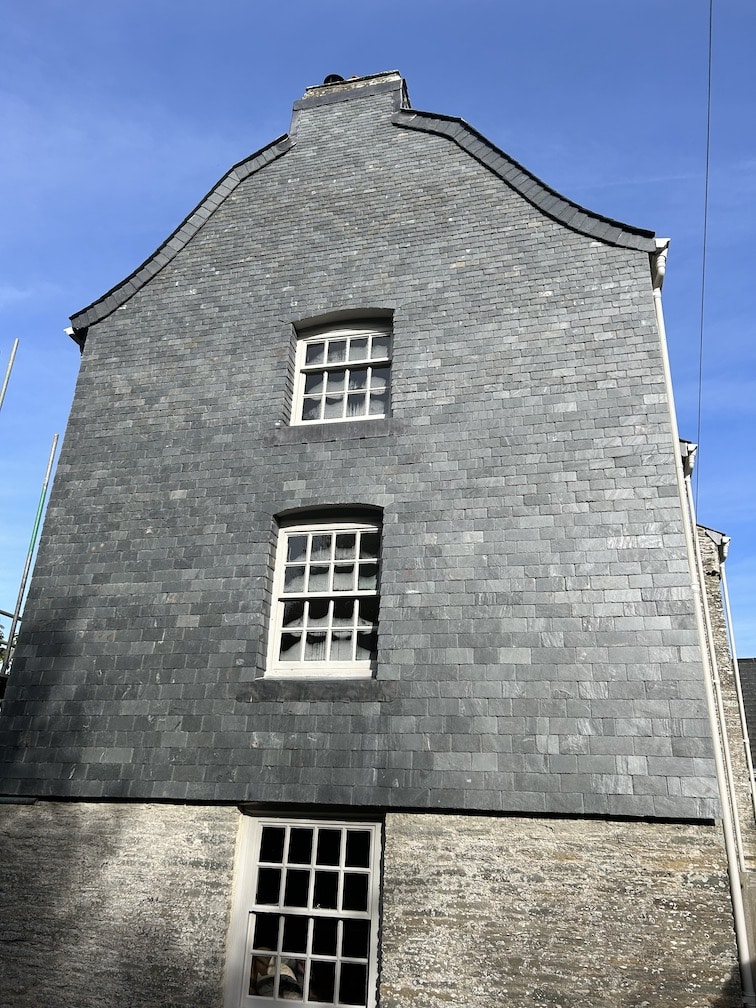
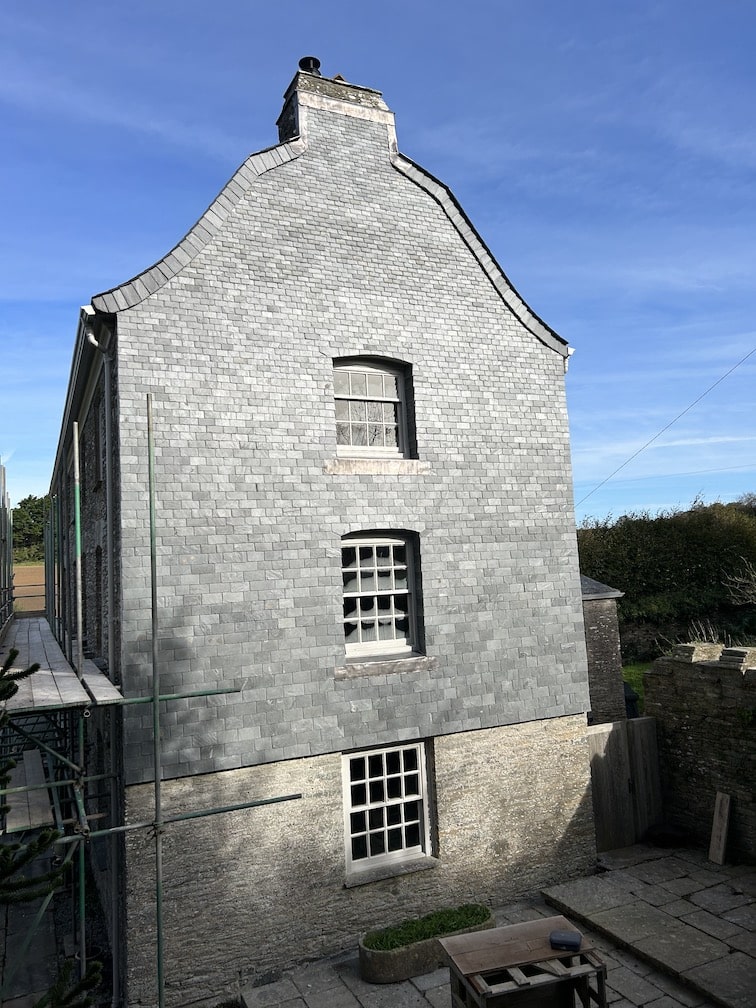
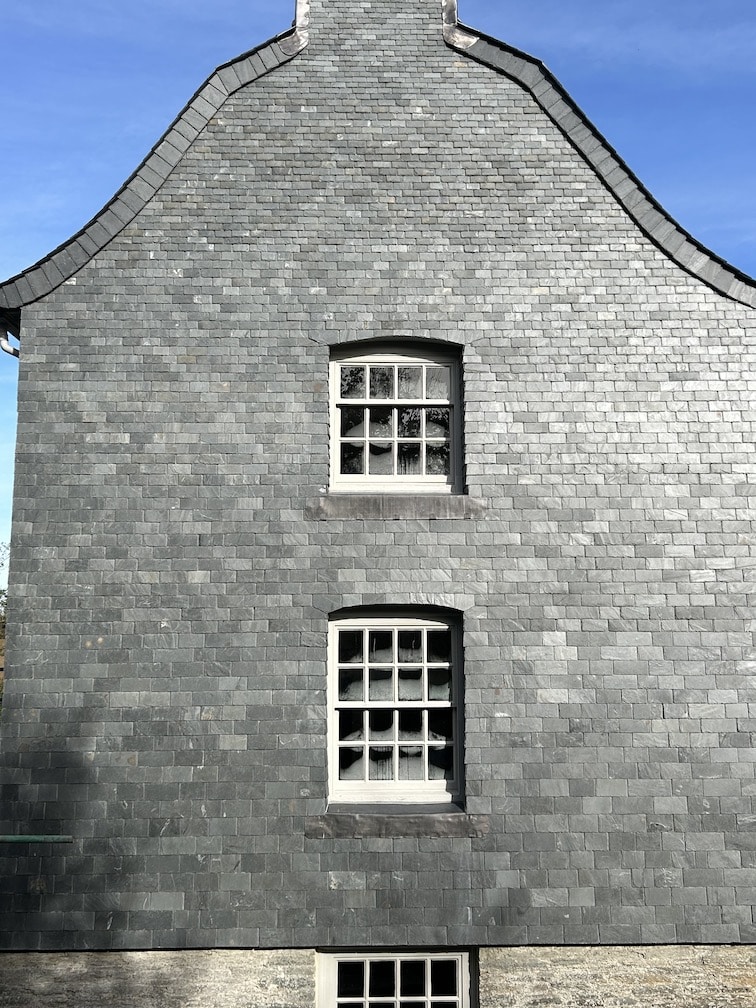
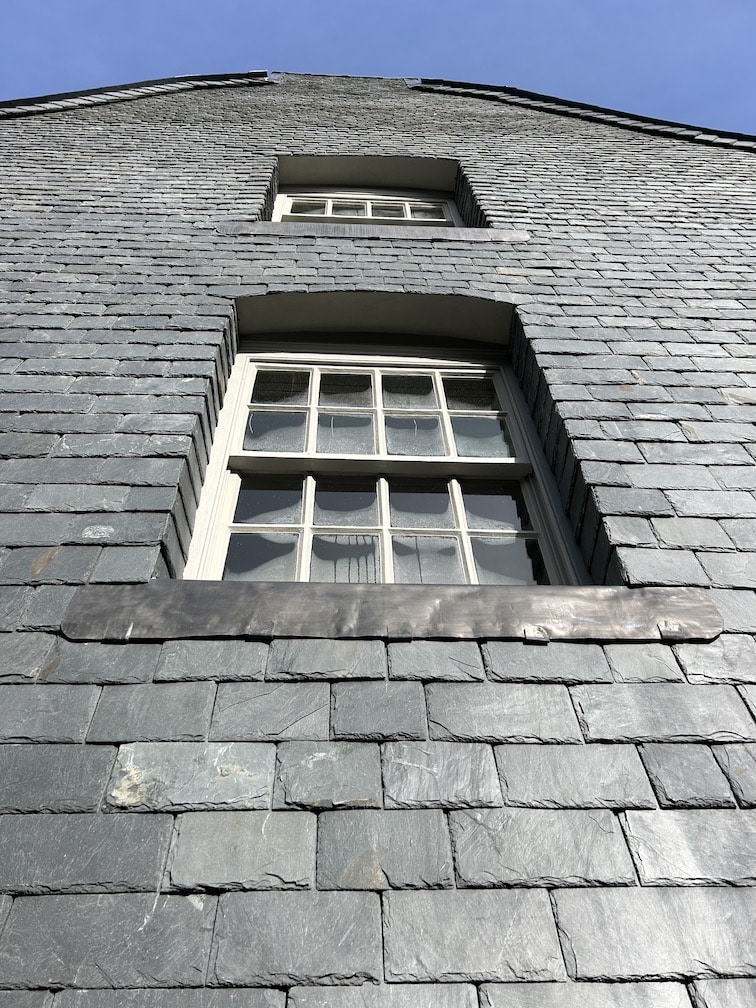
Random width slates with size diminishing courses are the protocol that we tend to choose for wall hanging. On this occasion we started with size 14” long and dropped down to 6” long at the chimney.
Hanging slate is one of our passions and with architecture like this, it really isn’t very hard to make look good!
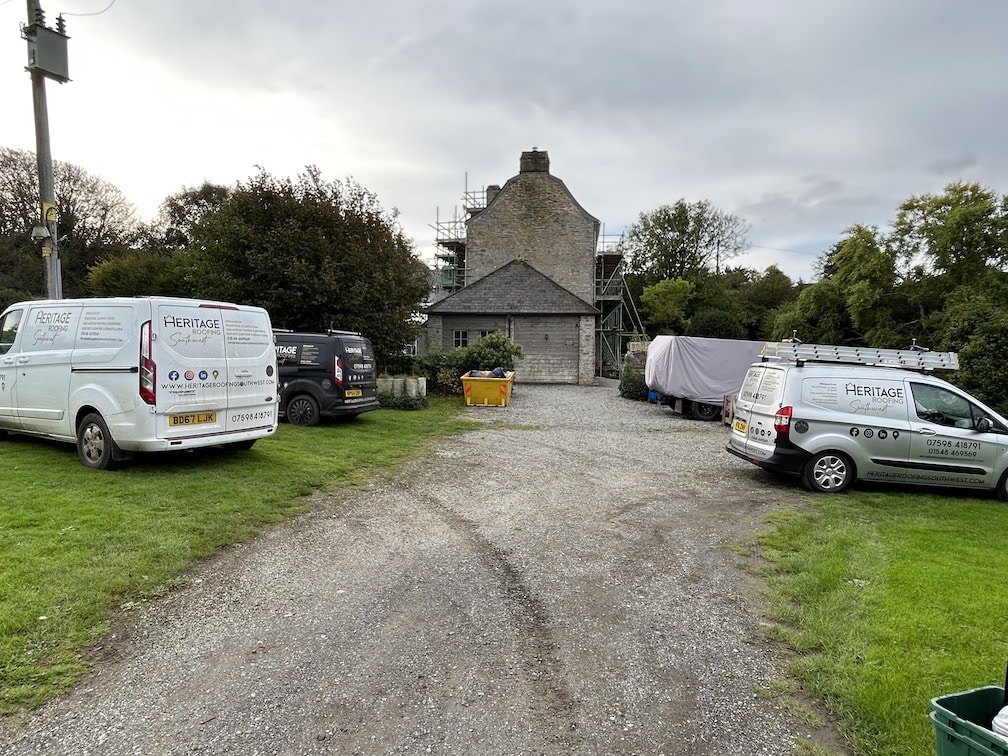
Here in the South Hams area of South Devon, there is not a shortage of architecturally beautiful homes and buildings and living here is certainly a roofer’s delight!
We really welcome hanging slate projects, not only because it’s a common detail to protect wall elevations from the Southwesterly’s, though also because we genuinely enjoy the style of work and finishing looks.
As with all our hanging slate projects that are completed retrospectively, we try to maintain our usual belts and braces attitude, whilst adhering to the sympathetic qualities of restoring old and / or listed buildings.
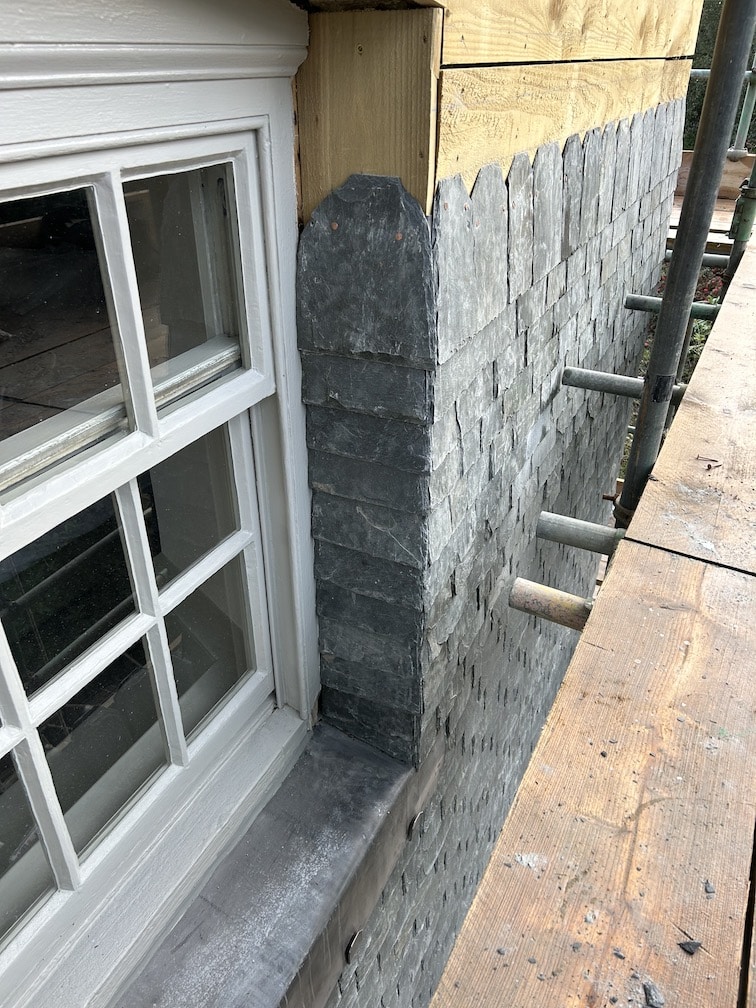
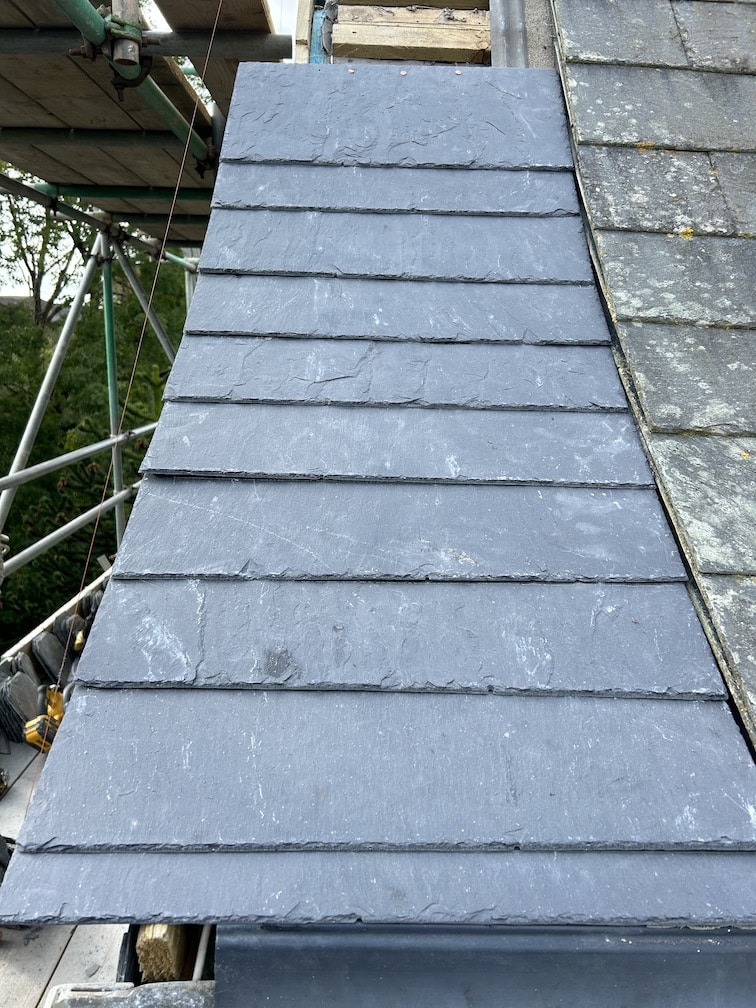
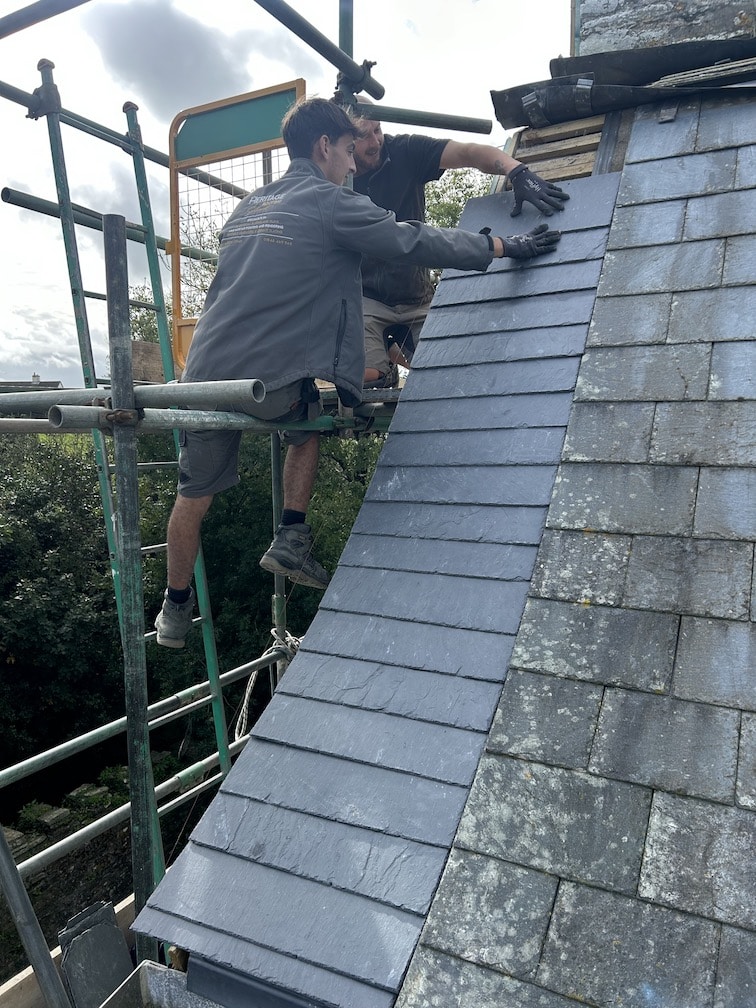
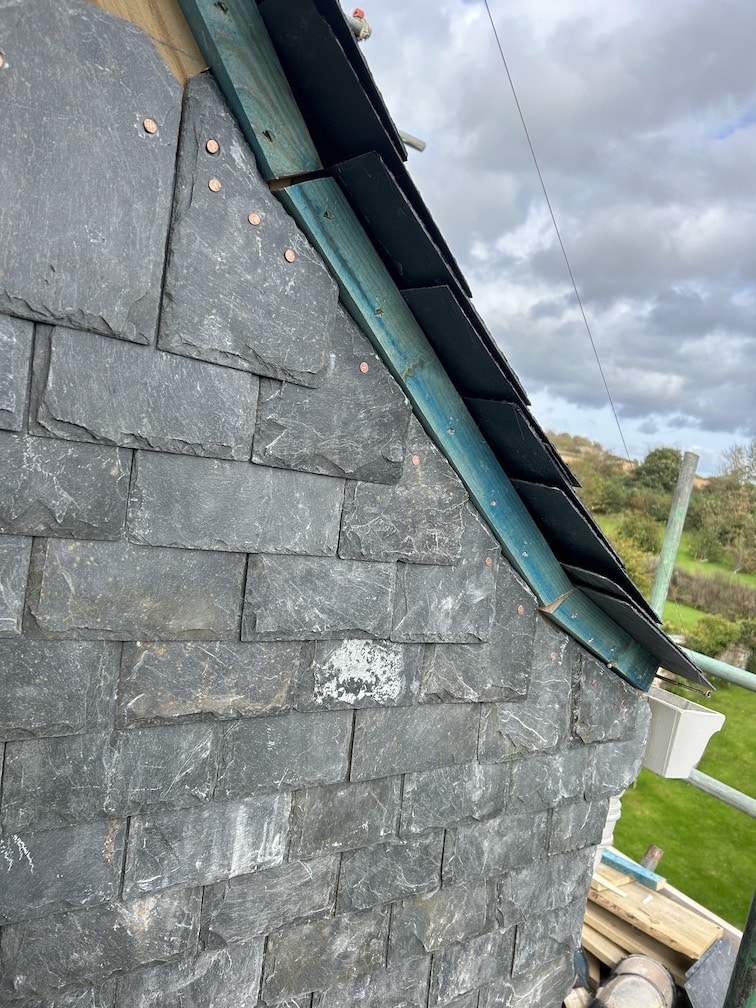
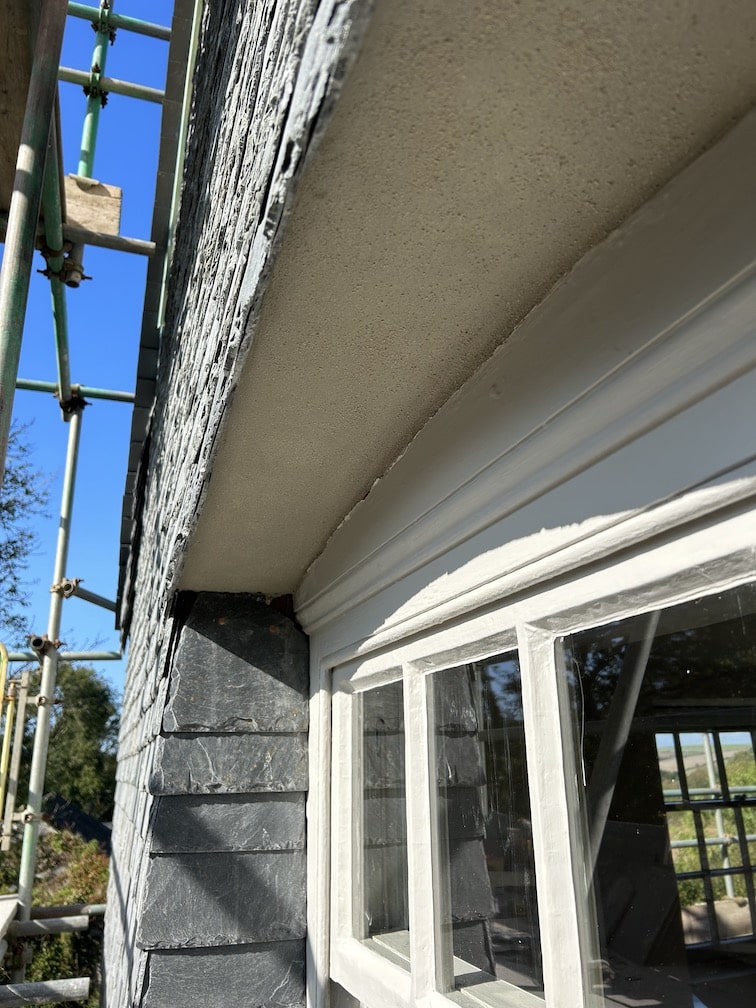
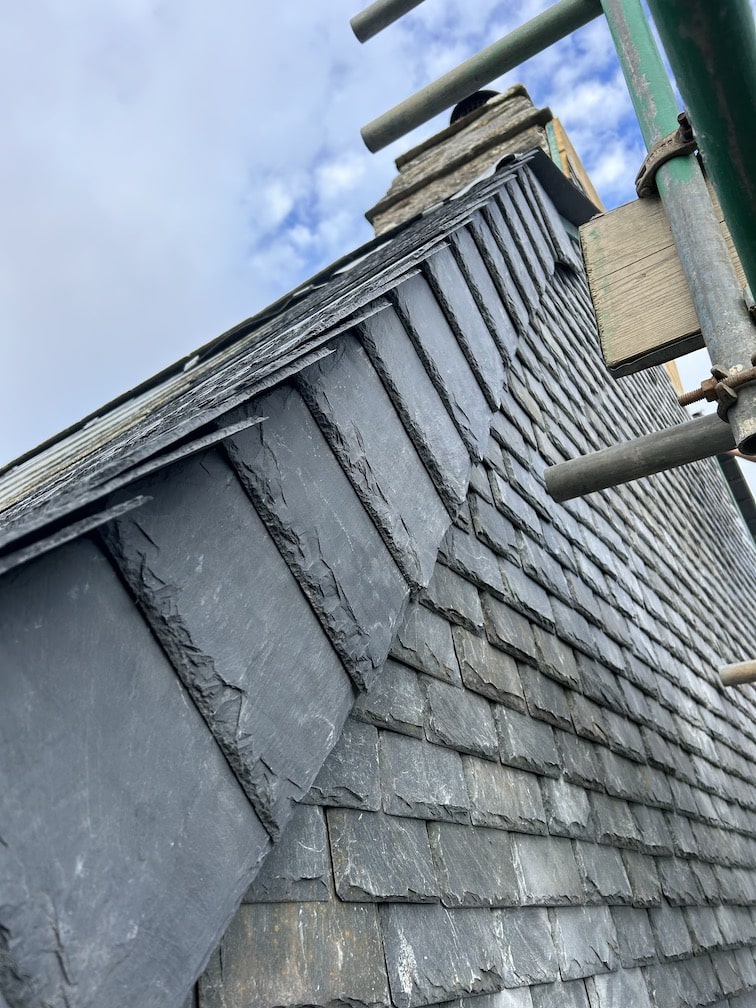
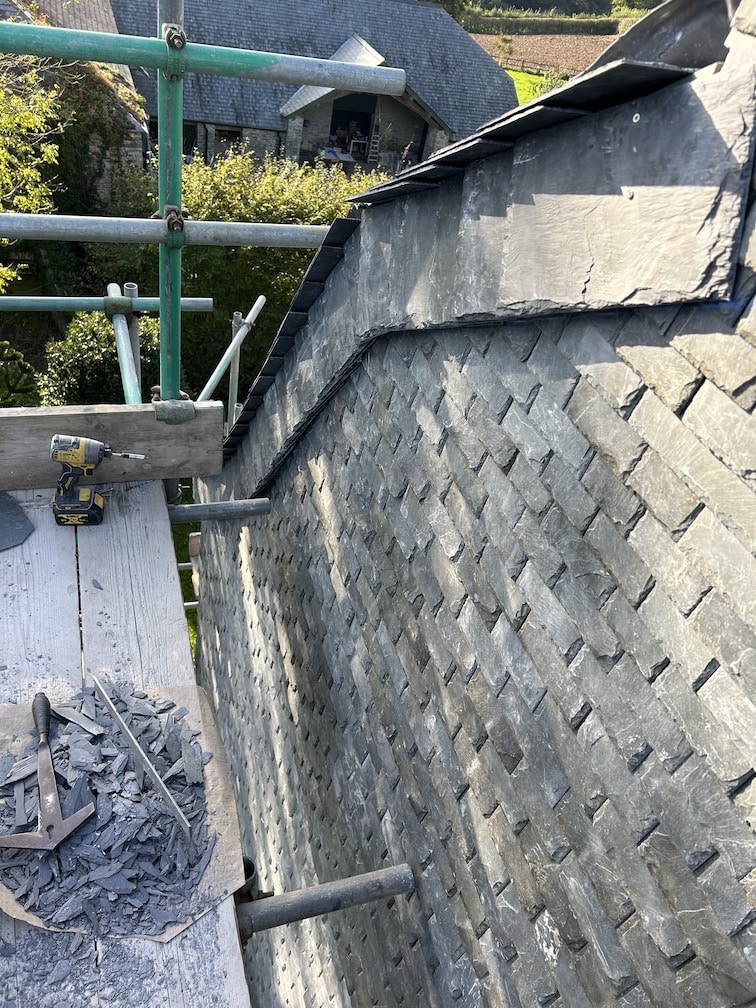
On this occasion it was important that we extended the main roof elevation gable slates over enough to provide sufficient cover on the slate wall elevation below. Being mindful of the products, we found a close match Spanish slate, that complimented the main roof slates. The main roof was reroofed some 8/10 years ago with Spanish slates. The main roof slates were already weathered, so we were confident a new Spanish slate will be just as weathered in just a few short years. This is due to the geographical location of the property and its proximity from the sea. Lichens grow very quickly in these parts of the country.
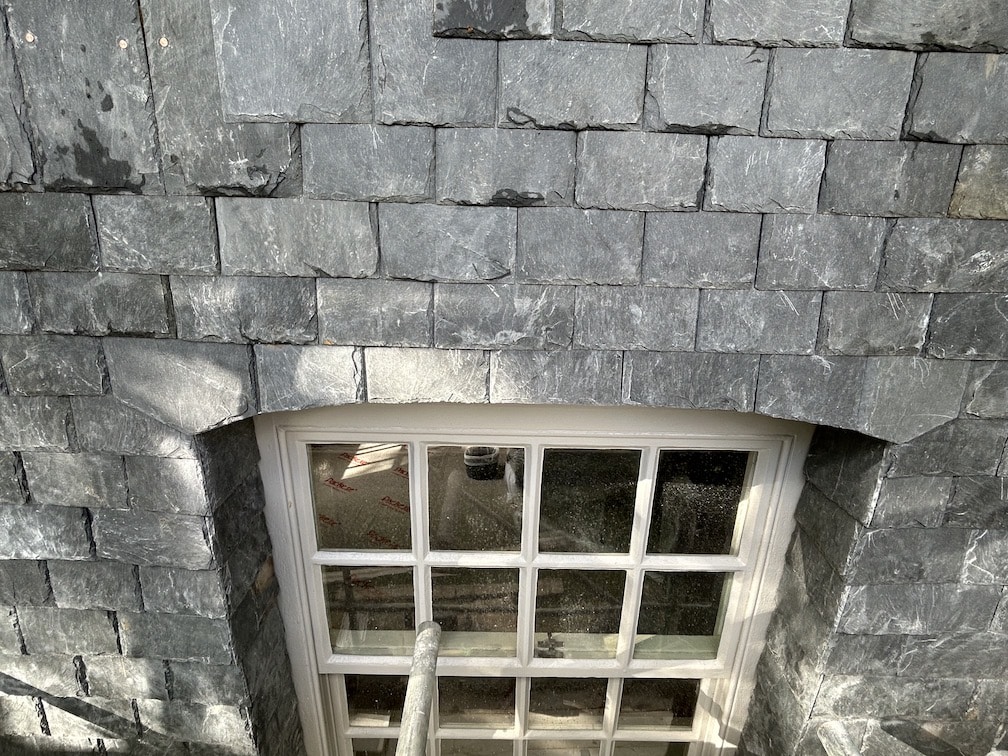
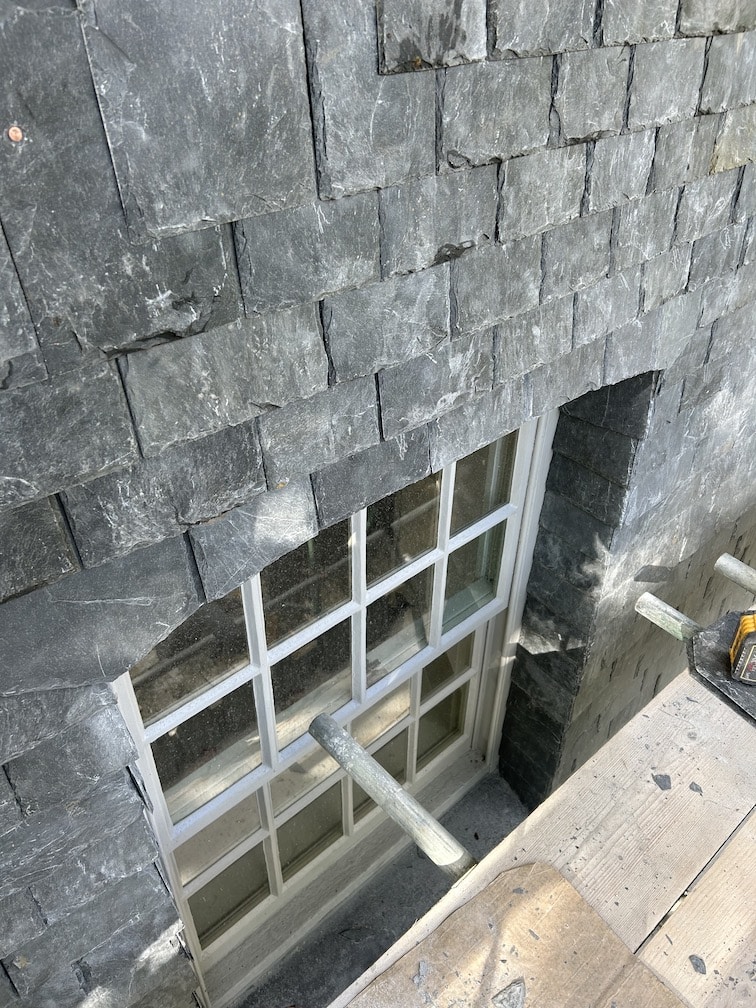
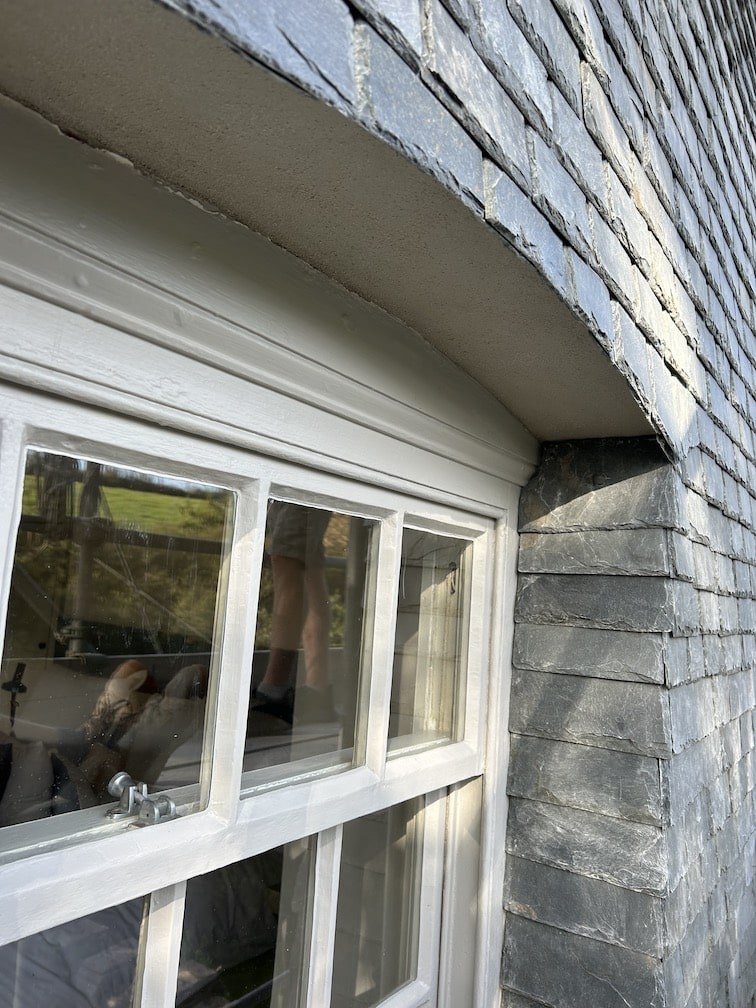
As with many of our hanging slate projects, we finished the junction between the underside of the verge slates to the hanging slates with a ‘Ranger’ course. The Rangers are very practical and exert an extremely aesthetic and functional combination. They seal up any voids in the main roof kicks and on this occasion these gaps were larger than usual. This was predominantly due to the rare swept detail formed by the Dutch design. We managed to take the gable rangers completely round the sweep and were satisfied with the finish, to say the least.